
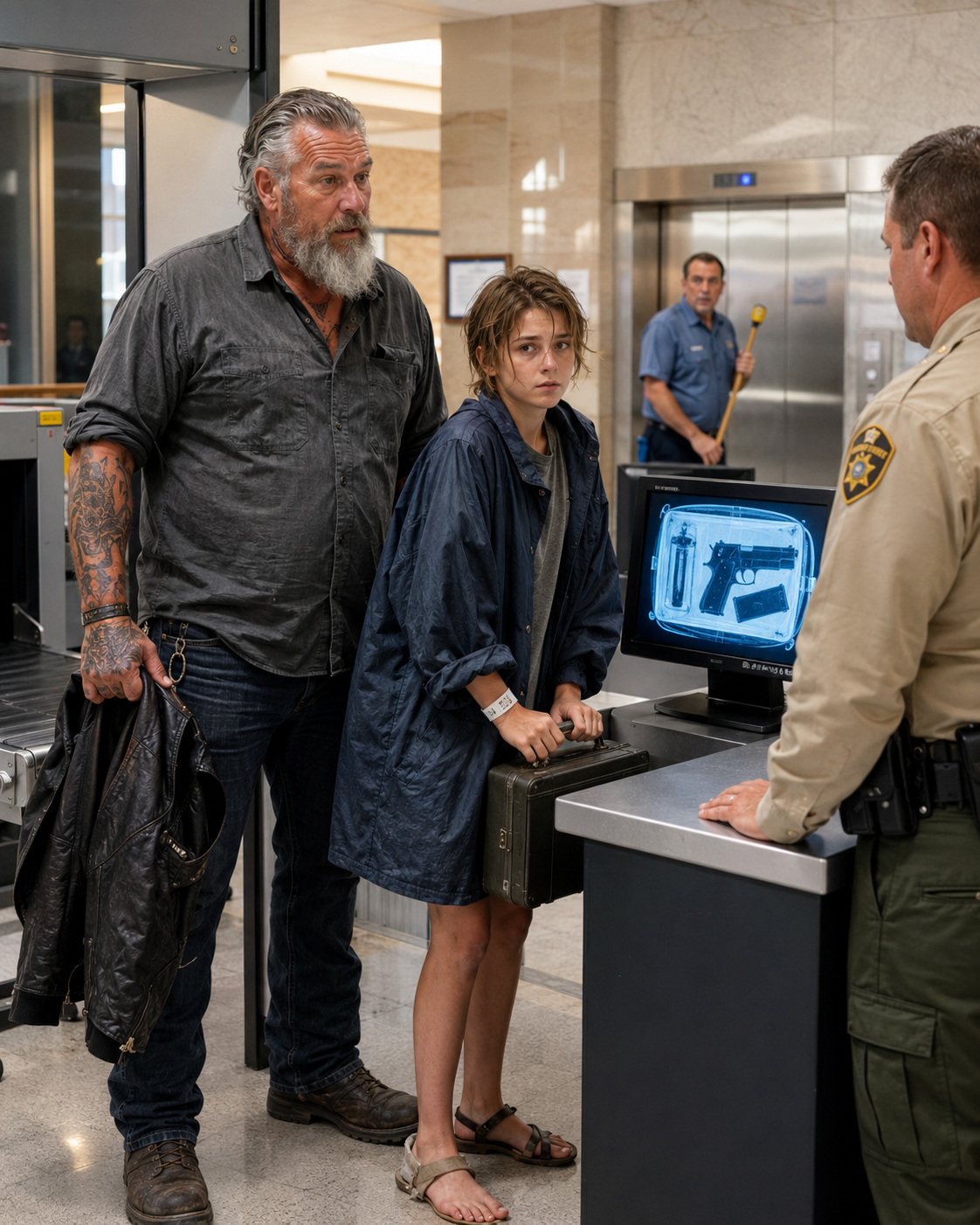
Harbor studied the photograph without touching it.
The girl sleeping in the van was Rowan, perhaps six years old, wrapped in a county shelter blanket. Behind her head, the vinyl bench had split into the shape of a narrow crescent.
Victor saw it too.
“That van carried the original ledgers.”
Thomas had called those paper files the witness because they existed before the agency altered names, medical records and guardianship orders. The databases could be rewritten. Ink inside a locked vehicle floor could not.
The van carrying Thomas was a decoy.
The second vehicle was leaving through the public parking garage while every available officer watched the underground medical bay.
The deputy radioed the garage exits and ordered officers to stop both vehicles without approaching until child-protection investigators arrived. Rowan remained beside Harbor at the security desk.
He wanted to follow.
She caught his sleeve.
“You said people should ask before deciding.”
Harbor looked down at her.
“Do you want me to stay?”
“Yes.”
So he stayed.
The first van was stopped beneath the east steps. Thomas was found alive inside, sedated but breathing. The attendants claimed they were following a medical transfer order.
The order had been signed by a doctor dead for nine years.
The second van reached the garage barrier three minutes later.
Officers found no passengers. The rear bench matched the photograph, including the crescent-shaped tear. Beneath it was a false steel floor containing the original foster-placement ledgers, recorded interviews and photographs of children being transported under borrowed identities.
Rowan’s file contained seven names.
Thomas’s statements were there too, handwritten beneath medication logs showing exactly when he had been questioned.
Miriam Cross, Ms. Vale and four county contractors were arrested before sunset. The grand-jury proceeding Harbor had been promised never existed, but a real one began six weeks later.
Harbor testified.
So did Victor.
He was charged for planting the weapon and forging courthouse access, though prosecutors acknowledged that his actions prevented Harbor and Rowan from entering the basement trap. He accepted responsibility without asking to be called brave.
Thomas spent two months in hospital before Rowan agreed to visit.
She stood near the door during their first meeting.
He did not reach for her.
“I thought signing what they wanted would keep you alive,” he said.
“It kept me lost.”
“Yes.”
“Did you stop looking?”
His eyes lowered.
“For a while.”
Rowan nodded slowly.
That answer hurt, but it was honest.
Their relationship returned through small things: photographs, shared meals and Thomas remembering that she hated peaches. Some visits ended early. Others lasted until the nurses changed shifts.
Harbor remained her emergency guardian while Thomas recovered. Later, the court gave Thomas supervised parental rights and allowed Rowan to decide when those visits increased.
She kept the name Rowan.
“It’s mine now,” she told the judge.
The agency’s records were used to restore the identities of twenty-three children. Some returned to relatives. Others chose not to. The court stopped treating blood as automatic proof of safety and paperwork as proof of truth.
Months later, Rowan asked Harbor why her father had trusted him.
Harbor turned the old wedding ring between two fingers.
“Because I listened once when nobody else did.”
Rowan looked at him.
“And when you didn’t?”
He took a long breath.
“People got hurt.”
She considered that answer, then placed the dented evidence case on his workshop bench.
“Then keep listening.”
Harbor did.
The case remained empty after that.
No weapon. No false badge. No borrowed identity.
Only a reminder that a child had risked arrest because every official route had already failed her.
For years, adults had kept Rowan safe on paper while moving her farther from anyone who knew her real name.
She was finally found when someone stopped asking which document was valid and asked the simpler question.
Which frightened person was still telling the truth?