
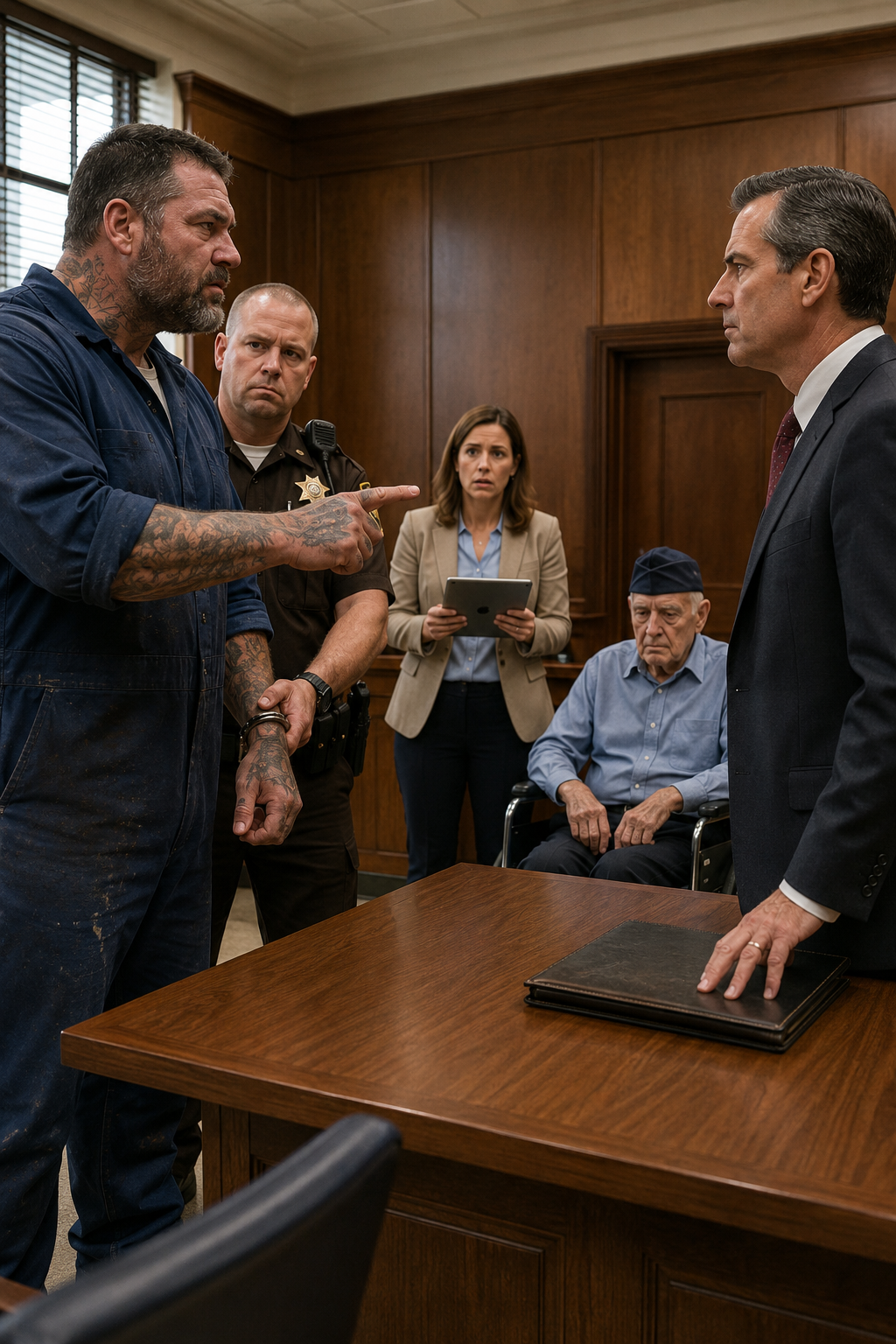
Marcus was already moving before I lowered the phone.
The deputies took us in two cruisers. Marcus rode in the back with one wrist still cuffed, staring through the rain-streaked glass toward Muncie. He said almost nothing. Once, when Deputy Ross asked how he knew Walter, Marcus answered without looking away.
“He raised me when my father went to prison.”
That was all.
The hospice sat behind a strip mall, a converted brick house with a wooden ramp and three empty flowerpots by the entrance. A white medical van was idling near the side door.
Walter’s niece stood beside it.
The attorney was holding the transfer papers.
They did not run. People who believe paperwork protects them rarely do.
The hospice nurse had locked Walter’s wheelchair to a steel rail inside the reception area and refused to release him. She stood between him and the door with both hands shaking.
Walter was awake, but barely. His shirt had been buttoned incorrectly, and a strip of adhesive remained on his wrist where someone had removed his real identification band. When Marcus entered, Walter lifted his head.
“Took you long enough,” he murmured.
Marcus stopped.
The anger went out of his face so quickly that it frightened me more than rage would have. He knelt beside the wheelchair and placed one hand against Walter’s shoulder, gently this time.
“I’m here.”
Walter looked at the cuff.
“You in trouble again?”
“Looks that way.”
The niece began insisting the transfer was lawful. The attorney said Walter had consented and that the county petition proved he was incompetent.
Deputy Ross asked them to explain the dead physician’s signature.
Neither answered.
The hospice administrator scanned the transfer packet and found the same forged credentials used on my discharge authorization. The metadata showed the documents had been created from a computer inside the attorney’s office. The false fire alarm had given them time to remove Walter before the guardianship hearing could expose the substitution.
Daniel Rusk later admitted he had been paid five hundred dollars to sit in court. He had once shared a room with Walter during rehabilitation and knew enough details to pass a few basic questions. The hospital tag had been attached so staff would move him through restricted areas without checking his face carefully.
The plan had been simple. Declare Walter incompetent, place his assets under permanent guardianship, sell his house, and move him into hospice under a false terminal diagnosis. By the time anyone challenged the paperwork, the property would already be gone.
Walter’s niece had access to his accounts.
The attorney knew how to make the theft look administrative.
I had given them the missing authority.
That part did not disappear when they were arrested.
I testified against them, then resigned from the county office before the disciplinary board could decide whether to remove me. I had followed procedure, but procedure had become an excuse for not meeting the man I was condemning.
Marcus never blamed me publicly.
At the hospital, he sat beside Walter through the night while doctors treated dehydration, bruising, and the effects of unnecessary sedatives. Just before dawn, Walter woke and asked whether the house was still his.
Marcus told him yes.
Then Walter asked about the basement steps.
“Still crooked,” Marcus said.
Walter smiled.
Twenty-one years earlier, Walter had found Marcus unconscious in a garage after an overdose and kept him breathing until paramedics arrived. Marcus had promised that if Walter ever slipped toward silence, he would not look away.
He kept that promise.
Months later, Walter returned home with daytime nursing support and a court-appointed advocate who had never met his family. Marcus moved into the spare room. The men from his repair shop rebuilt the porch, widened the doors, and installed a ramp Walter complained was too expensive.
On Sundays, the house filled with motorcycles.
The neighbors stopped calling them a gang.
They called them Walter’s people.