
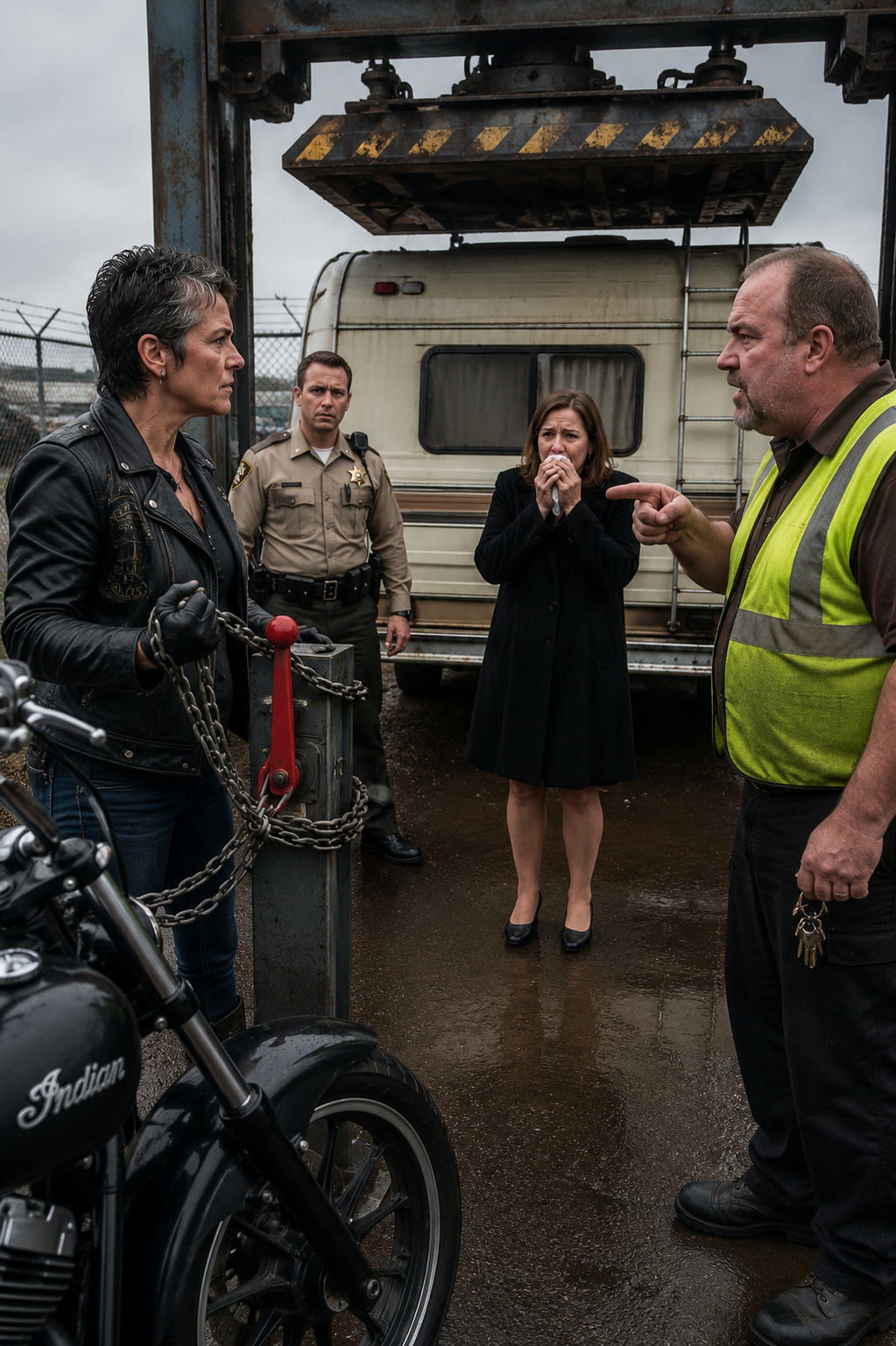
The deputy reached the truck before it cleared the gate.
Calvin braked hard, then sat gripping the wheel while dust drifted past the windshield. He did not try to run again. The resistance seemed to leave him once the deputy opened the door and asked him to step down.
The file boxes in the truck bed were marked for routine destruction.
George Whitmore’s name appeared on three of them.
Inside the camper, the recorder continued turning. Nobody stopped it.
George explained that Calvin had been his younger brother’s closest friend. Years earlier, after George’s health began failing, Calvin helped him prepare documents giving Beth and Lucas access to the camper and everything inside it. George had written a separate letter explaining the cedar box, the tickets, and his wish to have Eleanor’s ashes scattered from the rear platform of the old Knoxville station where they had first met.
The letter never reached the family.
Calvin had taken it.
Not because he wanted George’s money. There was almost none.
He wanted the camper.
George had promised it to him during an argument years earlier, before repairing his relationship with his children. Calvin believed the promise still stood. When George later changed the paperwork, Calvin used his position at the impound yard to bury the release forms, add storage charges, and move the camper toward destruction before probate exposed what he had done.
The postcard had been mailed by George’s neighbor.
George had prepared it before his death and asked the woman to send it only if the family failed to reach the station by the end of the week. He had known Calvin might interfere. He had also known Mara would understand the hidden compartment and the old wiring behind the radio.
The final minutes of the recording were quieter.
George spoke directly to Beth and Lucas.
He apologized for becoming difficult after Eleanor died. He said grief had made every offer of help feel like an attempt to remove another piece of her. The camper, the Bible, the pressed flowers, even the damaged radio had become places where he stored what he could not say aloud.
Then his voice softened.
“Don’t fight over what carried us,” he said. “Take care of where we were going.”
Calvin eventually admitted everything.
The county recovered the original letter from a locked drawer in his office. He lost his position and later pleaded guilty to falsifying records and interfering with estate property. The court did not treat his grief, resentment, or old promise as an excuse.
Beth and Lucas declined to destroy the camper.
Mara repaired the radio, replaced the dry tires, and rebuilt the rear step. She refused payment except for fuel.
Two weeks later, the three of them drove to Knoxville with the cedar box secured between Beth and Lucas. The old station no longer served passengers, but the rear platform remained beneath a rusted iron canopy.
Rain had darkened the tracks.
Beth opened the box.
Inside were Eleanor’s ashes, George’s wedding band, and a second compartment holding a small paper envelope. It contained George’s ashes, placed there by the funeral home according to instructions found in the recovered letter.
He had planned the final journey for both of them.
Lucas held one ticket. Beth held the other.
Mara stood several feet away while the family scattered the ashes beyond the platform, where the wind moved through weeds growing between the rails. Nobody gave a speech.
On the drive home, the repaired radio caught an old country song through the static.
Beth began crying before she recognized it. Lucas reached across the seat and turned the volume higher.
Mara kept both hands on the wheel.
Behind them, the empty cedar box rested inside the camper, no longer guarding anything.
For the first time since George died, the family was not carrying his unfinished business.
They were simply taking him home.