
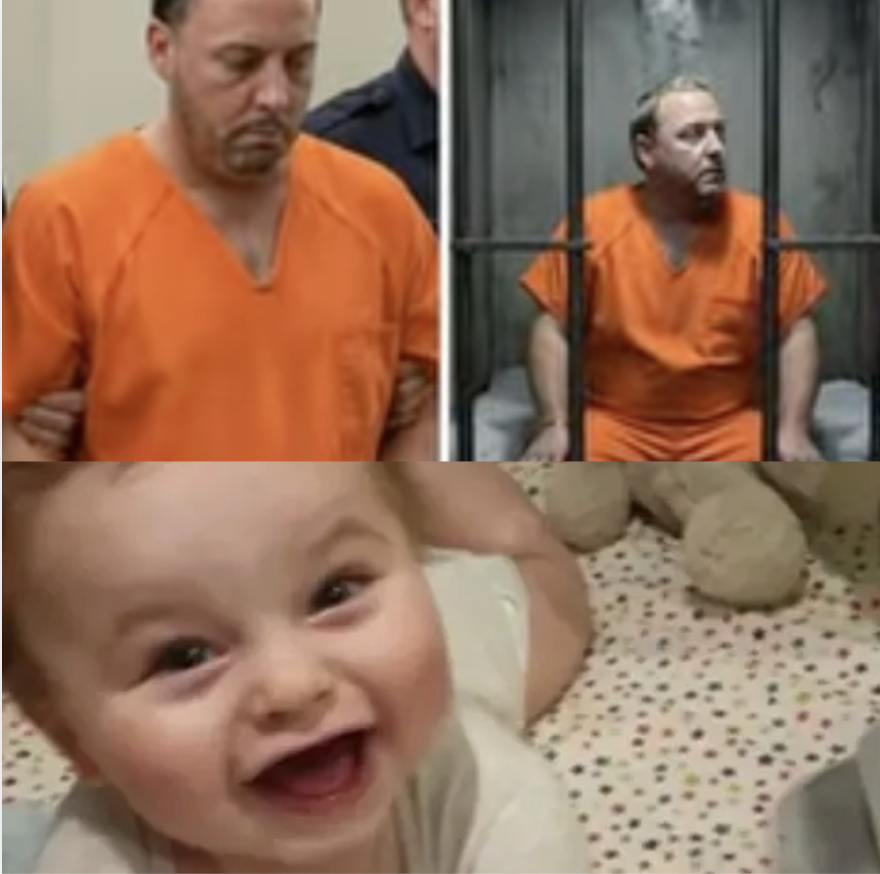
PRESTON — In one of the most agonizing and horrifying criminal trials in recent British legal history, the justice system delivered its ultimate verdict against a man whose actions shocked the entire nation. Jamie Varley, a 37-year-old former high school head of year, was handed a rare whole life order at Preston Crown Court for the sadistic murder, severe physical assault, and sexual abuse of 13-month-old baby Preston Davey.
The sentence—the most severe penalty available under UK law—ensures that Varley will spend every remaining day of his natural life behind bars without the possibility of parole. Yet as the heavy doors of the courtroom closed and the legal proceedings formally concluded, public attention shifted almost immediately toward the stark, perilous reality awaiting Varley inside the high-security prison estate.
For individuals convicted of horrific crimes against children, entering the prison system marks the start of an entirely different kind of sentence—one defined by extreme isolation, constant threats, and a brutal internal hierarchy enforced by fellow inmates.
A Four-Month Reign of Unimaginable Cruelty
To comprehend the sheer severity of the judge’s sentencing remarks, one must look at the harrowing evidence presented over the course of an eight-week trial. Preston Davey was placed in the care of Varley and his partner, 32-year-old financial sales manager John McGowan-Fazakerley, in March 2023 with a view toward permanent adoption. Health professionals and social workers had previously described the baby as happy, healthy, and thriving.
However, within just four months of entering their Blackpool home, the infant was subjected to what prosecutors described as “unremitting abuse,” cruelty, and sexual assault. Phone records, digital evidence, and videos recovered by Lancashire Police revealed a disturbing pattern of escalating violence and neglect.
On July 27, 2023, Preston was rushed to Blackpool Victoria Hospital in cardiac arrest, suffering from severe internal and external injuries. Despite the emergency medical response, the toddler was pronounced dead shortly after arrival. A Home Office post-mortem examination ultimately uncovered more than 40 separate traumatic injuries across his tiny body, determining his cause of death as acute upper airway obstruction inflicted by Varley.
Passing sentence, Mr. Justice Turner condemned Varley’s actions as a crime of “the most extreme gravity,” stating: “You treated him as your plaything… It was you who did this. You murdered him. A whole life order is a sentence of last resort, and you will never be eligible for parole.” McGowan-Fazakerley was also sentenced to 25 years for allowing the death of a child, child cruelty, and sexual assault.
The Immediate Fall from Professional Respectability
For Varley, the transition from his former life to a high-security prison cell represents a dramatic, total collapse. As a senior educator at a secondary school, Varley had once enjoyed professional respect, authority, and community trust. Court testimony noted that professionals—including social workers and visiting health officials—were repeatedly disarmed by his articulate manner and respectable professional background, enabling the severe abuse inside the home to remain hidden until it was too late.
However, the prestige that once protected him offers zero insulation behind prison walls. In the UK prison system, former professionals, teachers, and figures of authority convicted of child abuse occupy the absolute bottom tier of the inmate social hierarchy.
Upon arrival at a Category A reception facility, prisoners convicted of crimes involving child murder or sexual offenses are immediately flagged for protective measures. Their crimes make them prime targets for violence from the broader prison population, where convict codes impose harsh retaliation against those who harm defenseless children.
Life on the VP Wing: Isolation and Constant Surveillance
Insiders and prison reform experts indicate that offenders serving whole life sentences for child cruelty are routinely placed on Vulnerable Prisoner (VP) wings—specialized units designed to segregate high-risk convicts from the general population.
While VP wings are intended to prevent physical attacks, former prison staff describe the environment inside these segregated units as psychologically suffocating:
-
Strict Segregation: Inmates on protective units are kept under tight lock and key, with limited out-of-cell time, restricted communal exercise, and constant staff supervision to prevent physical ambushes.
-
Hostility from General Population: Even with physical barriers in place, prisoners from general population blocks frequently shout threats, abuse, and warnings through windows or during escorted transfers.
-
Solitary Routines: Meals, exercise, and basic hygiene routines are heavily staggered. Interactions are confined almost exclusively to prison guards and fellow segregated offenders.
“A whole life order is a crushing psychological weight on its own,” explains criminologist Dr. Aris Thorne. “When you combine that with being on a VP unit, where every movement must be vetted for personal safety, the environment becomes an endless cycle of isolation. You are stripped not only of freedom, but of basic social human interaction for the rest of your natural life.”
The Systemic Fallout and Demands for Reform
Outside the prison gates, the conclusion of the trial has triggered widespread outrage and urgent calls for systemic reform across safeguarding agencies. Detective Chief Inspector Andy Fallows of Lancashire Police described Varley as an “evil and monstrous individual,” while local authorities and the national Child Safeguarding Practice Review Panel announced a comprehensive independent inquiry into how multiple agencies failed to protect baby Preston.
The case has drawn painful comparisons to other high-profile child protection failures across the country, sparking national debate over how prospective adopters are vetted and monitored.
For Preston’s birth mother, Sarah Davey, the trial provided an agonizing measure of legal accountability, though no sentence can repair the loss. In a moving victim impact statement read in court, she condemned Varley for stealing her son’s future, declaring that she would never forgive him for taking away the chance to watch Preston grow up.
A Forever Sentence Behind Closed Doors
As Jamie Varley begins serving his whole life order, the public chatter surrounding the courtroom drama will eventually subside, but his reality behind concrete walls will remain permanently fixed.
He joins a small, infamous group of around 70 prisoners in British history who have been told by a judge that they will die in custody. Deprived of his freedom, his career, and any hope of future release, Varley’s new life is defined by the four walls of a cell and the enduring stigma of his monstrous crimes.
Justice has been formally rendered in court, but for Jamie Varley, the true burden of his actions will be carried out quietly, day after day, for the rest of his life.