
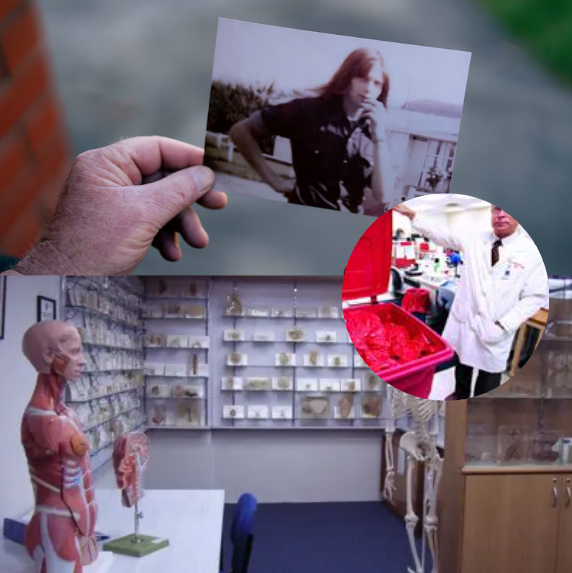
The air inside the public gallery of Tasmania’s House of Assembly yesterday afternoon was thick with a quiet, agonizing tension. Elderly men and women, some clutching faded black-and-white photographs in cheap wooden frames, sat shoulder-to-shoulder with their children and grandchildren. They had traveled from all corners of this island state—from the quiet coastal stretches of Wynyard to the working-class suburbs of Launceston—to witness what was supposed to be a historic moment of state-sanctioned remorse.
For these families, the occasion was a reckoning fifty years in the making. They were the surviving kin of 177 individuals whose bodies had been systematically pillaged by state-employed pathologists during coronial autopsies between 1966 and 1991. Without their knowledge, and without their consent, brains, hearts, lungs, and bone specimens had been quietly sliced away, placed in jars of formalin, and delivered to the University of Tasmania’s R.A. Rodda Museum of Pathology to serve as teaching tools and exhibition pieces.
The formal parliamentary apology was meant to offer a measure of closure, a solemn admission of institutional failure and moral bankruptcy. But within minutes of the session starting, the solemnity shattered, replaced by a raw, white-hot fury that has thrown the Tasmanian government into its deepest moral and political crisis in decades.
Taking the floor, the newly appointed Tasmanian Minister for Health, Bridget Archer, delivered an extraordinary and deeply polarizing address. Rather than adhering strictly to a standard script of unconditional penance, Archer sought to contextualize the historical practices, asserting to a stunned chamber that the unauthorized harvesting of body parts was “not wrong” when evaluated under the clinical and educational standards of the mid-to-late twentieth century.
“These practices, while deeply distressing when viewed through the lens of contemporary ethics, were not wrong in the context of the era in which they occurred,” Minister Archer told the house, her voice echoing through a chamber that had suddenly fallen into a deathly, disbelieving silence. “They were carried out in the absolute interest of science, medical advancement, and the training of generations of clinicians who have kept tens of thousands of Tasmanians alive. We must separate the emotional trauma of the present from the objective clinical utility of the past.”
The reaction from the gallery was instantaneous and visceral. Gasps of horror cut through the sterile parliamentary air. Several family members stood up, shaking with rage, while others collapsed into quiet, convulsing tears.
“Shame on you!” a voice cried out from the gallery, before being ushered out by parliamentary security. “You stole our children!”
By last night, the political landscape of Tasmania was in flames. Independent MPs, legal experts, and bioethicists have united in their condemnation of the Minister’s remarks, demanding her immediate resignation and accusing the Liberal government of turning a long-awaited act of healing into a “grotesque exercise in academic arrogance.”
Part I: The Mechanics of the Theft (1966–1991)
To understand the depth of the betrayal that unfolded in parliament, one must look closely at the historical reality of what occurred in Hobart’s state mortuaries during the latter half of the twentieth century.
Between 1966 and 1991, the R.A. Rodda Museum of Pathology, housed within the University of Tasmania (UTAS) Medical School, quietly amassed a vast collection of human specimens. The current collection consists of approximately 2,700 items preserved in Wentworth’s solution and presented in clear Perspex containers. Among these, as a grueling, multi-year coronial investigation recently confirmed, were 177 specimens that had been extracted from the bodies of deceased Tasmanians undergoing coronial autopsies.
                  THE PATHWAY OF UNSANCTIONED ACQUISITION

       [ Deceased Individual ] ──> Brought to State Mortuary (Coronial Case)
                                              │
                                              ▼
                                 [ Post-Mortem Examination ]
                         (Pathologist, e.g., Dr. Royal Cummings)
                                              │
                    ┌─────────────────────────┴────────────────────────┐
                    ▼                                                  ▼
         [ Rest of the Deceased ]                            [ Secret Extraction ]
     Released to family for burial/cremation.              Organs/specimens kept.
     *Family believes body is intact.*                                 │
                                                                       ▼
                                                          [ R.A. Rodda Museum ]
                                                       Stored, cataloged, and
                                                       displayed for decades.
A coronial autopsy is, by its very nature, a highly sensitive legal process. Typically initiated following sudden, unexplained, violent, or custodial deaths, it grants the state temporary custody of a human body to determine the cause of death. Under both the historical laws of the time and contemporary statutes, this authority is strictly limited. Once the cause of death is established, the body is legally required to be returned in its entirety to the next of kin for burial or cremation.
But in Tasmania, a select group of state pathologists—most notably the late Dr. Royal Cummings, who served as a senior forensic pathologist—treated these coronial autopsies as a free-access biological supermarket.
According to the final report published by Tasmanian Coroner Simon Cooper, pathologists actively harvested organs from deceased individuals, keeping them for forensic curiosity or simply to donate them to the university’s teaching museum. The coroner’s report paints a chilling picture of clinical detachment, noting that the retention of these specimens was done in direct contravention of the laws that applied at the time.
For twenty-five years, these organs sat on public and semi-public display. Medical students walked past them; researchers analyzed them. All the while, the families of the deceased went about their lives, visiting cemeteries and scattering ashes, entirely unaware that crucial pieces of their husbands, wives, siblings, and children had been withheld, cataloged, and displayed in Perspex jars.
Part II: The Human Toll — “Burying Tony Twice”
The cold clinical data of “177 specimens” fails to capture the immense, agonizing human cost of this decades-long deception. Behind every specimen is a family whose grief has been violently resurrected.
Perhaps no story encapsulates this horror more profoundly than that of the Santi family. In 1976, nineteen-year-old Tony Santi was killed in a tragic motorcycle accident. His younger brother, John Santi, who was only thirteen at the time, vividly remembers the devastation that ripped through their Hobart home.
“Tony was my hero, my best friend,” John Santi says, his voice cracking with emotion. “We buried him fifty years ago. We built a life around his memory. I went to his grave site almost every fortnight for five decades. I talked to him. I kept the grass clean. I thought he was resting in peace.”
In late 2025, John’s world was shattered when he saw Tony’s name published in a Tasmanian newspaper. The coroner’s office, struggling to identify the next of kin for the 177 specimens held at the Rodda Museum, had resorted to publishing a list of the deceased, pleading for family members to make contact.
====================================================================
                 CASE STUDY: THE SANTI FAMILY TRAGEDY
====================================================================

      1976: Tony Santi (19) dies in a motorcycle crash.
            The family receives the body for burial, believing it intact.

      2025: John Santi sees Tony's name in a newspaper list of 143 names.
            Learns his brother's brain was withheld by pathologists.

      2026: John receives a shoe box containing Tony's brain.
            Forces a second burial, 50 years after the first.

      "The state did not just keep a specimen; they stole our peace."
====================================================================
When John contacted the coroner’s office, he was told that a “minute piece” of Tony’s brain had been retained for research purposes. The reality, however, was far more shocking.
“When I went to meet the funeral directors at the cemetery to rebury what they told me was a tiny sample, they passed me a shoe box,” John recalls, his hands trembling. “I opened it up. It wasn’t a slide, and it wasn’t a tiny tissue sample. It was his whole brain. His entire brain had been sitting in a jar at the university while we spent fifty years weeping over an empty shell.”
For John, the trauma of having to bury his teenage brother for a second time, fifty years after his death, is “inconceivable.”
“I had to carry my brother’s brain in a shoe box to his grave,” John says. “The anger I feel is indescribable. And then to sit in parliament yesterday and hear the Health Minister say that this was ‘not wrong’ because it was done for science? It is like being spit on by the very government that was supposed to protect us.”
Other families share similar stories of finding out that their loved ones had been “hollowed out” before being handed over for burial. For many, the discovery has sparked deep, existential crises, throwing their cultural and religious beliefs into turmoil. For some Tasmanian Aboriginal families affected by the practice, the removal of body parts represents a profound spiritual violation, preventing the spirit of the deceased from finding rest.
Part III: The Ethical Chasm — “Science” vs. “Consent”
The defense mounted by Health Minister Bridget Archer has ignited a fierce debate within Australia’s medical, legal, and ethical communities. At the heart of this conflict lies a fundamental question: Can the pursuit of scientific knowledge ever justify the systematic violation of human rights and bodily autonomy?
In her speech, Archer argued that the actions of pathologists in the 1960s, 70s, and 80s must be judged by the “utilitarian standards of their time.” She suggested that the specimens harvested for the Rodda Museum played a critical role in advancing medical education in Tasmania, ultimately leading to better health outcomes for the broader population.
        THE TWO SIDES OF THE BIOETHICAL CHASM

  [ The Utilitarian Argument ]         [ The Human Rights Argument ]
  (Defended by Minister Archer)        (Defended by Families & Ethicists)
               │                                      │
               ▼                                      ▼
  - "In the interest of science."       - "No science without consent."
  - Focus on clinical outcomes.         - Focus on bodily autonomy.
  - Historical context as defense.      - Universal dignity of the dead.
  - Utility of medical training.        - Violation of the social contract.
This argument, however, has been roundly rejected by bioethicists, who point out that the concept of informed consent was not a twenty-first-century invention.
“To suggest that the medical establishment did not understand the importance of consent in the 1970s is historically and ethically illiterate,” says Dr. Evelyn Thorne, a senior lecturer in bioethics at the Melbourne Institute of Health. “The Nuremberg Code was established in 1947. The Declaration of Helsinki was adopted in 1964. The medical world was fully aware that performing procedures on human bodies—living or dead—without consent was a grave ethical violation.”
Dr. Thorne argues that Archer’s defense of the pathologists represents a dangerous return to a paternalistic medical model where doctors are treated as demigods who are exempt from the moral rules that govern the rest of society.
“The argument of ‘scientific utility’ is the classic defense used to justify some of the worst human rights abuses in medical history,” Dr. Thorne warns. “The moment we accept that the state or a scientific institution has a right to harvest the bodies of its citizens without their consent simply because it might prove useful, we destroy the very foundation of the social contract.”
Furthermore, Coroner Simon Cooper’s investigation explicitly found that the practices were unlawful under the laws of the time. The Anatomy Act of 1869 and subsequent legislation clearly stipulated that organs could not be retained from coronial autopsies for teaching or exhibition without the formal consent of the deceased’s family.
Thus, critics point out, the pathologists were not merely acting in a different ethical era; they were knowingly and systematically breaking the law.
Part IV: A Pattern of Institutional Arrogance
For many Tasmanians, the Rodda Museum scandal is not an isolated incident of historical misconduct, but rather a symptom of a deeper, systemic culture of institutional arrogance that has long characterized the state’s public health and academic institutions.
Independent Member of the Legislative Council, Meg Webb, who has been a tireless advocate for the affected families, believes that the government’s response to the scandal has been marked by a persistent desire to protect institutions rather than support victims.
“We have seen a pattern of obfuscation, delay, and institutional self-preservation from the very beginning,” Webb says. “The university and the coroner’s office knew about these specimens as early as 2016. Yet, it took nine years for a formal coronial report to be published, and ten years for a parliamentary apology to be delivered. Why?”
====================================================================
                    TIMELINE OF A COVER-UP?
====================================================================

      1966–1991: Systemic, unauthorized harvesting of human organs
                 during coronial autopsies in Tasmania.

      2016:      UTAS Rodda Museum curators raise concerns about
                 unauthorized specimens. Minimal public disclosure.

      2018:      Specimens quietly removed from public display.

      2025:      Coronial investigation finally concludes.
                 A list of names is published in local papers.

      2026:      Formal State Apology marred by the Health Minister's
                 controversial "not wrong" defense.
====================================================================
Webb points out that the university quietly removed the specimens from public display in 2018, but failed to make a comprehensive public announcement or actively seek out the families for several years.
“The institutional instinct was to sweep this under the rug,” Webb alleges. “And now, when they are finally forced to stand before the public and apologize, the Health Minister stands up and tries to intellectualize the theft of people’s brains and hearts. It is a devastating betrayal of public trust.”
The University of Tasmania has previously issued its own apology, with Deputy Vice-Chancellor for Health Graeme Zosky stating the university was “deeply sorry for the sadness and hurt felt by family members.” But for many families, the university’s words ring hollow when the state’s own Health Minister continues to defend the “scientific interest” of the collection.
Part V: The Political Explosion — Will Archer Survive?
The political fallout from yesterday’s parliamentary session has thrown Premier Jeremy Rockliff’s Liberal government into a state of high anxiety. The Premier, who had delivered a deeply emotional, unreserved apology just moments before Archer took the floor, now finds his government’s moral authority utterly compromised.
In his own address, Premier Rockliff had spoken of “an abhorrent practice” that represented “a profound breach of trust, and a failure to uphold the ethical standards expected of health and research institutions.”
The stark, jarring contradiction between the Premier’s condemnation and his Health Minister’s defense has left the government looking chaotic, divided, and deeply insensitive.
                      A GOVERNMENT DIVIDED

        [ THE PREMIER ]                      [ THE HEALTH MINISTER ]
      Hon. Jeremy Rockliff                     Hon. Bridget Archer
               │                                        │
               ▼                                        ▼
    "An abhorrent practice."                "The practice was not wrong."
    "A profound breach of trust."           "In the interest of science."
    "Unreserved state apology."             "Separate emotion from utility."
Labor Opposition Leader Rebecca White wasted no time in launching a devastating attack on the government during Question Time, calling on the Premier to immediately sack Archer from the health portfolio.
“The Health Minister’s comments were not just insensitive; they were an act of cruelty,” White told the chamber. “To stand in front of grieving families who have had their loved ones’ bodies desecrated, and tell them that this desecration was ‘not wrong’ because it was done in the interest of science, is completely disqualifying. If the Premier has any decency, he will remove the Minister immediately.”
The crossbench has also moved swiftly, with the Tasmanian Greens and several key independents signaling that they are prepared to draft a motion of no confidence in the Minister if she does not issue an immediate, unreserved retraction and apology for her remarks.
Behind closed doors, Liberal strategists are reportedly in damage-control mode. Archer, who was elected to state parliament in 2025 after a prominent career in federal politics where she was known for her independent streak, is viewed as a key asset for the party’s northern Tasmanian strategy. Sacking her would trigger a major internal crisis, but keeping her in the health portfolio risks permanently alienating a highly motivated and deeply sympathetic group of voters.
Late yesterday, a spokesperson for Minister Archer issued a brief, clarifying statement, asserting that the Minister “did not intend to cause any distress” and that her comments were meant to highlight the “complex historical context of medical education.” Crucially, however, the statement stopped short of a retraction or an apology, suggesting that the Minister intends to stand by her clinical-utility defense.
Part VI: The Path to True Redress
As the political storm rages in Hobart, the affected families are left wondering if they will ever receive true justice. For many, a simple, spoken apology—even one undamaged by political controversy—is no longer enough.
John Santi and several other family members are now actively calling for a comprehensive class-action lawsuit against the Tasmanian Department of Health and the University of Tasmania. They are seeking not only financial compensation for the decades of psychological trauma they have suffered, but also a guarantee of institutional accountability.
“An apology is just cheap words if there are no consequences,” Santi says. “The people who stole my brother’s brain are dead and buried. But the institutions that allowed it to happen—the Department of Health, the Royal Hobart Hospital, the University of Tasmania—are still there. They still have their funding. They still have their reputations. Where is the accountability for them?”
                 PROPOSED REDRESS PATHWAYS FOR FAMILIES

  ┌───────────────────────────────┼───────────────────────────────┐
  ▼                               ▼                               ▼
[ Independent Inquiry ]   [ Financial Compensation ]  [ Institutional Reform ]
A fully independent,      A comprehensive state fund  Legislation ensuring that
non-coronial investigation  to support families with  no human tissue can be
into systemic complicity  counseling and the costs   used or retained under
of past authorities.      of second burials.         any circumstances without
                                                     prior written consent.
Legal experts suggest that the state government could face massive legal liability if families decide to pursue civil litigation.
“The Tasmanian government has admitted that these organs were taken without lawful authority and in breach of the laws of the time,” says Hobart-based human rights lawyer Marcus Vance. “That is a clear admission of liability. Families would have a very strong case for nervous shock, misfeasance in public office, and trespass to the person of the deceased.”
But beyond the legal battle, there is a deeper, more spiritual need for healing that cannot be solved by a financial settlement. Many families want a permanent, public memorial erected in Hobart to honor the 177 individuals whose bodies were used without their consent.
“We want their names remembered,” says Sarah Kelly, whose father’s heart was retained by pathologists in 1982. “We don’t want them remembered as medical specimens or numbers in a database. We want them remembered as people who had families, who were loved, and who were deeply wronged by the state. We need a place where we can go to remember them, and where the medical community can go to be reminded of their ethical boundaries.”
Conclusion: The Cold Evening Air of Hobart
As dusk fell over Hobart last night, the crowds slowly dispersed from the sandstone steps of Parliament House. The grieving families walked back out into the cold Tasmanian evening, their shoulders hunched against the wind, clutching the framed photos of their dead.
They had arrived at parliament hoping to find a measure of peace, a sense that their long-running battle to restore dignity to their loved ones had finally reached its end. Instead, they walked away carrying a fresh, bleeding wound, inflicted by a health minister who chose clinical utility over human empathy.
The controversy surrounding the R.A. Rodda Museum is no longer just a historical footnote about past medical misconduct. It has become a living, breathing testament to the enduring conflict between institutional power and individual dignity.
For John Santi, the battle is far from over.
“They thought they could give us a shoe box, say a few nice words in parliament, and make us go away,” Santi says, looking out over the dark waters of the Derwent River. “But they don’t understand the strength of a family’s love. We fought for fifty years to find out the truth about what they did to Tony. We aren’t going to stop fighting now just because the government wants to protect its own.”
Until the Tasmanian government recognizes that human dignity cannot be sacrificed on the altar of clinical advancement, the ghosts of the Rodda Museum will continue to haunt the halls of power in Hobart. And for the 177 families who have had to bury their loved ones twice, the wounds of the past will remain wide open.