
-
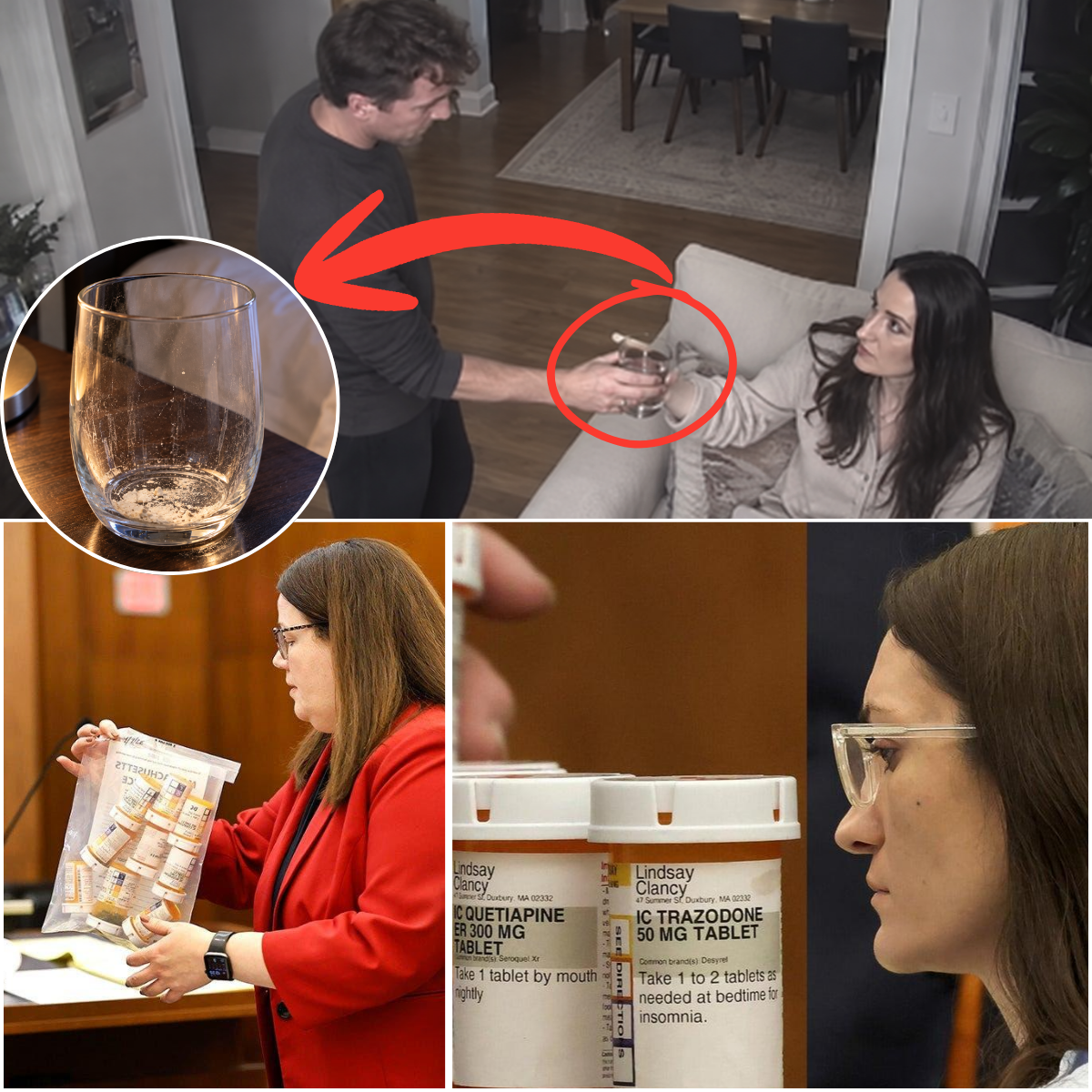
A standard drinking tumbler recovered from the Clancy master bedroom becomes a pivotal point of contention during trial testimony.
-
Patrick Clancy recalled seeing a fine, powdery residue clinging to the bottom of the cup following the tragedy.
-
Lindsay Clancy maintained during psychiatric evaluations that the tumbler held nothing more than ordinary lemonade mix.
-
Courtroom cross-examination delivered a stunning revelation: forensic technicians never ran a chemical lab test on the residue.
-
The total lack of a laboratory report leaves one of the case’s most discussed physical items entirely unverified.
It was an ordinary plastic tumbler sitting on a bedside table—a commonplace household item that rapidly transformed into one of the most hotly contested pieces of physical evidence in Plymouth County Superior Court.
Throughout the high-stakes murder trial of 33-year-old Lindsay Clancy, state prosecutors and defense attorneys repeatedly locked horns over what that bedroom cup actually contained on the afternoon of January 24, 2023.
According to witness statements, Patrick Clancy noticed a distinct white, powdery film coating the bottom of the tumbler, leading prosecutors to suggest that Lindsay had crushed and dissolved a heavy overdose of prescribed medication prior to the tragedy.
However, when questioned by psychiatric examiners—including court-appointed experts evaluating her state of mind—Lindsay offered a far simpler explanation: she insisted she had merely mixed and consumed a glass of powdered lemonade earlier that day.
+--------------------------------------------------------------------------+
|                     THE BEDROOM TUMBLER EVIDENTIARY GAP                  |
+--------------------------------------------------------------------------+
| LOCATION         | Master bedroom nightstand inside the Duxbury home.    |
| PATRICK'S ACCOUNT| Described a visible white, powdery residue at bottom. |
| LINDSAY'S ACCOUNT| Stated the cup contained standard powdered lemonade.   |
| EXPERT TESTIMONY | Referenced by psychiatrists evaluating intent & state.|
| SCIENTIFIC STATUS| UNTESTED: No forensic lab analysis was performed.     |
+--------------------------------------------------------------------------+
The Cross-Examination That Exposed the Missing Link
While both legal teams constructed sweeping arguments around the tumbler—prosecutors framing it as proof of a calculated self-harm attempt and defense counsel pointing to severe postpartum psychosis and prescription drug toxicity—a critical moment in cross-examination tore through the narrative.
Under sharp questioning from the defense, state police crime scene technicians and forensic analysts were forced to make a glaring admission on the witness stand.
Despite recovering the cup from the scene and documenting the visible residue in crime scene photographs, investigators never subjected the powder to chemical laboratory testing.
+--------------------------------------------------------------------------+
|                       DUELING COURT INTERPRETATIONS                      |
+--------------------------------------------------------------------------+
| PROSECUTION THEORY               | DEFENSE CONTENTION                    |
| • Argued the white residue proved| • Emphasized Lindsay's consistent     |
|   a deliberate plan to crush and |   account of drinking lemonade.       |
|   swallow prescription pills.    | • Highlighted the total absence of a  |
|                                  |   toxicological report for the cup.   |
+--------------------------------------------------------------------------+
A Critical Void in the Forensic Record
The shocking disclosure that crime lab specialists failed to analyze the residue left jurors with an unbridgeable gap in the physical evidence.
Without a certified toxicological report identifying whether the substance was crushed prescription pharmaceuticals, common drink mix, or an unrelated compound, the true nature of the powder remained entirely in the realm of speculation.
“You have personal observations and you have assumptions,” defense counsel argued during fierce courtroom exchanges. “What this jury does not have is a single piece of paper from a lab telling us what was scientifically inside that cup.”
The Legacy of an Unresolved Mystery
This fundamental lapse in forensic verification mirrored the broader evidentiary divide that ultimately fractured the jury panel.
Following days of intense deliberation over conflicting psychiatric assessments, mobile device extractions, and unverified physical details, the jury split 11–1 on criminal responsibility, forcing the judge to declare a mistrial.
As Massachusetts state prosecutors consider their next legal steps and Lindsay Clancy remains under continuous care in a state psychiatric facility, the untested bedroom tumbler stands as one of the trial’s most glaring and haunting unanswered questions.