
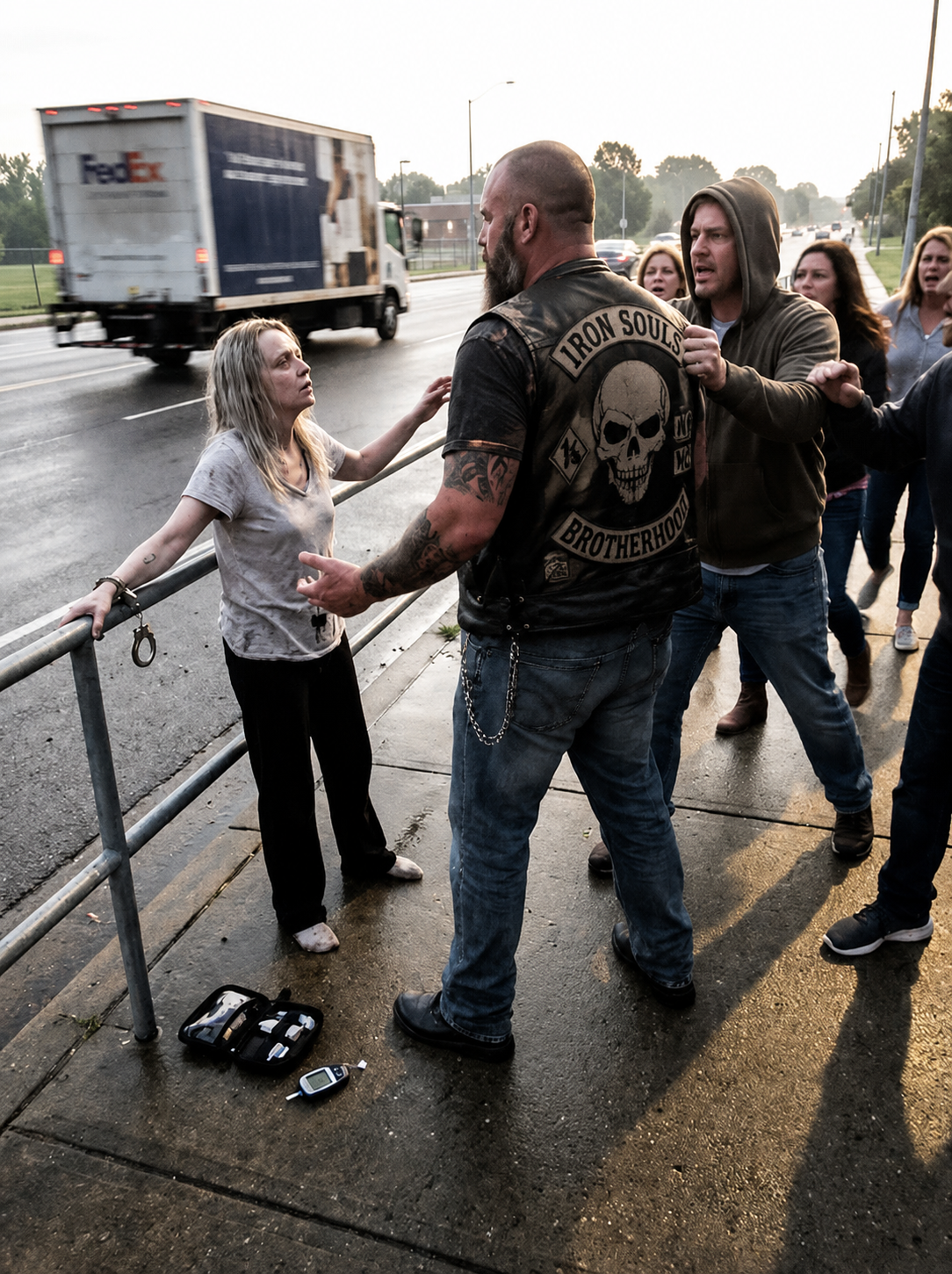
Part 3 — The Child Annie Never Forgot
Ray didn’t answer immediately.
Sarah stared at him.
“Is it me?”
He slowly nodded.
“I think so.”
Sarah sat down.
“But why?”
Ray unfolded the letter again.
“Annie wrote your name.”
Sarah’s face went pale.
“My name?”
He handed her the paper.
At the bottom, beneath Annie’s handwriting, were three words.
Sarah Bennett — diabetic.
Sarah covered her mouth.
“I was eight.”
“I know.”
“How did she know what would happen?”
“She didn’t.”
Ray looked at her.
“She just knew you needed someone to remember.”
Sarah started crying.
“I thought she forgot me.”
Ray shook his head.
“Annie never forgot anyone.”
He reached into his vest.
From an inside pocket, he removed a tiny plastic packet.
The label was faded.
The glucose gel inside had expired years ago.
Sarah recognized it immediately.
“My emergency gel.”
Ray nodded.
“Annie gave it to me.”
“Why?”
“She told me to keep one.”
Sarah stared at him.
“After she died, I couldn’t throw it away.”
The room became silent.
Then I noticed something strange.
The blue drawer wasn’t empty.
There was another compartment beneath the wooden bottom.
I pulled it open.
Inside was a small notebook.
The cover was worn.
Sarah picked it up.
The first pages contained children’s names.
Medical notes.
Emergency contacts.
Things Annie had written about students who needed extra attention.
Then we found Sarah’s page.
It was filled with notes.
Sarah gets quiet before her blood sugar drops.
Watch her hands.
She becomes stubborn when frightened.
Never assume she’s simply being difficult.
Sarah pressed the notebook against her chest.
Then she turned the page.
There was a note written years later.
The handwriting was different.
Sarah looked at Ray.
“Who wrote this?”
Ray didn’t know.
The note said:
Someone has been asking about Sarah.
Below it was a date.
Six months before Annie died.
Ray’s expression hardened.
“Who?”
Sarah shook her head.
“I don’t know.”
I turned the page.
Another sentence appeared.
They don’t care about the teacher. They care about what she witnessed.
My stomach tightened.
“What did Annie witness?”
Ray looked at me.
“I don’t know.”
Then Sarah remembered something.
“The day before she died…”
She stopped.
“What?”
“She came to my classroom.”
“What did she say?”
Sarah closed her eyes.
“She told me if anyone ever asked about the blue drawer, I should say I didn’t know what they were talking about.”
Ray stepped closer.
“Why didn’t you tell me?”
“I forgot.”
“You forgot?”
“I was eight!”
Ray immediately softened.
“Sorry.”
Sarah wiped her face.
“I didn’t understand.”
I looked at the notebook again.
There was one final page.
A name had been circled.
Not Sarah.
Not Annie.
Someone else.
Ray Dawson.
Underneath it was a sentence:
If Ray ever comes looking, tell him the truth.
Ray stared at his own name.
“What truth?”
Before anyone could answer, the school intercom crackled.
A voice came through.
“Principal Whitfield?”
I picked up the receiver.
“Yes?”
“This is the front office.”
“What is it?”
“There’s a man at the gate asking for Sarah Bennett.”
My eyes moved to the window.
A black SUV sat beyond the school fence.
The driver’s door opened.
A man stepped out.
He wasn’t a parent.
He wasn’t a teacher.
And he wasn’t alone.
Ray closed the notebook.
“Get the children inside.”
I looked at him.
“How do you know they’re here for her?”
He pointed at the blue drawer.
“Because Annie wasn’t protecting Sarah from a disease.”
He looked through the window.
“She was protecting her from someone.”
The man outside raised his head.
Even from across the parking lot, I could see the expression on his face.
He was looking directly at Sarah’s classroom.
Ray moved between Sarah and the window.
Then his phone rang.
He looked at the screen.
The caller ID showed a name none of us expected.
Annie Dawson.
Ray stopped breathing.
The phone rang again.
And again.
Sarah whispered:
“She’s been dead for six years.”
Ray answered.
A woman’s voice came through the speaker.
Quiet.
Shaking.
Alive.
“Ray…”
Everyone froze.
Then the voice said six words:
“You were never supposed to find her.”