
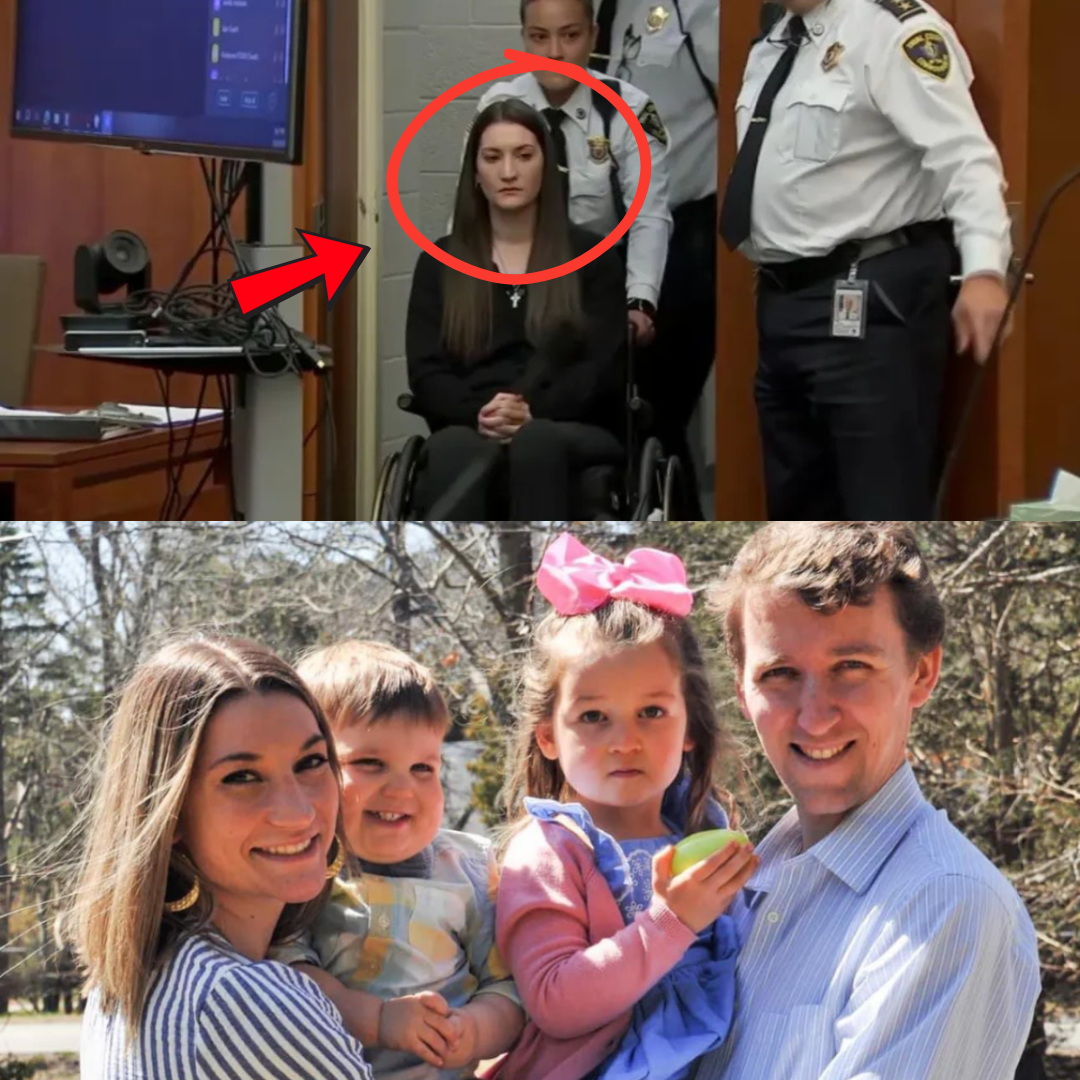
LINDSAY CLANCY TRIAL ROCKED BY EMOTIONAL TESTIMONY: COURTROOM STUNNED AS DETAILS OF TRAGIC CASE UNFOLD
The murder trial of Lindsay Clancy has once again gripped a Plymouth, Massachusetts courtroom, with powerful and deeply unsettling testimony leaving those present visibly shaken and the public scrambling for answers in one of the most haunting cases in recent American memory.
Clancy, the 35-year-old former labour and delivery nurse, is charged with the first-degree murders of her three young children — Cora, 5, Dawson, 3, and Callan, then 8 months old — in the family’s Duxbury home on 24 January 2023. She has pleaded not guilty. Her defence centres on a claim of legal insanity driven by severe postpartum mental illness, arguing she was not criminally responsible for her actions at the time.
As the trial continues into its later stages in August 2026, the courtroom has heard harrowing accounts from family members, mental health professionals, first responders and others. Recent days have featured particularly intense moments, including testimony from a psychologist who treated Clancy after the tragedy. The clinician told the court that Clancy reported hearing a man’s voice instructing her to harm her children and herself — details that have intensified the already charged atmosphere.
Those present described a tense, emotionally charged environment as the evidence and witness accounts continued to emerge. Clancy, who was left paralysed from the waist down after jumping from a second-storey window in what authorities say was a suicide attempt, has remained in a wheelchair throughout the proceedings. She has been seen reacting with visible distress during key moments, including when a recording of her then-husband’s frantic 911 call was played earlier in the trial.
A case that continues to divide and disturb
The basic facts of what occurred on that January evening are not in significant dispute. Prosecutors allege that after Clancy asked her husband Patrick to leave the house to collect takeaway food and medication, she killed the three children before attempting to take her own life. Patrick Clancy returned home to discover the unimaginable scene and made the desperate emergency call that later left jurors and courtroom observers in tears when it was played.
Clancy’s defence team, led by attorney Kevin Reddington, does not deny that she carried out the acts. Instead, they argue she was in the grip of postpartum psychosis and the effects of multiple medications prescribed to treat her mental health struggles in the months after the birth of her youngest child. The defence maintains she was over-medicated, experiencing profound psychological distress, and lacked the capacity to understand the wrongfulness of her actions.
Prosecutors, by contrast, have sought to portray a more calculated sequence of events. They argue Clancy planned the killings and that the evidence shows she was aware of what she was doing. The trial has featured extensive testimony about her medical history, internet searches, text messages, and interactions with healthcare providers in the weeks leading up to the tragedy.
Family members have taken the stand to describe a loving mother who had been desperately seeking help. Clancy’s mother and former mother-in-law have spoken of her begging for support as her mental state deteriorated. Friends and colleagues have offered observations of her demeanour. Mental health experts have debated the nature and severity of postpartum psychosis and whether it can fully explain the events of that night.
Đã đạt đến giới hạn yêu cầu ảnh
Bạn đã sử dụng hết lượt tạo hình ảnh của mình. Vui lòng thử lại sau.
The weight of mental health evidence
Central to the defence case is the claim that Clancy was suffering from a severe mental disorder that robbed her of criminal responsibility. Psychologists and other clinicians have testified about her reports of auditory hallucinations and intrusive thoughts. One psychologist who met with her repeatedly after the children’s deaths described her accounts of hearing a voice directing her to harm the children and herself.
The defence has also highlighted the complex cocktail of medications Clancy was taking and the challenges she faced accessing consistent, effective treatment. Supporters of the insanity defence point to her documented efforts to seek help in the months beforehand as evidence that she was a mother in crisis rather than a calculated killer.
Prosecutors have pushed back, arguing that the evidence of planning and the sequence of events demonstrate she understood the nature of her actions. Cross-examinations have been sharp, with both sides seeking to shape the jury’s understanding of Clancy’s mental state on the day in question.
The emotional toll on everyone involved has been plain to see. Patrick Clancy, the children’s father, gave lengthy and difficult testimony earlier in the trial. He described finding his wife injured outside the home and then discovering the children. The playing of his 911 call forced a recess as emotions in the courtroom ran high. Clancy herself was seen sobbing uncontrollably during that portion of the evidence.
Public fascination and unanswered questions
Outside the courtroom, the case continues to generate intense public interest and heated debate. Online discussions and media coverage have focused on the broader issues of postpartum mental illness, the adequacy of support systems for new mothers, and the limits of the insanity defence. Some observers express profound sympathy for Clancy as a woman failed by the mental health system. Others focus on the three young lives lost and question whether any mental health diagnosis can fully account for the tragedy.
The trial has also raised difficult questions about medication, monitoring of patients with intrusive thoughts, and how society responds when a parent in crisis reaches a breaking point. Mental health advocates have used the case to call for better screening, faster access to specialist care, and greater public understanding of postpartum psychosis — a rare but serious condition that can involve hallucinations, delusions and a break from reality.
As the defence continues to present its case and the prosecution prepares for rebuttal, the jury faces the enormous task of deciding whether Clancy was legally insane at the time of the killings or whether she remains criminally responsible. The outcome will determine not only her future but will also contribute to ongoing national conversations about mental health, motherhood and accountability.
A courtroom still searching for understanding
Throughout the proceedings, Clancy has largely remained silent in the sense of not taking the stand herself so far. The “unexpected” power of recent testimony has come instead from the professionals and family members describing what she told them about her experiences in the aftermath and in the lead-up to the tragedy. Those accounts — of voices, of desperation, of a mind in freefall — have left many in the courtroom and beyond struggling to process the full human cost of what occurred.
The trial is expected to continue in the coming days. Judge William Sullivan has managed the proceedings carefully, balancing the need for a fair trial with the intensely emotional nature of the evidence. Jurors have been repeatedly instructed not to discuss the case or form conclusions until all the evidence is in.
For the families of Cora, Dawson and Callan, and for Lindsay Clancy herself, the process remains an ongoing ordeal. For the wider public, the case stands as a stark reminder of how quickly mental illness can turn a family’s world upside down — and of how many questions still remain about prevention, treatment and justice when the unthinkable happens.
As more witnesses take the stand and the legal arguments intensify, the courtroom continues to serve as the stage for a story that is as complex as it is heartbreaking. The search for truth, accountability and some measure of understanding goes on.