
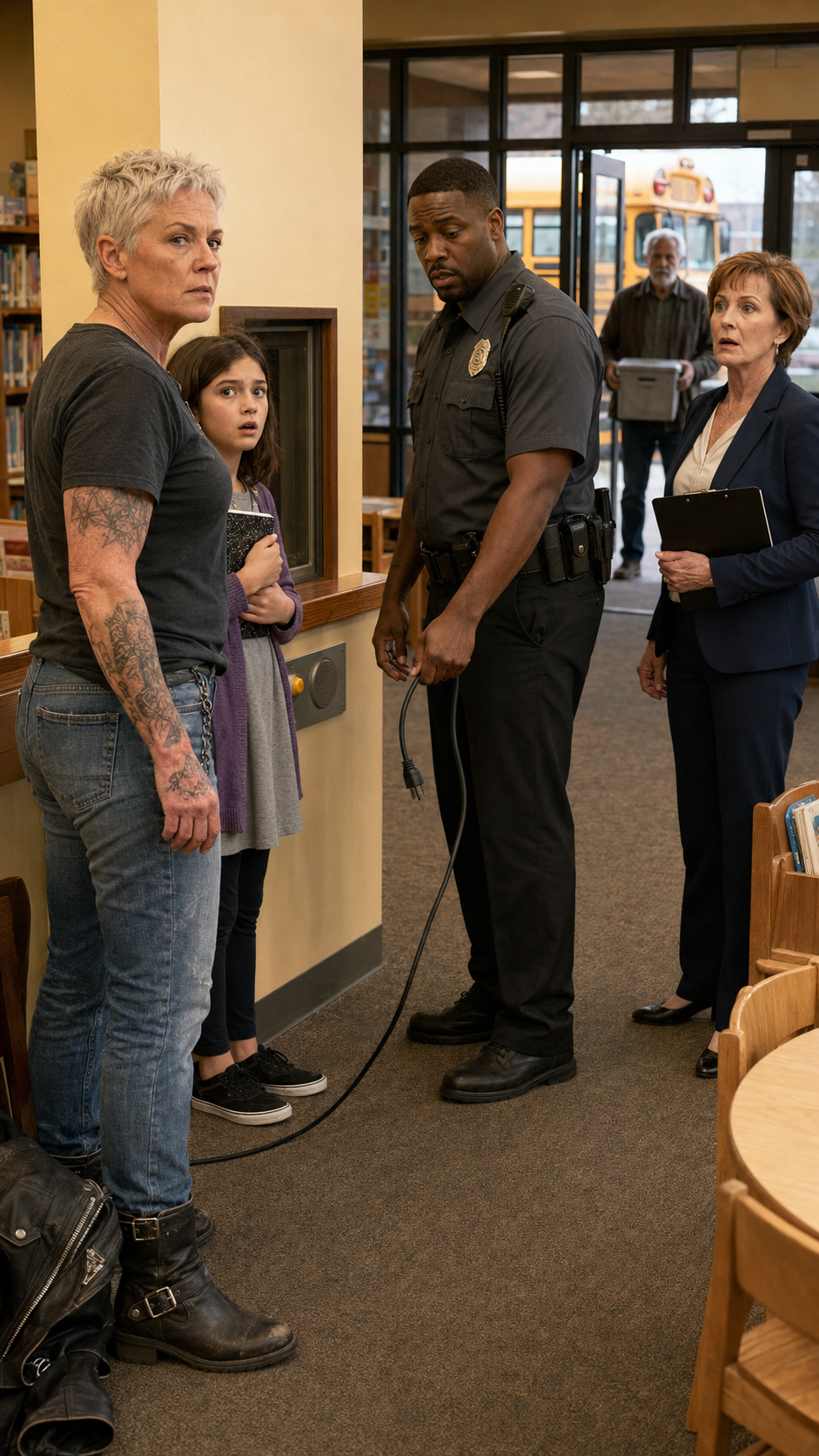
The yellow bus stopped outside the library with its engine running.
An elderly man stepped down first.
He was tall but bent at the shoulders, wearing an old maintenance jacket with a brass name badge that read SILAS BELL. He carried a metal archive box against his chest and walked with the careful gait of someone whose knees had outlived their warranty.
Mara knew him immediately.
“You drove the Building Four bus.”
Silas nodded.
“And you built the first window.”
June looked between them.
“What first window?”
Silas placed the archive box on the library desk.
Thirty-four years earlier, Building Four had been a locked residential unit for girls the county described as disruptive, withdrawn or difficult to place. Mara had entered at fifteen under her legal name, Rebecca Doyle.
Her younger sister, Anna, arrived two months later.
Anna rarely spoke around staff.
One evening, Mara cut a square opening through the laundry-room wall and ran a microphone wire into an abandoned service closet. The girls could speak through the opening without standing before counsellors or signing their names.
Silas installed the speaker.
He had believed the recordings would help.
Instead, the girls began describing locked rooms, withheld meals and medication given without explanation.
Paula Finch had been a junior programme counsellor then.
Her surname was different, but Mara recognised the younger face in the photograph Silas removed from the box.
Paula turned toward the exit.
The security officer blocked her path.
“You said you’d never worked there,” Mara said.
Paula gripped the back of a chair.
“It was thirty-four years ago.”
Silas opened the archive box.
Inside were cassette tapes, maintenance logs and copies of incident reports marked incomplete. He had hidden them after Building Four closed.
The last tape had been recorded by Anna.
Silas placed it in the library’s old cassette player.
Static filled the room.
Then a child’s voice spoke.
“Rebecca says we should tell the truth, but Miss Finch says truth is why families send girls away.”
Mara’s scarred hands closed around the edge of the desk.
The voice continued.
“She said if Rebecca talks again, they’ll separate us.”
Paula whispered, “Turn it off.”
Silas did not.
Anna described a fire door chained from the outside and a staff member removing boxes from the records room the night smoke filled Building Four. She said Mara had returned for her but was dragged outside before reaching the dormitory.
The official report claimed Anna died in the fire.
No body was identified.
Mara had believed the report because Paula personally handed it to her.
June stepped closer and took Mara’s hand.
The gesture was so small that Mara almost pulled away from surprise.
Silas removed a school photograph from the box.
One girl’s face had been cut from the second row.
“Why is she missing?” June asked.
Silas looked toward the bus.
“Because Paula made me alter the passenger list.”
The library doors opened.
Six adults entered quietly. Each had once lived in Building Four. Some carried folders. One woman used a cane. Another held an old cassette against her chest.
A seventh passenger remained seated inside the bus.
Only her hand was visible against the window.
A faded purple wooden bead hung from her wrist.
Mara stopped breathing.
She had carved that bead for Anna from a broken bedpost.
Paula shook her head.
“Anna died.”
The woman on the bus slowly stood.
Her voice reached the library through the open doors.
“No, Paula.”
Mara’s face emptied.
The woman stepped into the aisle.
“You only needed Rebecca to believe I did.”