
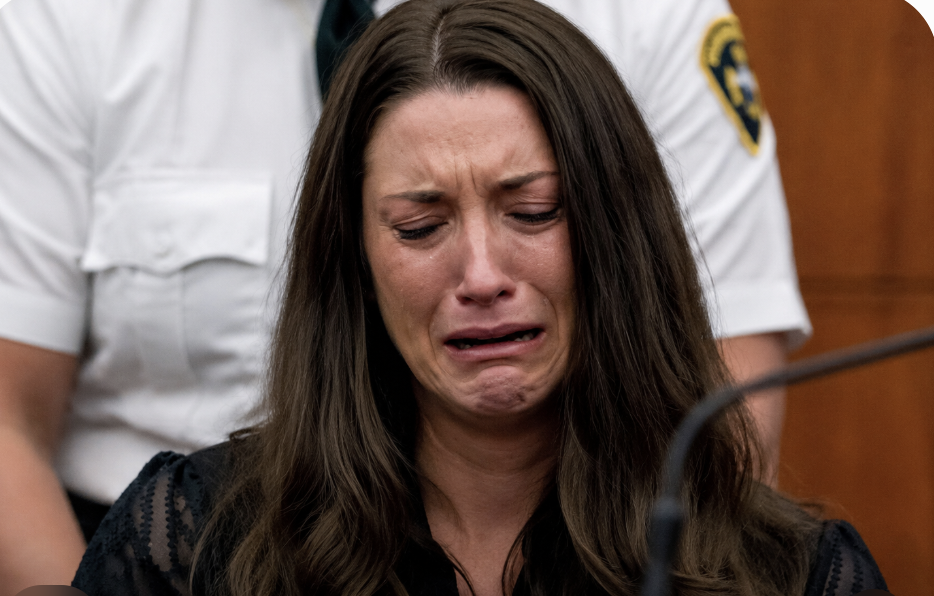
Sensational online teasers routinely use dramatic phrasing to hook readers, promising unexpected pleas, secret hospital transfers, and surprise legal requests delivered on behalf of mysterious third parties. However, an analysis of the official court record, medical filings, and real-time trial proceedings reveals that these viral rumors are entirely fabricated.
The actual story of Lindsay Clancy—the Duxbury, Massachusetts mother accused of killing her three young children—contains no last-minute mercy requests or secret plea deals. Instead, it centers on a grim legal battle over maternal mental health, criminal responsibility, and a deeply divided jury.
The Reality of Medical Custody
The claims alleging a dramatic “last-minute request” prior to a medical transfer conflate and misrepresent routine legal events from the early stages of the case.
-
The Transfer: In May 2023, following her initial hospitalization at Brigham and Women’s Hospital for injuries sustained during a suicide attempt, Clancy was transferred to Tewksbury State Hospital to receive long-term inpatient psychiatric and physical rehabilitation care.
-
No Secret Pleas: Court transcripts and official statements from her defense attorney, Kevin Reddington, show no record of Clancy making a plea for “mercy” or a “pardon” for anyone else during this transition.
-
Legal Strategy: The defense has maintained a consistent stance throughout the proceedings: a plea of not guilty by reason of lack of criminal responsibility, citing severe postpartum psychosis, postpartum depression, and the adverse effects of multiple prescribed psychiatric medications.
The Real High-Stakes Courtroom Battle
Rather than secret deals behind hospital doors, the true focal point of the case has played out inside the Plymouth Superior Court. Opening statements in Commonwealth v. Lindsay Clancy began in late July 2026, leading to weeks of emotional testimony from medical experts, first responders, and family members.
Prosecutors argue that Clancy acted with premeditation when she killed 5-year-old Cora, 3-year-old Dawson, and 8-month-old Callan in January 2023, pointing to her online search history and diary entries as evidence that she understood her actions. Conversely, the defense presented expert medical testimony asserting that Clancy was in the grip of severe psychosis and command hallucinations that impaired her ability to distinguish right from wrong.
Deliberations and Legal Impasse
By early September 2026, after more than 25 hours of deliberations spanning several days, the jury signaled to the court that they were deadlocked and unable to reach a unanimous verdict.
The impasse underscores the profound complexity of evaluating criminal responsibility in cases involving severe mental illness. While clickbait headlines attempt to simplify and dramatize the narrative with sensational twists, the verified facts remain anchored in the ongoing judicial process.