
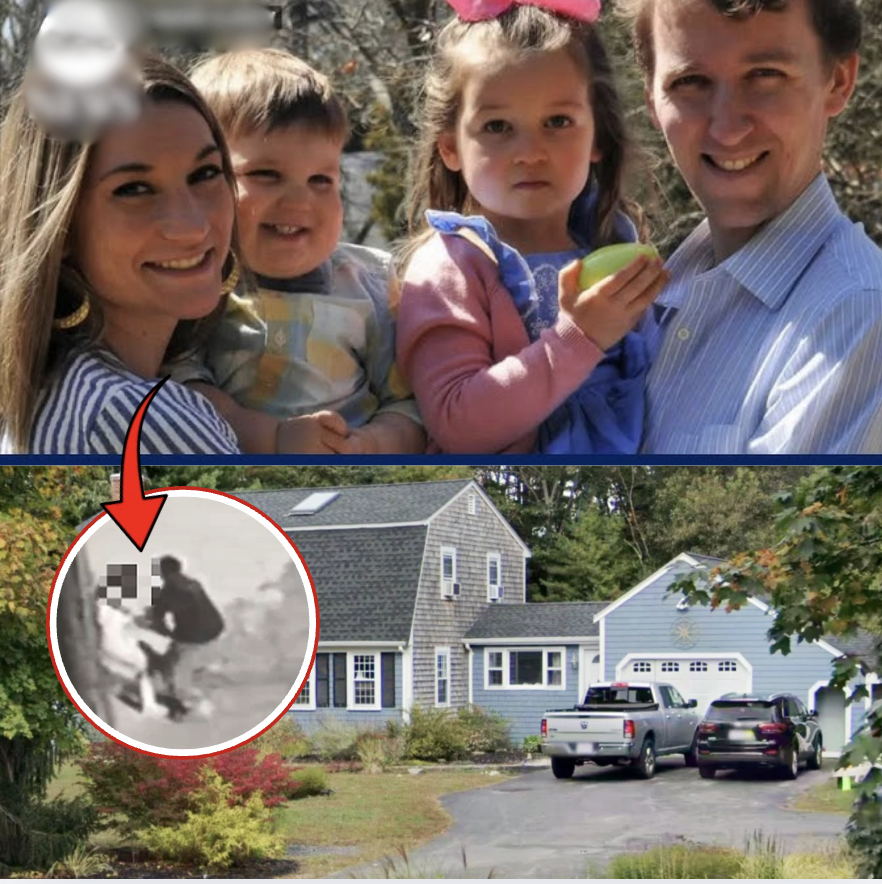
In an ongoing wave of internet sensationalism surrounding the high-profile Lindsay Clancy trial in Plymouth Superior Court, social media platforms and online forums have seen a resurgence of viral posts claiming the existence of “leaked security footage.” The circulating captions assert that an unredacted, night-vision video file from inside the Clancy home captured a masked figure confronting Lindsay Clancy moments before the tragic events unfolded, with commentators pointing toward an alleged interaction at the 24-second mark as crucial missing evidence.
These clickbait teasers invite users to tap external links to view a “full video breakdown” or “unredacted footage.” However, a comprehensive audit of the official court record, evidence logs, and daily expert testimony presented during the trial confirms that no such security clip, intruder recording, or masked figure exists within the factual scope of the case.
THE ORIGIN AND MECHANICS OF THE VIRAL FOOTAGE CLAIMS
The phenomenon of viral “leaked clip” posts has become a recurring trend on true crime forums and short-form video platforms. These posts utilize dramatic formatting, urgency indicators, and specific timestamp references—such as “frame-by-frame analysis at second 24″—to construct an aura of investigative credibility.
By promising exclusive access to hidden security feeds that supposedly show the recording cutting to static, content creators leverage algorithm-driven engagement to direct web traffic to external ad-monetized landing pages or subscriber channels.
In reality, digital forensic experts testifying in court confirmed that the physical evidence collected from the Summer Street residence consisted of standard mobile device extractions, smart-home hub logs, and exterior surveillance clips from neighboring properties—none of which contained interior hallway video of an unknown intruder.
THE ACTUAL COURTROOM REALITY
Inside Plymouth Superior Court, where the trial of Lindsay Clancy has drawn global attention, the proceedings remain anchored strictly in medical, toxicological, and psychological evidence regarding postpartum mood disorders. Neither the prosecution nor the defense team has ever introduced or alleged the presence of a third-party intruder or masked individual.
-
Defense Position: Lead defense attorney Kevin Reddington does not dispute the physical sequence of events, resting the defense entirely on a plea of not guilty by reason of lack of criminal responsibility due to severe postpartum psychosis and bipolar disorder.
-
Prosecution Position: Prosecutors argue that Clancy acted intentionally, presenting digital forensic records of phone usage, web searches, and routine errands to establish a deliberate timeline.
-
Auditory Hallucinations vs. Physical Intruder: The only reference to a “man’s voice” throughout the multi-week trial stems from medical evaluation records and Patrick Clancy’s testimony, where Lindsay described hearing an internal, auditory hallucination commanding her to act—a key clinical symptom evaluated by psychiatric experts on the stand.
EXPERT TESTIMONY AND FORENSIC FINDINGS
Throughout the trial, a succession of expert witnesses—including forensic toxicologists, digital media analysts, emergency room physicians, and treating psychiatrists—have provided detailed accounts of the physical evidence.
-
Digital Extractions: Ian Whiffin, a digital forensics specialist who examined mobile devices associated with the home, outlined precise timestamps of phone activity and step-count data, establishing that no external network breaches or tampered video feeds occurred on the night of January 24, 2023.
-
Toxicology Reports: Justin Brower, a forensic toxicologist, delivered extensive analysis regarding the therapeutic levels of multiple prescribed psychiatric medications detected in Clancy’s blood following the incident.
-
Psychiatric Evaluations: Dr. Paul Zeizel and other medical experts testified regarding Clancy’s extensive treatment history, medical records, and severe psychiatric decline in the months preceding the tragedy.
THE IMPACT OF ONLINE MISINFORMATION ON TRIAL INTEGRITY
Legal analysts and judicial observers have repeatedly highlighted how “forensic fandom” and speculative social media campaigns can distort public perception of ongoing criminal proceedings. When dramatic fabrications—such as phantom intruders or fabricated security tapes—are spread online, they create confusion around cases that are fundamentally defined by complex medical and legal questions.
“Courtrooms operate on verifiable, sworn evidence subject to cross-examination,” noted legal analyst Elena Rostova. “While internet speculation often invents outside villains or conspiratorial twists, the actual trial is a solemn judicial process examining medical diagnoses, prescription histories, and statutory standards for criminal responsibility.”
As jury deliberations approach, the official record of the case remains confined exclusively to the sworn testimony, physical exhibits, and expert evaluations admitted into evidence before the court.
Lindsay Clancy trial: Chilling 911 call from ex-husband played in court
This report covers actual courtroom proceedings, featuring Patrick Clancy’s 911 call and the legal arguments surrounding mental health and postpartum psychosis.