
The atmosphere inside the courtroom was heavy, thick with the weight of unspeakable tragedy and the cold, clinical dissection of a life lost too soon. For weeks, the trial of John McGowan-Fazakerley and Jamie Varley has gripped the public imagination, serving as a harrowing reminder of how quickly the domestic sphere can turn into a theatre of catastrophe. But today, the narrative shifted. In a move that observers are calling the most pivotal moment in the trial thus far, co-accused John McGowan-Fazakerley offered testimony that dismantled the very foundation of his previous defense: his unwavering, and perhaps naive, trust in his former partner.
McGowan-Fazakerley, 32, stands before the court charged with causing or permitting the death of 13-month-old Preston Davey, along with allegations of child mistreatment and sexual offences. His co-accused, 37-year-old Jamie Varley, faces even more severe charges, including murder, child neglect, and crimes connected to indecent child images. Both men maintain their innocence regarding all charges, presenting a united front of denial that has characterized the trial since its inception.
Yet, as McGowan-Fazakerley took the stand today, the image of that shared denial began to fracture. Under the steady, methodical questioning of his defence barrister, Anne Whyte KC, the sales manager articulated a painful realization: the man he lived with, loved, and trusted was, in his current estimation, a man whose account of events he could no longer defend.
The Anatomy of an “Accident”
The core of the prosecution’s case rests on the brutal reality of Preston Davey’s death—a reality that, according to McGowan-Fazakerley, he was completely shielded from for far longer than anyone previously understood.
The testimony painted a picture of a man living in a state of self-imposed, or perhaps manipulated, ignorance. McGowan-Fazakerley recounted the harrowing day of the incident, claiming that while traveling to the hospital with Varley, he was told the toddler had been left unattended in a bathtub and had accidentally drowned. It was a narrative that, in the frantic, terrified moments of a medical emergency, McGowan-Fazakerley accepted without question.
“I don’t think I ever completely understood why he is no longer here,” McGowan-Fazakerley told the jury, his voice straining under the emotional weight of the admission. When asked by Ms. Whyte if he continued to believe the death was an accidental drowning throughout the time he and Varley remained living together—up until their re-arrest in 2025—he answered with a stark, unsettling, “Yes.”
This admission of “blind trust” serves as the crux of the defense’s strategy for McGowan-Fazakerley: to paint him not as a malicious participant, but as a victim of a sophisticated deception. However, the prosecution faces an uphill battle to convince the jury that such ignorance is plausible, especially given the harrowing medical evidence that followed the incident.
A Narrative Stained by Evidence
The tension in the courtroom reached a palpable peak when the discussion turned from McGowan-Fazakerley’s internal belief to the objective reality of the autopsy.
The post-mortem examination, the court heard, completely excluded drowning as the cause of death. Instead, it revealed a catalogue of suffering that defies simple explanation: Preston Davey had sustained dozens of traumatic injuries. The chasm between the narrative Varley allegedly provided—a tragic, preventable accident in a bathtub—and the forensic reality of the child’s body is so vast that it poses a critical question for the jury: Was McGowan-Fazakerley truly oblivious, or was he willfully blind?
Throughout his testimony, McGowan-Fazakerley described the process of his own awakening. Being held on remand, he noted, was where the walls of his reality began to crumble. He spoke of “putting the pieces together,” an intellectual exercise that occurred only when he was finally removed from the influence of his former partner and confronted with the prosecution’s case files.
“I feel like I am beginning to understand more of what took place,” he said, pausing to weigh his words before continuing. “I am starting to examine the timeline, the statements that were made, and how everything may fit together.”
When pressed by Ms. Whyte on whether he now believes his trust in Mr. Varley was misplaced, his response was definitive. “Yes,” he stated. “I believe my trust in Jamie was misplaced.”
The Shadow of the Hidden Video
Perhaps the most damning evidence introduced during the session, and one that further isolates Varley, concerns a piece of digital evidence that McGowan-Fazakerley claimed he was entirely unaware of until the trial.
It was revealed that on the afternoon of July 27, while McGowan-Fazakerley was at work, Varley recorded a video of the toddler. According to testimony, this recording was made under the guise of “concerns relating to the child’s wellbeing.”
The implications of this discovery are profound. If the video was meant to document the child’s health, why was McGowan-Fazakerley never informed of its existence? The failure to share this information suggests, at least from the perspective of the defence, a deliberate attempt by Varley to curate a specific, isolated version of the truth—one that only he controlled. For the jury, this detail may well serve as the smoking gun in the argument that McGowan-Fazakerley was being manipulated from within his own home.
The Legal Framework: “Causing or Permitting”
To understand the stakes of this trial, one must understand the nature of the charges, particularly regarding McGowan-Fazakerley. In UK law, the charge of “causing or permitting the death of a child” is a specific legislative tool designed for situations where it is clear that a child has died as a result of abuse or neglect within a household, but where it may be difficult to pin the act itself on a single individual.
It is a charge that targets the “duty of care.” It implies that even if one did not deliver the fatal blow, they had a responsibility to prevent it—or, at the very least, a duty not to ignore the signs of impending danger.
By admitting that his trust in Varley was “wrongly placed,” McGowan-Fazakerley is attempting to navigate the narrow straits of this legal definition. He is arguing that he lacked the mens rea—the guilty mind—because he genuinely believed in the narrative of the accident. He is positing that he was not “permitting” a crime because, in his eyes, no crime was being committed.
The jury’s decision will ultimately hinge on whether they believe it is possible for a primary caregiver to be so fundamentally unaware of the violence being inflicted upon a toddler under their own roof. It is a question that forces the jurors to grapple with the darkest aspects of human psychology: the power of denial, the strength of emotional bonds, and the extent of our responsibility to the most vulnerable among us.
The Human Toll: Remembering Preston Davey
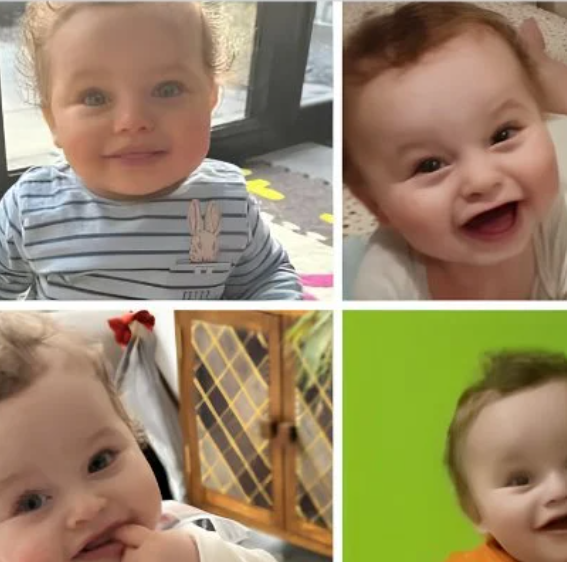
Amidst the legal maneuvering, the cross-examinations, and the forensic debates, it is easy to lose sight of the victim. Preston Davey was only 13 months old. He was at an age where his entire world should have been defined by safety, discovery, and the affection of those tasked with his care.
The courtroom, often a place of cold logic, has struggled to contain the emotional weight of this case. Every time the details of the post-mortem injuries are mentioned, the mood shifts from professional detachment to visible unease. The public galleries have remained packed, a testament to the community’s collective horror at the circumstances of Preston’s final months.
The trial is not merely an investigation into a criminal act; it is a reckoning with a failure of guardianship. Whether or not the defendants are found guilty, the narrative that has emerged is one of total systematic collapse—a failure of the home, the primary unit of protection, to fulfill its most basic mandate.
The Road Ahead
As the trial moves into its next phase, the focus will likely shift back to the evidence against Jamie Varley. With McGowan-Fazakerley’s dramatic pivot, the defense strategies for the two men have effectively decoupled. They are no longer a united front; they are now, in many ways, adversaries.
The testimony provided today has provided the prosecution with a powerful new angle: the argument of active deception. If Varley lied to his partner about the “bath incident,” if he hid videos that showed the child’s true condition, and if he manipulated the timeline of that fatal day, he is not just guilty of the charges—he is guilty of a comprehensive, premeditated betrayal of trust.
However, the burden remains on the jury to decide what, if anything, McGowan-Fazakerley should have seen. Did he ignore the signs? Was he too trusting? Or was he truly as blind to the tragedy as he claims?
The trial of Preston Davey is far from over, but the testimony heard today has left an indelible mark on the proceedings. It has stripped away the veneer of the “accidental” story, revealing instead a complex web of deceit, violence, and profound human failure.
In the coming weeks, the court will continue to parse the facts, the timelines, and the testimonies. But for those watching, the fundamental truth of the case has already crystallized: a young life was taken, and the answers to the “why” and the “how” are hidden somewhere in the debris of the trust that once existed between these two men.
As the court adjourned this afternoon, the silence in the room was deafening. It was a silence that spoke to the lingering, agonizing questions that remain: How could this happen? And more importantly, how could it go on for so long without someone speaking up?
For the family of Preston Davey, for the investigators, and for the jurors tasked with the heavy responsibility of delivering a verdict, the journey toward the truth has been arduous. But as today’s testimony proved, the truth, no matter how uncomfortable, has a way of surfacing—often in the most unexpected and painful ways.
The proceedings continue tomorrow, with the court expected to hear further arguments regarding the timeline of events. For now, the trial remains a somber mirror held up to society, forcing us to look at the shadows we often prefer to ignore.