
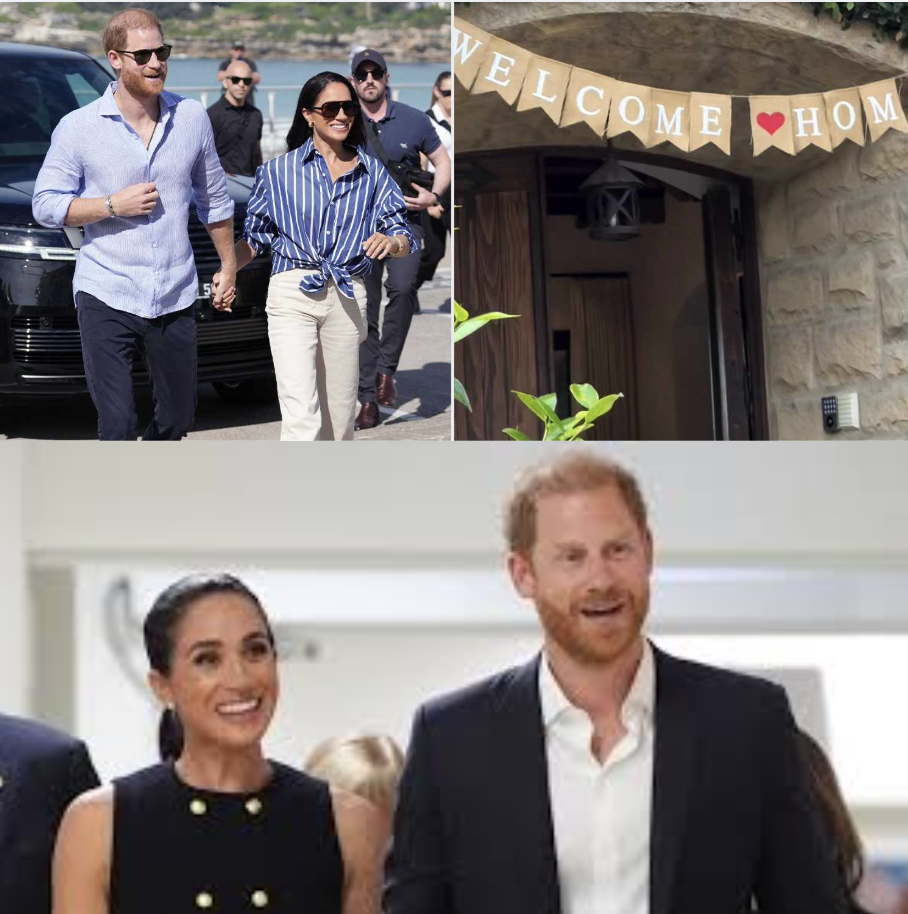
When Prince Harry and Meghan Markle arrived in Australia in 2018, the tour was widely seen as a major moment for the modern British royal family. It was their first official overseas trip as a married couple, and public interest was intense—from media coverage to crowds lining the streets in cities like Sydney and Melbourne.
Years later, however, that same tour is being reframed online through a very different lens.
Recent viral posts claim the visit ended in “embarrassment,” alleging that Australians “saw through” the couple’s appearances and gave Meghan a “brutally honest nickname” that has resurfaced and caused renewed controversy. The tone is dramatic. The engagement is high.
But the reality behind those claims is far more nuanced—and in many ways, far less sensational.
A TOUR THAT DREW MASSIVE ATTENTION
At the time, the 16-day tour was considered a significant diplomatic and cultural success. The couple attended more than 70 engagements across Australia, Fiji, Tonga, and New Zealand, including community visits, official receptions, and the high-profile Invictus Games Sydney 2018.
Crowds turned out in large numbers, particularly in Australia, where royal tours traditionally attract strong public interest. Images of the couple greeting well-wishers, meeting local leaders, and participating in events were widely broadcast across global media.
For many observers, it was a moment that reinforced the monarchy’s ability to connect with younger audiences.
WHERE THE “NICKNAME” NARRATIVE COMES FROM
The idea that Meghan was widely labeled with a harsh or “brutally honest” nickname during the tour has circulated online in various forms. However, there is no single verified, widely recognized nickname that reflects a unified public response from Australians.
Media analysts note that such claims often originate from isolated commentary—whether from individual opinion pieces, social media posts, or tabloid-style reporting—before being amplified into something that appears more widespread than it actually is.
“In reality, public opinion during the tour was mixed, as it is for most high-profile figures,” one analyst explained. “But the idea of a single nickname representing an entire country’s view is not supported by credible reporting.”
PUBLIC REACTION: COMPLEX, NOT UNIFORM
Like many global public figures, Meghan Markle’s presence during the tour drew both praise and criticism.
Supporters highlighted her confidence, communication style, and ability to engage with diverse communities. Critics, on the other hand, questioned aspects of protocol, media strategy, or presentation—common themes in coverage of royal tours.
But crucially, these reactions were not unique to Australia, nor were they overwhelmingly negative.
Surveys and mainstream reporting from the time reflected a generally positive reception overall, particularly among younger audiences and those interested in the couple’s modern approach to royal duties.
THE ROLE OF SOCIAL MEDIA—THEN AND NOW
What has changed since 2018 is not the tour itself, but how it is being discussed.
Social media platforms have made it easier for selective narratives to resurface years later, often stripped of original context. Clips, quotes, and commentary can be reframed to fit a more dramatic storyline—especially when tied to ongoing public interest in the couple.
The phrase “the internet is wild,” often included in viral posts, reflects this shift. Online discourse is rarely unified; instead, it amplifies extremes—both positive and negative.
NO EVIDENCE OF “PR PANIC”
Another claim circulating is that Meghan’s “PR team is in panic mode” due to the resurfacing of this alleged nickname.
There is no verified evidence supporting that assertion.
Public relations experts point out that high-profile figures like Meghan Markle operate within long-term media strategies, and isolated online trends—particularly those based on unverified claims—do not typically trigger the kind of internal crisis suggested in viral posts.
“PR responses are driven by real-world developments, not recycled social media narratives,” one communications strategist noted.
REPUTATION IN THE DIGITAL ERA
The resurfacing of this story highlights a broader trend: how quickly reputations can be reshaped by selective storytelling online.
In the case of Meghan Markle, her global visibility makes her a frequent subject of both admiration and criticism. Over time, individual moments from her public life are often reinterpreted, sometimes inaccurately, to fit new narratives.
Prince Harry has also spoken publicly in the past about the impact of media coverage—both traditional and digital—on their lives, particularly after stepping back from official royal roles.
WHAT THE TOUR ACTUALLY REPRESENTED
Looking back, the 2018 Australia tour remains a significant moment in the couple’s public timeline.
It marked:
- Their first major international tour as a married couple
- A high-profile platform for the Invictus Games
- A period of strong global media attention and engagement
While not without criticism—as is typical for any public figure—the tour itself was not defined by a single negative reaction or nickname.
THE BOTTOM LINE
Despite the dramatic framing of recent viral posts, there is no credible evidence that Australians collectively gave Meghan Markle a universally recognized “brutal nickname,” nor that the tour ended in widespread embarrassment or crisis.
Instead, the narrative appears to be a modern reinterpretation—fueled by selective memory, online amplification, and the enduring global fascination with Prince Harry and Meghan Markle.
A CAUTION FOR READERS
As with many viral stories, the most compelling version is not always the most accurate.
In this case, the truth is less dramatic but more grounded: a widely watched royal tour, a mix of public reactions, and a digital afterlife that continues to reshape how the story is told.
And as the conversation continues online, one thing remains clear—context matters just as much as the headline.