
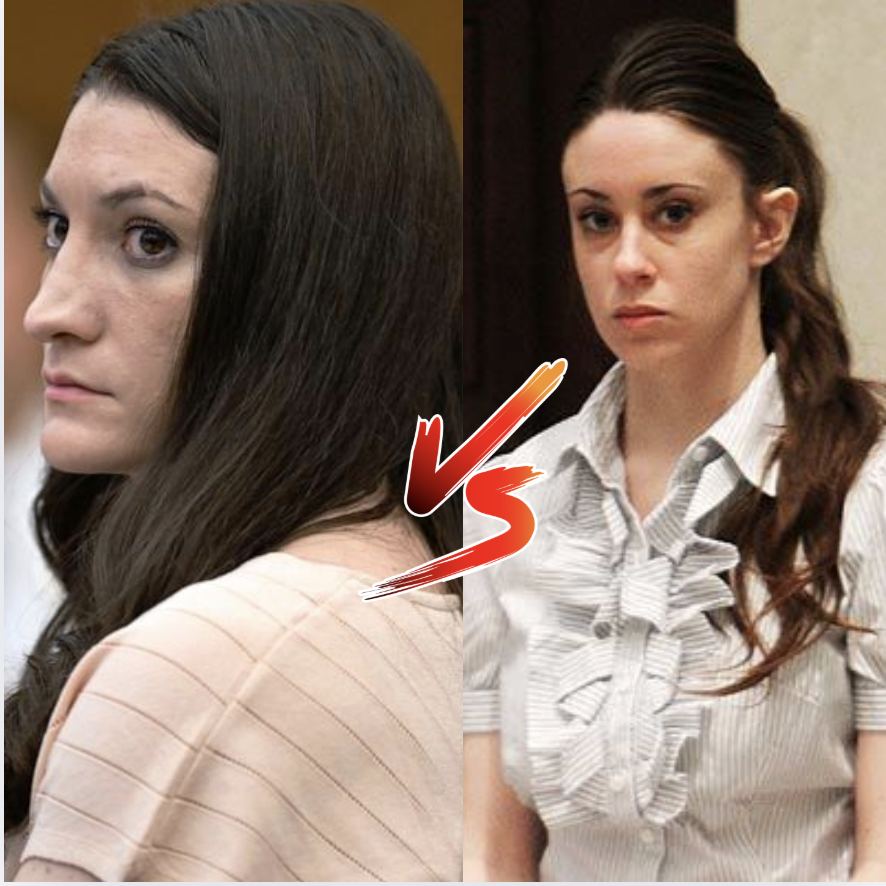
High-profile cases involving mothers accused in the deaths of their children stir profound public debate, but few legal comparisons reveal as sharp a contrast in defense strategy, forensic evidence, and public perception as those of Casey Anthony in 2011 and Lindsay Clancy. While observers on social platforms frequently compare maternal tragedies, a side-by-side legal examination demonstrates how two wildly different defense theories—and two distinct types of digital footprints—shaped their respective courtroom journeys.
Opposing Defense Strategies: Denial vs. Criminal Irresponsibility
The fundamental distinction between the two cases lies in the legal claims presented to the jury:
-
The Casey Anthony Strategy (Complete Denial & Alternative Cause): Anthony’s legal team built her defense around complete denial of guilt regarding murder. They asserted that her two-year-old daughter, Caylee, accidentally drowned in the family pool and that Anthony panicked, leading to a cover-up rather than a homicide. The defense focused on creating reasonable doubt around the cause of death and the prosecution’s lack of definitive physical evidence.
-
The Lindsay Clancy Strategy (Admitted Act, Insanity Defense): In sharp contrast, defense attorneys for Lindsay Clancy do not dispute that she took the lives of her three young children. Instead, her legal strategy relies entirely on a lack of criminal responsibility due to severe mental illness. The defense centers on documented battles with postpartum psychosis, severe depression, and overmedication.
Digital Footprints and Evidence Trails
Digital forensics played a pivotal role in establishing the timeline and mental state in both trials, yet the nature of the data retrieved paints two entirely different pictures.
Casey Anthony’s Search History
Prosecutors pointed to computer searches for terms such as “foolproof suffocation” and “chloroform” on the family computer. However, technical ambiguity over who conducted specific searches and when they occurred allowed the defense to raise sufficient doubt among jurors, contributing heavily to her eventual acquittal on murder charges.
Lindsay Clancy’s Medical & Search Logs
In Clancy’s trial, digital logs revealed extensive searches regarding psychiatric drug side effects, hallucinations, psychosis, and postpartum care. Defense attorneys use these records to illustrate a mother desperately documenting her deteriorating mental health and seeking help. Conversely, prosecutors highlight mapped driving routes and calculated timing to argue premeditation.
The Forensic Psychiatric Profile
The medical framework surrounding each defendant stands as perhaps the most stark contrast:
-
Behavioral Evaluation: In the Anthony case, state experts focused on her deceptive behavior, lack of distress, and delayed reporting of her daughter’s disappearance as indicators of consciousness of guilt.
-
Clinical History: In the Clancy proceedings, extensive clinical records show dozens of medical visits, prescriptions for multiple psychiatric medications, and voluntary admissions to mental health facilities prior to the tragedy. Expert witnesses testifying for the defense argue she was in the grip of a psychotic episode that severed her connection to reality.
The Impact on Legal Precedent
While the Anthony verdict underscored the strict burden of proof required for capital convictions relying on circumstantial evidence, the Clancy trial highlights the ongoing legal struggle to define accountability when severe maternal mental health conditions are involved. Analysts continue to examine both cases as benchmark studies in how forensic evidence, digital records, and psychiatric evaluations shape the outcome of America’s most high-stakes courtrooms.