
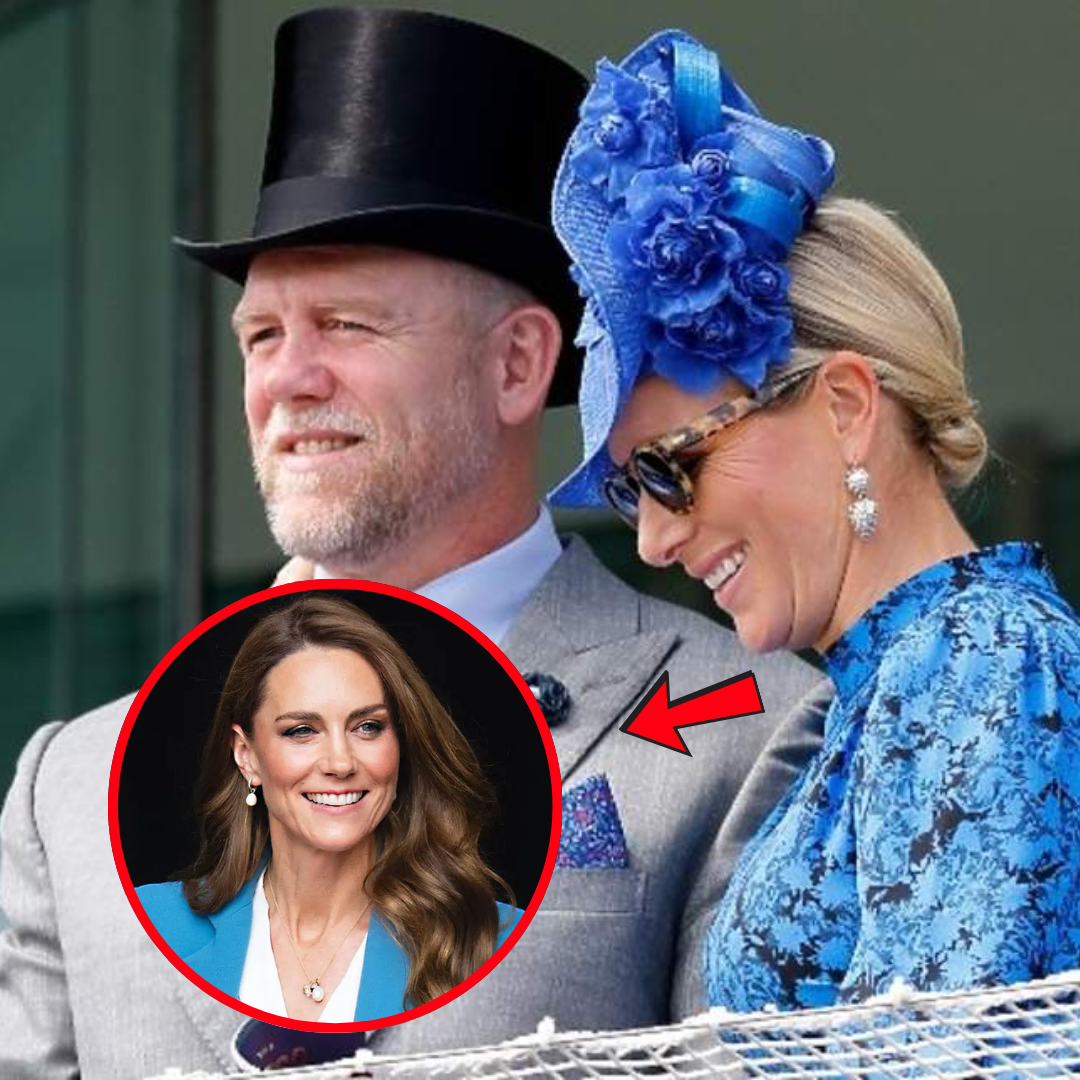
THE PHOTO THAT SET ROYAL FANS ABLIGHT: Kate Middleton’s ‘modest’ re-wear at Zara Tindall’s pre-wedding bash sparks fresh debate 15 years on
Exclusive: As a widely shared image from the 2011 party on the Royal Yacht Britannia resurfaces, fashion watchers and royal enthusiasts pore over every detail – and one choice by the then-new Duchess of Cambridge is once again the talking point
A single photograph from Zara Phillips and Mike Tindall’s pre-wedding party on the Royal Yacht Britannia has once more become the centre of feverish discussion among royal watchers. In the image, a young Kate Middleton – then the newly minted Duchess of Cambridge – stands in a striking yet understated Diane von Furstenberg dress, an outfit she had already worn just weeks earlier. What was, at the time, largely praised as an elegant and considerate choice has, in the age of endless online analysis, been pulled apart thread by thread.
The debate is classic royal fashion territory: Was Kate deliberately playing it safe so as not to upstage the bride-to-be? Was the re-wear a quiet statement of thrift and good manners? Or does the photograph capture something more revealing about her early approach to royal life, her relationship with the wider family, and the intense scrutiny that has followed her every public appearance ever since?
A glittering night on the Britannia
The date was 29 July 2011. Just three months after their own spectacular wedding, Prince William and Kate joined members of the Royal Family and a host of friends and sports stars aboard the former Royal Yacht Britannia, permanently moored in Leith, Edinburgh. The occasion was a pre-wedding celebration for Zara Phillips, the Queen’s eldest granddaughter, and England rugby player Mike Tindall, who would marry the following day in a more low-key ceremony at Canongate Kirk.
The atmosphere was relaxed by royal standards – a far cry from the formality of Westminster Abbey. Guests mingled on the decks of the iconic vessel that had once carried the late Queen on countless state visits. Photographs from the evening show smiles, easy conversation and a sense of genuine family occasion. Yet it is one particular frame featuring Kate that continues to draw the eye.
In the picture, Kate appears in a silk Diane von Furstenberg ‘Maja’ dress in a vivid green (often misremembered or described in later discussions as blue). The dress featured a flattering V-neck, long sleeves and a fitted bodice that skated the line between glamorous and appropriately restrained. She paired it with nude heels and simple jewellery – a look that was polished without being flashy.
Crucially, it was not a new purchase. Kate had worn the same dress only a short time earlier during a trip to Los Angeles. The decision to re-wear it so soon after her wedding, at a high-profile family event, was immediately noted by the fashion press.
The ‘modest and elegant’ verdict – and the questions that followed
At the time, most coverage was complimentary. Commentators praised Kate for choosing not to debut a brand-new, attention-grabbing gown that might have drawn focus away from Zara. In royal circles, where the unwritten rules of dress are scrutinised as closely as any protocol, such thoughtfulness is often rewarded. One fashion writer described the choice as “perfectly judged – glamorous enough for the occasion, respectful enough for the bride.”
Yet even in 2011 there were undercurrents of analysis. Why re-wear a dress so quickly? Was it a signal of the Duchess’s emerging preference for repeating outfits, a habit that would later become one of her most admired traits? Or was it simply practical – a busy young woman with a sudden explosion of public engagements reaching for something she already knew worked?
Fast-forward to today, and the same photograph is being examined with the full force of modern royal fandom. Online, every angle is debated. The colour. The fit. The way Kate stands in relation to other guests. The expression on her face. Some see quiet confidence. Others claim to detect a carefully calibrated performance of royal duty. A few go further, reading into the image questions about early dynamics within the family or the pressure Kate felt as the newest high-profile member of the Firm.
Kate’s early style under the microscope
The Britannia party came at a pivotal moment. Kate had only recently stepped into full-time royal life. The world’s eyes were still adjusting to her as a Duchess rather than a long-term girlfriend. Every outfit was dissected for clues about her personality, her budget, and her understanding of the unwritten dress codes that govern royal appearances.
Her decision to recycle the DVF dress fitted a pattern that would define much of her public image: high-street mixes with designer pieces, frequent re-wears, and a preference for looks that photographed well without dominating. In an era before “sustainable fashion” became a mainstream talking point, Kate was already practising a form of it – and receiving both praise and microscopic criticism for the same choices.
Royal fashion experts have long noted that the green Maja dress was an intelligent selection. The colour was fresh and summery, suitable for an evening on the water. The cut was feminine without being revealing. And by choosing a piece she had already been seen in, Kate avoided any suggestion that she was trying to compete with Zara’s own pre-wedding wardrobe.
Still, the modern online conversation rarely stops at practicality. Some fans insist the photograph shows Kate already mastering the art of strategic dressing – looking every inch the future queen-in-waiting while carefully ceding the spotlight. Others argue that the intense focus on her outfit, even at someone else’s party, illustrates the impossible standards she has always faced.
Zara’s night – and the supporting cast
It is worth remembering that the evening belonged to Zara and Mike. Zara, known for her no-nonsense personality and equestrian achievements, hosted a celebration that reflected her own style: warm, sporty-tinged, and free of excessive pomp. Mike Tindall, the larger-than-life rugby player, brought his own circle of friends, creating a mix of royalty, sports stars and long-time acquaintances.
Photographs from the night show a relaxed Prince William, other senior royals, and a general atmosphere of genuine enjoyment. Kate’s presence was notable but not dominant – exactly as many believe she intended. In that sense, the dress succeeded in its apparent purpose.
Yet the fact that a supporting guest’s outfit continues to generate discussion more than a decade later says as much about public fascination with Kate as it does about the garment itself. From the moment she became engaged, her clothing choices have been treated as texts to be decoded. A re-worn designer dress at a family party becomes evidence in larger arguments about duty, image management, and the unique pressures of royal life.
Why this photograph still matters
In the years since 2011, Kate’s fashion choices have evolved while remaining consistent in certain principles. She has popularised re-wearing as a royal virtue. She has balanced high fashion with accessible pieces. And she has repeatedly demonstrated an understanding of when to shine and when to step back.
The Britannia photograph captures an early example of that instinct. Whether one views it as simple good manners, clever strategy, or something more layered depends largely on the eye of the beholder. What is undeniable is the enduring power of a single image to fuel speculation, nostalgia, and debate.
Royal fans will continue to zoom in, crop, and comment. Fashion historians will place the green DVF dress in the longer arc of Kate’s style evolution. And the rest of us will be reminded, once again, that in the world of the British Royal Family, even a carefully chosen re-wear at someone else’s pre-wedding party can become the centre of attention.
The yacht has long been retired. The marriage of Zara and Mike has produced a lively family of its own. Kate has become the Princess of Wales and a central figure in the monarchy’s future. Yet that one photograph from a summer evening in Edinburgh in 2011 still has the power to stop the scroll – and start another round of questions about what, exactly, we think we see when we look at her.