
The Maldives is often marketed as a utopia—a sprawling mosaic of coral atolls, crystalline lagoons, and sun-drenched horizons. But for the small, specialized community of technical divers and local authorities, that image of paradise has been irrevocably shattered.
Four months ago, the world watched in horror as five Italian tourists were lost in a labyrinthine cave system, an underwater tomb hidden beneath the surface of the Indian Ocean. The official narrative—a tragic case of equipment failure and disorientation—was accepted by many as the final word.
This week, that narrative suffered a catastrophic collapse.
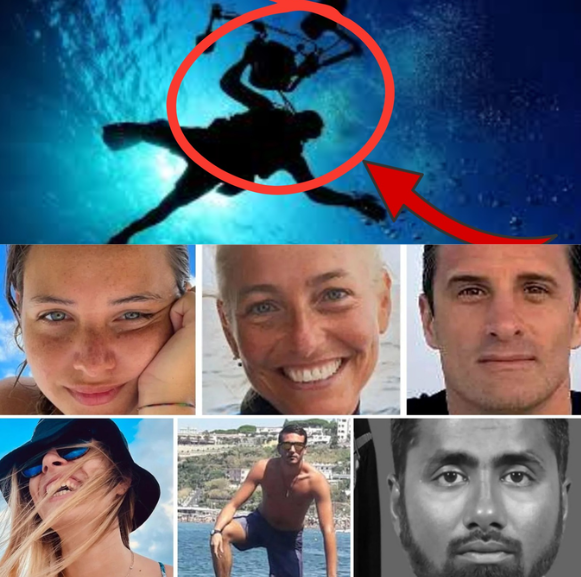
During a secondary, deep-tissue survey conducted by international search-and-recovery specialists, a sixth body was discovered deep within the cave’s inner sanctum. This individual, whose remains were found tucked away in a narrow crevice far from the primary recovery zone, is believed to be the “mysterious missing man”—a figure who, according to local sources, was never part of the original Italian party, yet whose presence now threatens to unravel the official account of the disaster.
The Anatomy of a Dead Zone
The cave system, known locally as “The Black Lung,” is not a destination for the casual vacationer. It is a treacherous, vertical subterranean system that descends into the dark, pressurized depths of the atoll. It is a place where oxygen is a luxury, not a guarantee.
In the aftermath of the initial tragedy, when the five Italian divers were confirmed dead, the investigation was rapid and, some now argue, perfunctory. The focus was on “misadventure”—a catch-all term for when the sea claims the unprepared. The site was mapped, the bodies were recovered, and the entrance was sealed.
But the discovery of the sixth victim changes everything.
Forensic teams brought to the site this week were shocked to find that the sixth body had been moved—or rather, sequestered. Unlike the Italian divers, who were found in the main cavern, this individual was discovered in a remote, unexplored tertiary tunnel, nearly three hundred meters away from the primary site. The body, heavily decayed but still wearing a localized, outdated diving rig, suggests an timeline of death that predates the Italian tragedy by months, if not years.
The Ghost in the Machine
Who is this man?
In the corridors of the local police headquarters in Malé, the air is thick with a different kind of tension. Official statements have been sparse, bordering on evasive. “We are in the process of identifying the remains,” a spokesperson stated on Tuesday. “Until we have definitive forensic evidence, we cannot speculate on the identity or the circumstances of the individual’s presence in the cave.”
However, sources close to the recovery operation tell a different story. According to one lead diver involved in the current salvage effort, the equipment found on the body is inconsistent with modern, commercial-grade gear. “It’s a patchwork system,” the diver explained, requesting anonymity due to the sensitivity of the ongoing investigation. “It looks like someone who knew the cave, someone who was trying to hide, or someone who didn’t want to be found. This wasn’t a tourist. This was someone who was operating outside the system.”
The implications are chilling. If a sixth person died in that cave, and their death went unreported, it implies a systematic failure of oversight that has persisted for years.
A Breach of Protocol
The “Black Lung” cave, while not officially mapped by the government, has long been an open secret among local dive guides. It is a “grey market” destination, where cash transactions often replace formal safety briefings and equipment logs.
For years, the authorities have turned a blind eye to these illicit excursions, driven by the lucrative nature of dive tourism. But the existence of an “unaccounted” diver suggests that the industry’s dark underbelly is far more expansive than previously imagined.
Was this individual a rogue guide? A victim of an illicit, unsanctioned dive? Or was this a more sinister event?
The recovery team noted that the body was positioned in a way that suggests an attempt at shelter. This was not a panicked drowning; it was a slow, deliberate retreat into the darkness. The question now is not just who he was, but why he was there, and who—or what—he was hiding from.
The Systemic Reckoning
The Italian families, still grieving the loss of their loved ones, have been briefed on the new discovery. Their reaction has been one of renewed agony. For them, the narrative of a “tragic accident” provided a shred of closure. The revelation that the site of their loved ones’ death was already a graveyard suggests a negligence that the authorities are now struggling to contain.
“We were told the area was dangerous but well-known,” a spokesperson for the families said. “We were never told it was a place where people go to vanish.”
The Maldives’ Ministry of Tourism is now facing calls for a complete moratorium on all cave diving in the atoll, along with a full, independent inquiry into the local diving industry’s safety practices. The government’s reluctance to open a wider probe is being met with mounting pressure from international diplomatic channels, particularly from the Italian government, which is demanding full transparency.
The Road Ahead
As the remains are transported to the capital for forensic examination, the broader question remains: how deep does the rot go?
The discovery of the sixth diver has acted as a catalyst, tearing away the veneer of the Maldivian paradise. It has forced the world to look beyond the turquoise water and into the suffocating, silent dark of the undersea caverns where secrets are kept and lives are lost in the shadows.
If this man was a victim of an industry that prioritized profit over human life, the “Black Lung” will not be the only tomb that needs to be unearthed. The investigation is now moving toward a wider search of all such “unofficial” dive sites across the archipelago.
For the people of the Maldives, the discovery is a national reckoning. For the families of the victims, it is a haunting reminder that in the deep, the truth has a way of rising to the surface—no matter how hard it is pushed down.