
PART 1
“You don’t even have money for a lawyer.”
My father said it with a smile.
Not a loud smile. Not cruel enough for the judge to rebuke him. Just that polished, practiced smirk he had worn my entire life whenever he wanted people to know he believed he had already won.
A few people in the Portsmouth County courtroom laughed under their breath.
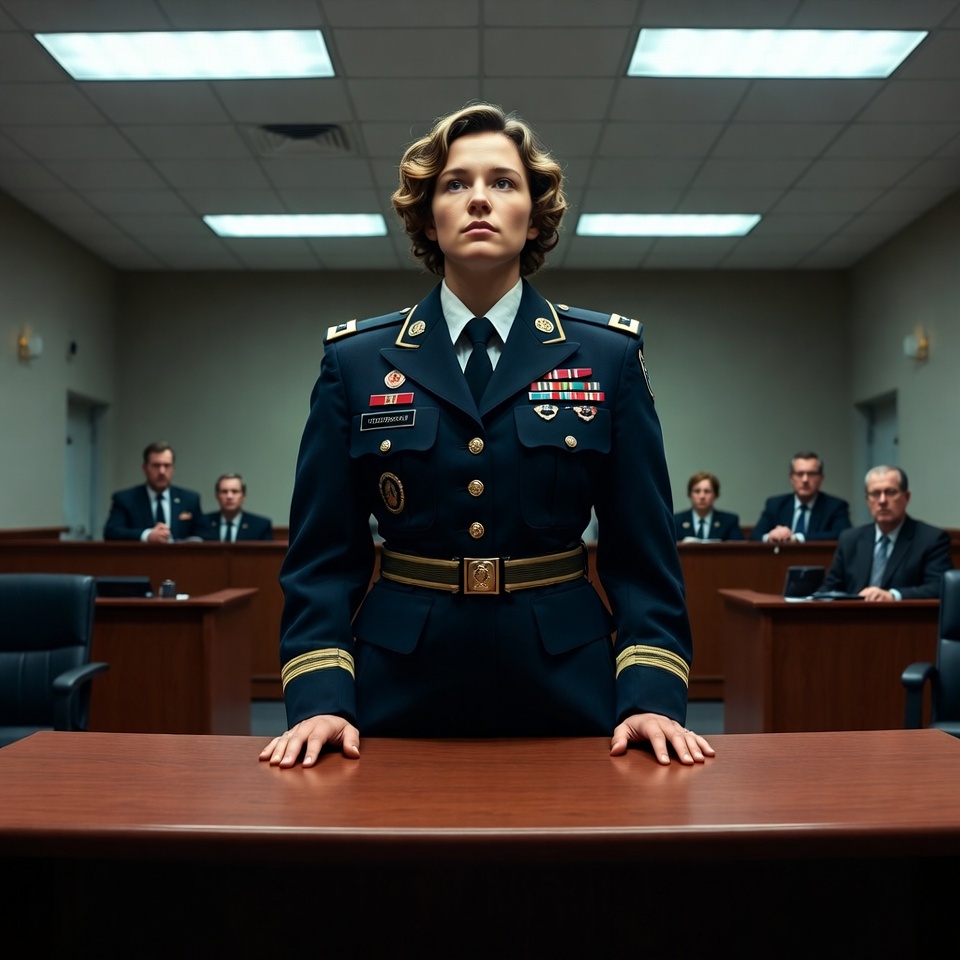
I stood alone at the defense table in my Army service uniform, hands resting lightly on the wood, spine straight, eyes forward. My name is Captain Emily Carter, and by that morning I had learned something strange about humiliation: it hurts differently when it comes from the man who once taught you how to tie your shoes.
Across the aisle, my father, Richard Carter, sat beside his expensive attorney, Malcolm Price, looking as comfortable as if he were waiting for lunch at the country club. His silver cuff links flashed beneath the cold overhead lights. His suit probably cost more than my monthly mortgage payment. Mine was pressed by my own hands at 4:30 that morning.
He wasn’t suing me for cash. That would have been too simple.
He was suing for control.
Control of the Carter land. Control of my grandfather’s old house. Control of the trust that had been built long before my father learned to smile for cameras and lie without blinking. He claimed I had abandoned the family. He claimed I had been absent, irresponsible, and unworthy of any authority over the Carter estate.
He wanted the court to erase me.
The judge, Samuel Whitaker, looked over his glasses at me. “Ms. Carter, you understand you have the right to representation?”
“Yes, Your Honor.”
“And you are choosing to proceed alone?”
“Yes, sir.”
My father chuckled.
Judge Whitaker held my gaze for one long second. His expression did not soften, but something in his eyes shifted. Recognition, maybe. Or memory.
Then he said, evenly, “For the record, she won’t be needing one.”
That was when my father’s attorney stopped moving.
His hand froze halfway inside a folder. His eyes flicked to the judge, then to me, then back to the file on his table. My father barely noticed. He leaned back, still smiling, still certain that the room belonged to him.
My father had always trusted appearances.
A trimmed lawn. A polished car. A firm handshake. A good seat in church. He cared about what people could repeat about him in public without lowering their voices.
When I was twelve, I brought home a regional science award. He glanced at it once, then asked if my brother had heard from the baseball coach.
May you like

When I was twenty-one, I told him I was enlisting. He didn’t ask if I was afraid. He didn’t say he was proud. He said, “People talk.”
Not, I’ll miss you.
Not, come home safe.
Just, “People talk.”
So I left.
I served. I trained. I deployed. I learned to sleep through artillery and wake up from silence. I learned how to fold grief into the corners of a footlocker. I learned that some families keep the door unlocked not because you are welcome, but because they want witnesses when you stop coming through it.
Two weeks before the hearing, the summons arrived while I was repairing a broken fence panel in my backyard. My old shepherd, Knox, had pushed through it during a storm. My knee ached from an injury I never talked about unless a doctor forced me to. The sky was low and gray, the kind of gray that makes even familiar roads look accused.
I opened the envelope at my kitchen table.
The words were cold.
Absence. Irresponsibility. Conduct unbecoming. Damage to the family name.
My father had finally turned his disappointment into paperwork.
For one hour, I stared at two lawyers’ phone numbers on a yellow legal pad. Then I crossed them out.
Because this was not a misunderstanding.
It was a pattern.
And I was tired of paying strangers to translate a truth I had already survived.
Instead, I opened the old footlocker at the end of my bed. Inside were medals, orders, tax receipts, bank statements, property records, letters from my grandfather, and one small brass compass he had given me when I was nine.
“North doesn’t care who’s popular,” Grandpa Carter had told me. “It just stays true.”
Now that compass sat in the worn leather folder beside years of evidence my father had never imagined I kept.
In court, Malcolm Price began with a voice like polished marble.
He spoke of legacy. Stewardship. Community respect. He made my distance sound like betrayal and my service sound like an excuse. Then my father stood.
“She walked away,” he said.
No anger.
Just certainty.
That hurt worse.
Judge Whitaker turned to me. “Ms. Carter?”
I opened the leather folder.
The clerk carried my documents to the bench. The judge began reading. Slowly. Page by page.
“These tax payments were made consistently,” he said.
“Yes, Your Honor.”
“They originated from an account under your name?”
“Yes, sir.”
My father laughed once. “Anyone can send money. That doesn’t mean she was present.”
The judge did not look up. “Mr. Carter, you will wait.”
The room went quiet.
Page after page, the truth unfolded without drama. Property taxes. Repairs. Insurance payments. Medical expenses for my grandmother before she died. Maintenance invoices for land my father claimed I had abandoned. Years of responsibility done without applause.
Finally, the judge asked, “Why did you continue paying?”
I looked straight ahead. “Because it mattered to my grandfather. And because no one else was doing it.”
Then, without turning toward my father, I added, “You never asked.”
For the first time that morning, his smile weakened.
Then Judge Whitaker reached for a second file.
It was thinner.
Marked with a red tab.
Malcolm Price sat up so fast his chair scraped the floor.
“Your Honor,” he said carefully, “if there are additional documents—”
“There are,” the judge replied. “And they are relevant.”
He opened the file, looked down, then raised his eyes toward my father.
“Mr. Carter,” he said, “are you familiar with your daughter’s service record?”
The courtroom changed.
Not loudly.
Not all at once.
But like a storm had entered through a crack beneath the door.
PART 2
My father blinked.
It was small. Almost nothing. But I had spent my childhood studying his face the way other children studied weather. I knew every version of him. Angry. Charming. Proud. Disappointed. Performing.
This was different.
This was uncertainty.
“I know enough,” he said.
Judge Whitaker leaned back. “Do you?”
Malcolm Price shifted beside him. “Your Honor, with respect, Ms. Carter’s military service is admirable, but this matter concerns estate stewardship.”
“It does,” the judge said. “That is why I am asking.”
The judge turned a page.
“Captain Emily Carter served two tours overseas. Commendation for logistics under hostile conditions. Injury during convoy evacuation. Formal recognition for preserving classified transport records during an attack.”
A murmur moved through the courtroom.
My father’s jaw tightened.
I kept my face still.
I had not brought my service record. I had not asked anyone to discuss it. I hated the way people’s eyes changed when they learned about medals, as if bravery were only real when stamped by an institution.
But the judge kept reading.
“Additionally, Captain Carter was appointed by her grandfather, Thomas Carter, as secondary executor of the family trust in a sealed military-safe declaration dated thirteen years ago.”
My father stood halfway. “That’s impossible.”
The gavel struck once.
“Sit down, Mr. Carter.”
He sat.
But now the color had begun to drain from his face.
Judge Whitaker removed a document from the red-tabbed file. “This declaration was filed under restricted custody because Thomas Carter believed, and I quote only in summary, that certain family members might attempt to pressure or manipulate the estate after his death.”
My father whispered, “No.”
I heard it.
So did his attorney.
Judge Whitaker continued. “The declaration names Emily Carter as the controlling trustee if evidence emerges that Richard Carter misrepresented estate activity, withheld financial information, or attempted to remove a beneficiary through false claims.”
Malcolm Price slowly closed his folder.
That was when I understood.
He hadn’t known.
My father had lied to his own lawyer.
Judge Whitaker looked at him. “Mr. Carter, this petition accuses your daughter of abandoning the property. Yet records show she paid taxes, maintenance, and insurance while you drew rental income from two Carter-owned parcels without reporting it to the trust.”
The courtroom became utterly still.
My father’s lips parted.
For years, he had made silence his weapon.
Now silence turned against him.
“That is not accurate,” he said.
The judge slid one document forward. “Bank records say otherwise.”
Malcolm Price turned sharply toward my father. “Richard?”
My father ignored him.
His eyes locked on me, and for a second, I saw the man from my childhood kitchen table. The man who could turn any room cold with one look. The man who made apology feel like weakness and obedience feel like love.
“You did this,” he said.
I finally looked at him.
“No,” I said. “You did.”
His hand slammed against the table.
A woman gasped behind me.
“You ungrateful little—”
“Enough,” the judge thundered.
The sound cracked through the room.
But my father was unraveling now. His mask had split, and all the ugly things underneath were pushing through.
“You disappeared!” he shouted. “You ran off in that uniform and left me to carry everything!”
I felt heat rise behind my eyes, but I did not let it fall.
“I left,” I said, “because you made staying feel like begging.”
His face twisted. “Your grandfather filled your head with nonsense.”
“My grandfather trusted me.”
“He pitied you.”
That one hit.
For half a second, the courtroom blurred.
Then Judge Whitaker spoke, quieter than before.
“Mr. Carter, I would advise you to stop speaking.”
But my father laughed. It was not polished now. It was raw and ugly.
“You think she’s some hero?” he said, sweeping one hand toward the room. “She couldn’t even come home when her own grandmother was dying.”
My breath stopped.
That was the lie I had feared most.
He knew where to cut.
He always had.
The judge looked at me. “Captain Carter?”
My fingers closed around the brass compass in my pocket.
Then I opened the final section of my folder.
“There are hospital records,” I said. “Permission logs. Video call confirmations. Payment receipts. I was deployed when my grandmother declined. I requested emergency leave twice. Both requests were delayed because the family contact listed—my father—reported that my presence was not necessary.”
My father went still.
I handed the papers to the clerk.
The judge read them.
His face darkened.
Malcolm Price lowered his head.
I continued, voice steady, though every word scraped something open inside me. “My grandmother asked for me. I called every night when communications were available. She died while I was in transit. My father told the family I chose not to come.”
Someone in the gallery whispered, “Oh my God.”
My father stared at me.
For the first time, he did not look angry.
He looked afraid.
Judge Whitaker read the final page, then slowly removed his glasses.
“Mr. Carter,” he said, “did you inform military personnel that Captain Carter’s presence was unnecessary during Martha Carter’s final illness?”
My father swallowed. “It was complicated.”
“Yes or no.”
“She was overseas.”
“Yes or no.”
His voice cracked. “Yes.”
The word landed like a body hitting water.
I thought I would feel victory.
I felt nothing.
Only a deep, hollow ache.
The judge leaned forward. “This court finds that the petitioner has materially misrepresented the facts. Furthermore, given the sealed declaration and supporting financial records, temporary authority over the Carter trust is transferred immediately to Captain Emily Carter pending full audit.”
My father gripped the edge of the table.
“No.”
The judge continued. “Mr. Carter is ordered to surrender all related financial documents within seventy-two hours.”
“No,” my father said again.
This time it was not defiance.
It was panic.
And then something happened that no one expected.
The back doors of the courtroom opened.
An elderly woman stepped inside with a cane in one hand and a manila envelope in the other.
My father turned.
His face went white.
I knew her instantly, though I had not seen her in years.
Evelyn Moore.
My grandfather’s former housekeeper.
The woman my father claimed had moved away before Grandpa died.
The woman who had mailed me birthday cards in secret until I turned eighteen.
She walked slowly down the aisle.
Judge Whitaker looked startled. “Mrs. Moore?”
She nodded. “Forgive me, Your Honor. I was told this hearing was today.”
My father whispered, “Evelyn, don’t.”
She stopped beside my table and looked at me with eyes full of sorrow.
“Emily,” she said softly, “your grandfather wanted you to have this if your father ever took you to court.”
She placed the envelope in my hands.
My name was written across it in my grandfather’s handwriting.
My knees nearly failed.
The judge allowed it into review after Malcolm Price, now pale and furious, raised no objection.
Inside was a letter.
And a key.
The letter began with five words that broke me more completely than any accusation my father had ever thrown.
My brave girl, forgive me.
PART 3
Judge Whitaker read the letter privately first.
Then he looked at me. “Captain Carter, this appears to concern you directly. You may read it aloud, or I may summarize it for the record.”
My hands trembled.
But I had spent too long letting men summarize my life.
“I’ll read it,” I said.
The paper was old, folded carefully, the ink slightly faded but unmistakably my grandfather’s.
My voice shook at first.
Then steadied.
“My brave girl, forgive me. If this letter is being opened, then Richard has done what I feared he would do. I should have protected you sooner. I should have told you the truth before I died.”
The courtroom disappeared around me.
There was only the page.
“Your father did not resent you because you left. He resented you because you were never meant to be under his control.”
My father closed his eyes.
I kept reading.
“When your mother died, she left a private inheritance in your name. Richard convinced the family that the funds were needed to preserve the estate. They were not. He used them to cover debts, investments, and appearances. I discovered the truth too late.”
A sharp sound came from the gallery.
I did not look up.
“The Carter land was never meant to pass through Richard alone. Your mother purchased the north parcel before her death. She placed it in trust for you. Richard has lived for years on land that legally, morally, and spiritually belonged to the daughter he shamed for leaving.”
My father stood.
“No,” he said hoarsely.
The gavel struck.
“Sit down.”
But he didn’t.
His face had collapsed into something I had never seen before. Not pride. Not anger. Ruin.
“I did what I had to do,” he said. “You don’t understand what this family cost to maintain.”
I lowered the letter.
“You stole from Mom?”
He looked at me then.
Not at the judge. Not at the gallery.
At me.
For one second, I saw the answer before he said anything.
He had.
He had stolen from a dead woman and punished her daughter for surviving it.
“I kept us respected,” he said.
“No,” I whispered. “You kept yourself admired.”
Evelyn Moore’s voice cut through the silence.
“There’s more.”
Everyone turned.
She pointed to the key in my hand. “That opens the old storm cellar under the north house.”
My father lunged forward.
Two deputies moved instantly, blocking him.
“Don’t,” he snapped. “That has nothing to do with this.”
Judge Whitaker’s eyes narrowed. “Mr. Carter, I strongly suggest you control yourself.”
But Evelyn was already speaking.
“Thomas kept records there. Real records. He said if Richard ever dragged Emily into court, the truth had to come out in public, where it couldn’t be buried again.”
My father’s attorney stood slowly.
“Your Honor,” Malcolm Price said, voice cold now, “I request to withdraw from representing Mr. Carter pending review of possible fraud.”
My father turned on him. “Coward.”
“No,” Price said. “I am an attorney. Not an accomplice.”
The room erupted in whispers.
Judge Whitaker called for order, then issued instructions with terrifying calm. The trust transfer would stand. The audit would begin immediately. The court would refer potential financial misconduct for investigation.
My father stood motionless as his world, built over decades of charm and theft, began collapsing in legal language.
But the true ending did not happen in court.
It happened three days later.
The north house sat at the edge of Carter land, half swallowed by weeds and pine shadow. I had not been there since I was seventeen. Knox came with me, limping slightly beside my truck. Evelyn stood near the porch, wrapped in a gray coat.
The storm cellar door was beneath warped boards behind the house.
The key fit.
Inside, the air smelled like damp stone, rust, and old secrets.
We found metal boxes.
Records.
Photographs.
My mother’s journals.
And one sealed cassette tape labeled in her handwriting:
For Emily, when she is ready.
I played it that night at my kitchen table.
My mother’s voice filled the room.
Soft. Warm. Alive.
“Emily, sweetheart, if you are hearing this, I need you to know something. Your father is not the man he pretends to be. But he is also not the beginning of your story.”
I covered my mouth.
The tape crackled.
“There is a reason your grandfather protected you. There is a reason I bought the north parcel in your name. I was planning to leave Richard. I was planning to take you with me.”
My breath came apart.
Then came the sentence that changed everything.
“Richard is not your biological father.”
The room tilted.
Knox lifted his head.
My mother continued, voice trembling.
“Your father in blood was a soldier named Daniel Reeves. He died before you were born, saving two men in a training accident. Richard knew. He married me anyway, but he never forgave you for being proof that I had loved someone before him.”
I sat frozen.
All my life, I had wondered why my father’s love felt like a locked door.
Now I knew.
It had never been mine to open.
The final papers in the metal box confirmed it. Letters. Photos. A folded flag receipt. A birth certificate amendment never filed because my mother died before she could finish the process.
Daniel Reeves had no family left.
Except me.
The investigation into Richard Carter moved quickly after that. Fraud. Misappropriation. Perjury. Obstruction. Every polished piece of his life had fingerprints underneath.
But I did not go to every hearing.
I had spent enough of my life standing in rooms where he decided what I was worth.
Months later, I returned to the north parcel at sunrise. The grass was wet. The old house still needed repairs. Knox stood beside me while workers unloaded lumber from a truck.
Evelyn came too, carrying coffee.
“What will you do with it?” she asked.
I looked at the land my mother had bought for freedom, the land my grandfather had guarded with silence, the land my father had tried to steal with shame.
Then I looked at the brass compass in my palm.
“I’m turning it into a retreat,” I said. “For veterans coming home with nowhere quiet to land.”
Evelyn smiled through tears. “Your grandfather would like that.”
I thought of Judge Whitaker’s words.
She won’t be needing one.
At the time, everyone thought he meant I did not need a lawyer.
But standing there, beneath the pale gold morning, I understood something deeper.
I had never needed my father’s permission.
Never needed his approval.
Never needed his name.
A week later, I received one final letter from Richard Carter. No apology. Not really. Just three pages of excuses dressed in regret.
At the bottom, he had written:
“You were never really mine.”
I stared at that sentence for a long time.
Then I took out a pen and wrote beneath it:
No. I was always my mother’s. I was always my grandfather’s. And finally, I am my own.
I folded the letter, placed it in the old footlocker, and closed the lid.
Outside, the first veterans arrived before noon.
One came with shaking hands.
One with a service dog.
One with eyes that looked exactly like mine had once looked—trained to survive, unsure how to rest.
I met them on the porch in jeans, boots, and my old field jacket. No medals. No courtroom. No smirk across the aisle.
Just open land.
Clean air.
And a door that would never be used as a weapon.
Behind me, mounted above the entrance, was a small brass compass.
North doesn’t care who’s popular.
It just stays true.