
PART 2: YOUR TURN TO HAVE SOMETHING HERE
Twenty minutes later, Mason and Tyler stood in the cereal aisle.
“Which one?”
Tyler pointed.
Mason stared at the box.
“That one?”
“Yeah.”
“It’s ninety percent sugar.”
“No, it’s not.”
Mason turned the box around.
“I can actually see the sugar from here.”
“Mom buys it.”
An unbeatable argument.
Mason put it into the cart.
Tyler smiled.
It was small.
Almost nothing.
But Mason noticed.
The next morning, Tyler walked into the kitchen.
He didn’t search the cabinets.
He knew exactly where to go.
He pulled down the cereal.
Found a bowl.
Poured too much.
Spilled some on the counter.
Mason opened his mouth to complain.
Then stopped.
For the first time since moving in, the apartment looked slightly less like Mason’s new place.
And slightly more like somewhere his son lived too.
So the cereal stayed.
Every time Tyler visited, there was a box waiting.
Over the years, other things joined it.
Tyler’s favorite peanut butter.
The hot sauce he eventually became obsessed with.
A specific frozen pizza.
Chocolate milk.
Then sports drinks.
The dinosaur pajamas disappeared.
The cereal remained.
At ten, Tyler still ate two bowls.
At eleven, one.
At twelve, occasionally.
Then almost without Mason noticing—
Tyler stopped eating it.
But Mason kept buying it.
Then Tyler’s mother received a job opportunity in another state.
They talked.
Planned.
Worked out school schedules, holidays and travel.
Mason hated the distance.
But Tyler wanted to go.
So Mason didn’t make the boy responsible for his sadness.
Tyler moved.
The visits became less frequent but longer.
Summer.
Christmas.
Spring break.
And every Sunday—
Mason still checked the cereal aisle.
One box.
Always.
Years passed.
Tyler turned fifteen.
He was taller.
His voice had changed.
His interests changed every six months.
The boy who once needed dinosaur pajamas now spent forty minutes fixing his hair before leaving the house.
One summer afternoon, Tyler arrived for a visit.
He walked into Mason’s kitchen.
Opened the pantry.
Then burst out laughing.
“Dad.”
Mason looked up from the counter.
“What?”
Tyler pulled out the colorful cereal box.
“You still buy this?”
“Apparently.”
“I haven’t eaten this stuff in years.”
Mason frowned.
“You ate it last time you were here.”
“I was twelve.”
“No.”
“Yes.”
Mason thought about it.
Three years.
He’d been replacing a box of cereal for three years that nobody actually wanted.
“Then why didn’t you tell me?”
Tyler looked at the box.
Then shrugged.
“Because I liked knowing you still bought it.”
Mason stopped.
Tyler immediately looked embarrassed.
“That’s stupid.”
“No.”
“It kind of is.”
Mason leaned against the counter.
“Explain.”
Tyler hesitated.
“You always had my stuff here.”
“Of course.”
“No, I mean even when I wasn’t here.”
Mason said nothing.
Tyler gestured toward the pantry.
“My cereal was here. My hot sauce was here. That gross peanut butter—”
“You chose that peanut butter.”
“I was nine. I had no standards.”
Mason smiled.
Tyler continued.
“It just felt like…”
He struggled for the words.
“Like you expected me to come back.”
That landed harder than Mason expected.
For years he’d thought he was buying cereal because he was afraid to let go of an old routine.
Maybe part of him was.
But Tyler had seen something different.
Every unopened box said:
There’s still a place for you here.
That night, Mason held up the cereal.
“We have a problem.”
Tyler looked over.
“What?”
“This expires in four months.”
“So?”
“Somebody has to eat it.”
“Absolutely not.”
“You created this situation.”
“I was eight.”
“Accountability matters.”
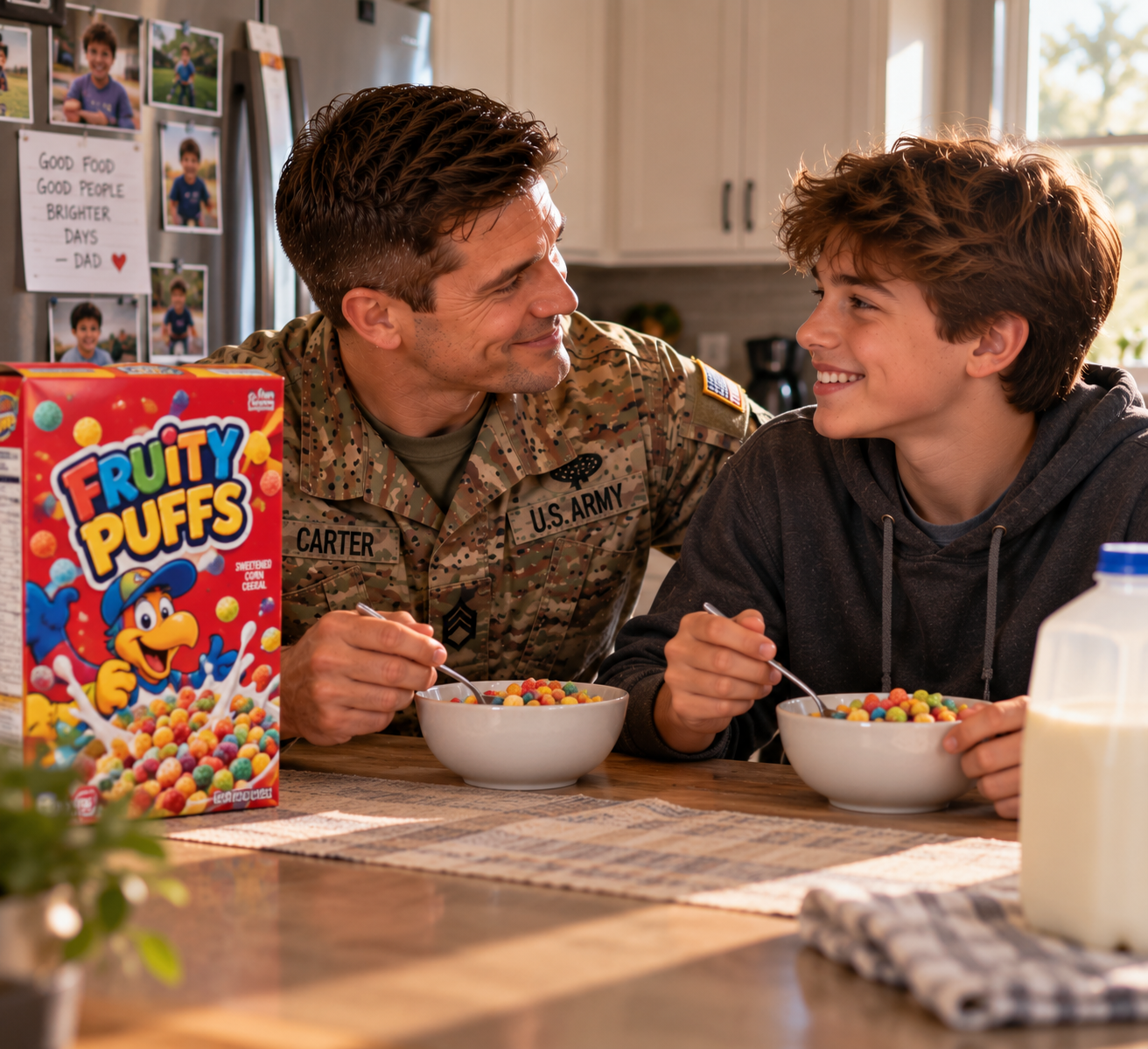
The next morning, father and son sat at the kitchen table.
Two bowls.
One box of absurdly colorful cereal.
Tyler took a bite.
His face changed immediately.
“This is terrible.”
Mason tried his.
He stared at his son.
“You ate this voluntarily?”
“I was a child.”
“This explains a lot.”
They laughed.
They finished exactly one bowl each.
Then Tyler took the box to the trash.
He stopped.
“You okay with this?”
Mason looked at it.
For a surprising moment, he wasn’t sure.
That cereal had survived almost every version of their relationship after the divorce.
Little boy.
Weekend visits.
Middle school.
Moving away.
Teenager.
Throwing it away felt like closing something.
Then Mason looked at his fifteen-year-old son.
Tyler wasn’t disappearing.
He was simply no longer eight.
“Yeah,” Mason said.
“Throw it away.”
Tyler did.
The following Sunday, Mason went grocery shopping.
He reached the cereal aisle automatically.
He stopped in front of the familiar box.
For the first time in years—
he walked past it.
It felt strange.
But also right.
He bought coffee.
Eggs.
Bread.
Things he actually ate.
Rachel noticed immediately when he unpacked the groceries.
“No cereal?”
“No cereal.”
She placed a hand dramatically over her heart.
“I’m witnessing growth.”
“Don’t make this emotional.”
“I would never.”
Several weeks later, Tyler returned to his mother’s house.
Life continued.
Then one Wednesday, Mason found a package outside his front door.
From Tyler.
He carried it inside.
Opened it.
A box of cereal.
But not Tyler’s old sugary brand.
This was the cereal Mason actually liked—the plain kind he’d occasionally eaten before work.
On top was a folded note.
Mason opened it.
Three words:
YOUR TURN, DAD.
Then underneath:
TO HAVE SOMETHING HERE.
Mason read it twice.
Rachel walked into the kitchen.
“What did you get?”
He handed her the note.
She read it.
Then looked at him.
“Oh, that’s going to destroy you.”
“I’m fine.”
“Your face says otherwise.”
“Dust.”
“In the kitchen?”
“Extremely dusty cereal.”
Rachel smiled and left him alone.
The following morning, Mason opened the new box.
He poured himself a bowl.
Then took a picture and sent it to Tyler.
This stuff is better than yours.
A reply came almost immediately.
YOU’RE OLD.
Mason typed:
And yet I have excellent cereal.
Tyler replied:
Save me some.
Mason smiled.
Then moved the box to the same spot in the pantry where Tyler’s cereal had lived for years.
Not because he needed to preserve the past.
Not because he was afraid his son wouldn’t come home.
He finally understood that homes change because the people inside them change.
Children grow.
Favorite foods disappear.
Bedrooms become guest rooms and then become bedrooms again when someone comes home for Christmas.
Parents learn to stop buying certain things.
Children begin buying things for their parents.
The rituals change.
The love underneath them doesn’t have to.
For years, Mason kept one cereal box in his pantry because he wanted his son to know:
There’s always something of yours here.
Then one day his son grew old enough to return the message.
Dad, there’s room for you in my life too.