
PART 2: ASKING ISN’T BEGGING
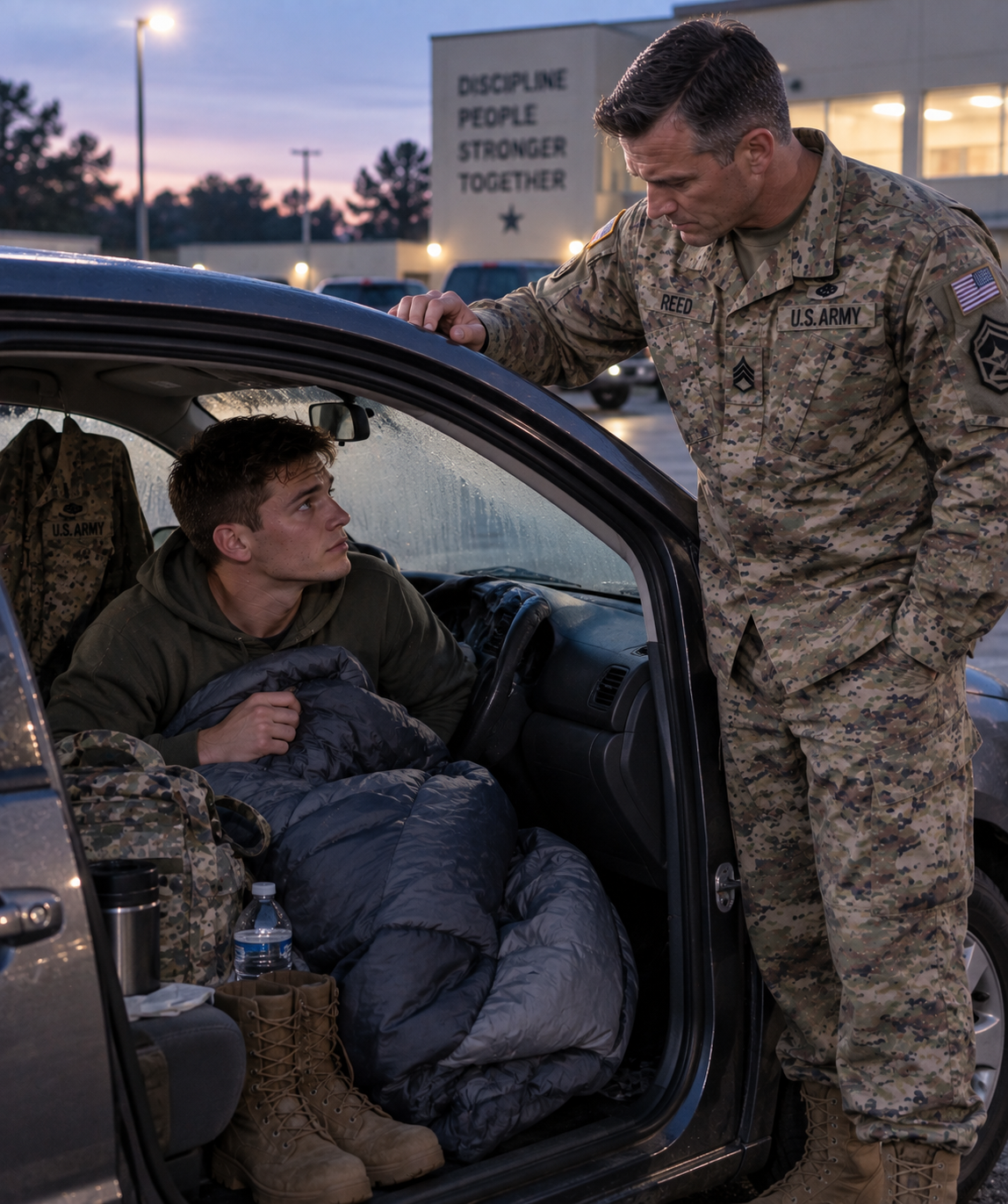
Daniel reported to Mason’s office twenty minutes later.
Fresh uniform.
Boots polished.
Hair fixed.
If Mason hadn’t seen the sleeping bag, nobody would have guessed where Daniel had woken up.
“Sit.”
Daniel sat.
Mason didn’t reach for his wallet.
He didn’t offer Daniel his spare room.
He opened his computer.
That confused Daniel.
“What are you doing?”
“Finding out what options actually apply to your situation.”
“Sergeant, I told you—”
“I heard you.”
Mason looked at him.
“You don’t want charity.”
Daniel nodded.
“Good. I’m not offering charity.”
The apartment problem had begun twenty-three days earlier.
A plumbing failure in the building caused extensive water damage.
Daniel was told to leave temporarily.
He packed a few things and checked into a motel.
After several nights, the bill began eating into money he’d carefully saved.
So he checked out.
He told himself he’d sleep in his car for one night.
Then another.
He showered at the gym.
Washed clothes at a laundromat.
Bought inexpensive meals.
Reported to duty early.
Nobody noticed.
That became a source of pride.
If nobody knew, Daniel told himself, then he was handling it.
Mason saw the flaw immediately.
“Did you contact your landlord in writing?”
“Yes.”
“Insurance?”
Daniel hesitated.
“I wasn’t sure what applied.”
“Did you ask anyone?”
“No.”
“Did you contact housing resources?”
“No.”
“Your chain of command?”
“No.”
Mason leaned back.
“So your plan was to use exactly none of the people or resources that might help you understand your options.”
Daniel’s jaw tightened.
“When you say it like that, it sounds stupid.”
“I was trying very hard to make that happen.”
Daniel almost smiled.
Mason then helped him identify the appropriate channels to contact.
Housing support.
His landlord.
Information about temporary lodging possibilities and other resources potentially available depending on his circumstances.
Daniel still had calls to make.
Documents to provide.
Questions to answer.
Nobody magically handed him an apartment.
But for the first time in three weeks, he had a plan that involved more than reclining the driver’s seat.
Before Daniel left, Mason stopped him.
“One more thing.”
“Yes, Sergeant?”
“You kept saying you didn’t want pity.”
Daniel nodded.
Mason pointed toward him.
“Asking for help isn’t the same as asking for pity.”
Daniel remained silent.
“Pity says you can’t handle your life.”
Mason continued.
“Help means you don’t have to know every answer by yourself.”
That afternoon, Daniel made the calls he’d been avoiding.
The situation took time to resolve.
But arrangements were made so he no longer had to treat his car as his bedroom while he worked through the housing issue.
Then came the part Daniel feared most.
His squad found out.
Private Lucas Bennett approached him.
Daniel prepared for a joke.
Instead Lucas held out a plastic container.
“My wife made too much pasta.”
Daniel stared at it.
“That’s the oldest lie I’ve ever heard.”
“Take the pasta.”
Daniel took it.
Another soldier offered to help move some belongings that had survived the water damage.
Daniel initially refused.
Then remembered Mason.
“Actually…”
He stopped.
The word felt strangely difficult.
“Yeah. I could use a hand Saturday.”
“Cool.”
That was it.
No pity.
No dramatic speech.
Saturday morning, four soldiers arrived.
Daniel had expected one.
“You all bored?”
Lucas shrugged.
“Extremely.”
They worked for several hours.
They made fun of Daniel’s terrible old couch.
Daniel insulted Lucas’s music.
Nobody treated him like a charity case.
By afternoon, something inside Daniel had shifted.
He realized he’d confused privacy with isolation.
There were parts of his life that belonged only to him.
But hiding a problem until exhaustion affected everything wasn’t strength.
Months later, the apartment situation was behind him.
Daniel moved into a different place.
The first night there, he sat on an actual bed and stared at his car through the window.
He laughed.
Then he sent Mason a message:
Bed > driver’s seat. Confirmed.
Mason replied:
Outstanding discovery, Private.
A year passed.
Daniel gained experience.
Then one cold morning, he arrived early.
Not 5:12.
But early enough to notice a car sitting at the far end of the lot.
Engine off.
Windows fogged.
Daniel stopped walking.
For several seconds, he simply stared.
Then he approached.
Inside was a newly assigned soldier named Private Ethan Hayes.
Ethan was awake.
Embarrassed.
“Everything okay?” Daniel asked.
“Yeah.”
Daniel almost laughed.
He knew that answer.
“You sleeping out here?”
Ethan looked away.
“Just tonight.”
Daniel didn’t interrogate him.
Didn’t announce it to anyone nearby.
He simply said:
“Okay.”
Ethan looked surprised.
Daniel continued.
“But if tonight becomes tomorrow night, talk to somebody.”
“I can handle it.”
Daniel nodded.
“I said the same thing.”
Ethan studied him.
“You?”
Daniel pointed toward another parking space.
“Three weeks.”
“No way.”
“Way.”
Ethan looked relieved for reasons he probably couldn’t explain.
Daniel didn’t offer cash.
He didn’t promise to solve the problem.
He gave Ethan the same thing Mason had given him.
A place to begin.
“Come inside,” Daniel said. “Coffee first. Then we’ll figure out who you need to talk to.”
Ethan climbed out.
As they walked toward the building, Mason Reed arrived.
He noticed Daniel.
Then Ethan.
Then the fogged car.
Mason understood immediately.
Daniel looked at him.
Neither man said anything.
Mason simply nodded.
Daniel nodded back.
Years earlier, Mason had found a young soldier sleeping inside a car because he was too ashamed to admit his housing situation had fallen apart.
Mason hadn’t rescued him.
He’d done something more useful.
He’d shown Daniel that responsibility didn’t always mean carrying everything alone.
Sometimes responsibility meant knowing when a problem had become bigger than your own solution.
And Daniel never forgot the sentence that changed how he understood asking for help:
“Asking for help isn’t the same as asking for pity.”