
THE HIGH-STAKES CRIME THRILLER ON NETFLIX EXPOSING THE DANGEROUS TRUTH BEHIND EXTREMIST GROUPS

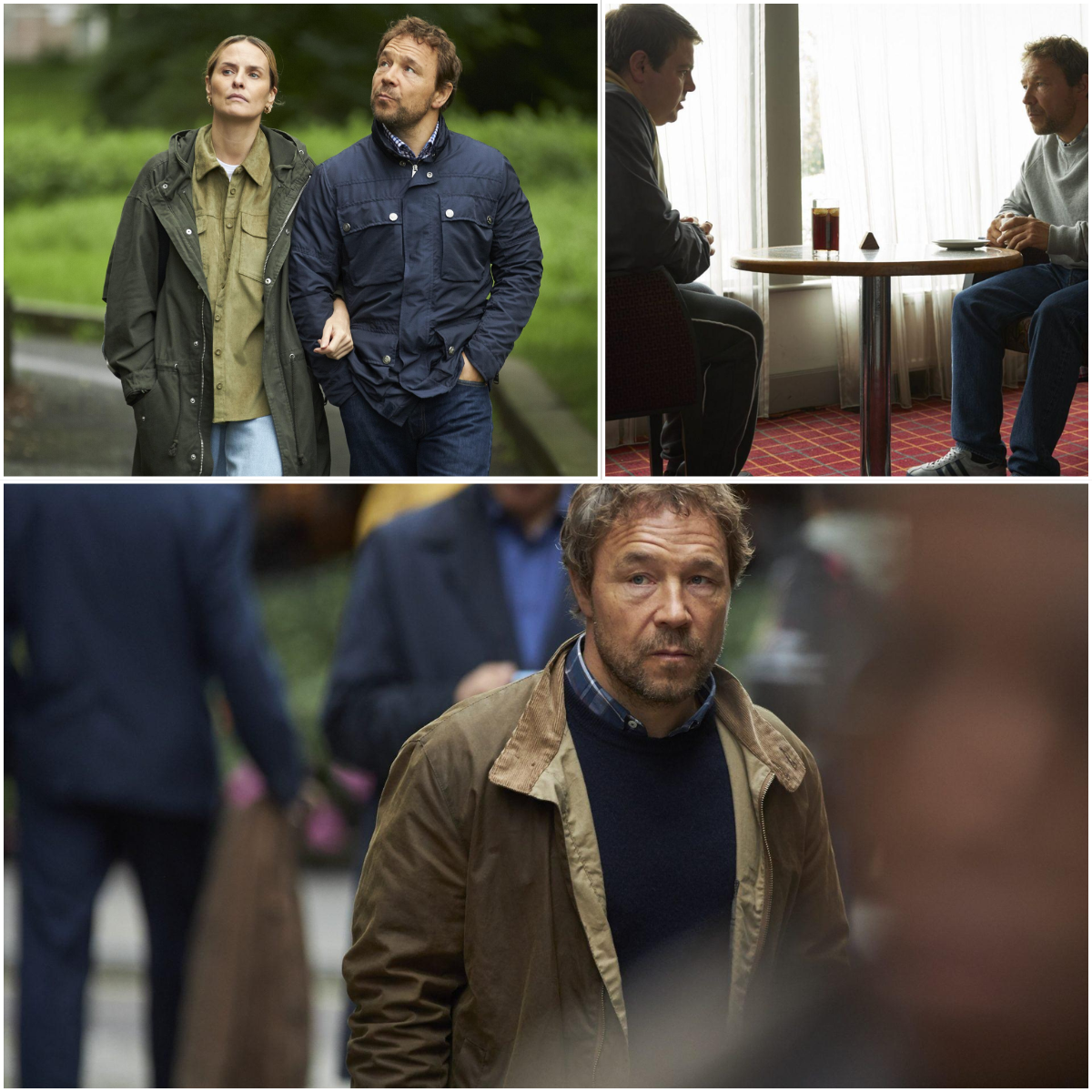
A hurried stride down the alley. Intense expressions. A high-stakes mission where one wrong move can mean fatal consequences. On Netflix, Stephen Graham and Nadine Marshall deliver gripping, critically acclaimed work as activists racing the clock to stop a devastating plot. Behind their urgent steps lies an atmosphere of constant surveillance, danger, and moral courage. In The Walk-In (2022), the raw intensity of that moment is not style. It is the method of people who know that the next conversation might be the last chance to keep someone alive.
Written by Jeff Pope and directed by Paul Andrew Williams, this ITV true-crime drama later found a second life on Netflix. It dramatizes how Matthew Collins, a former far-right activist turned investigator for the anti-racist organization Hope Not Hate, helped infiltrate National Action and expose a plot to murder Labour MP Rosie Cooper. The series is not a fantasy about lone-wolf heroics. It is a portrait of imperfect people doing dangerous work in the shadow of a real assassination. After the murder of MP Jo Cox in 2016, the threat was no longer theoretical. A banned movement had gone underground. Young men were still being recruited. Someone inside was talking about killing again.
Graham plays Collins with the coiled energy that has defined his best work. This is not a saint’s biography. Collins knows the language of the groups he now fights because he once belonged to that world. That knowledge is his advantage and his burden. He can read a room of angry young men. He can also see, with sickening clarity, how quickly talk becomes a plan. The series follows him as he hunts for a “walk-in”: an insider willing to report what the group is preparing. Without that voice, Hope Not Hate is guessing. With it, they are in the blast radius.
Andrew Ellis is the drama’s other nerve center as Robbie Mullen, the lonely recruit who steps into National Action and then cannot live with what he hears. Dean-Charles Chapman plays Jack Renshaw, the member whose obsession hardens into a specific target. Jason Flemyng appears as Nick Lowles, Hope Not Hate’s chief executive, trying to turn fragments of intelligence into action that the authorities will take seriously. Leanne Best, as Collins’s wife Alison, shows the domestic cost of a job that never clocks out. Nadine Marshall, as the caption emphasizes, helps carry the activist front line: the late calls, the hurried meetings, the sense that the organization is always one step behind men who have already chosen violence.
The Walk-In (2022) is strongest when it refuses glamour. Alleys, car parks, cramped offices, cheap pubs, encrypted panic: Williams shoots the investigation as grind rather than spectacle. There is no gleaming situation room. There is a journalist-activist trying to keep a source alive long enough to testify. There is a young informant realizing that leaving a terrorist milieu is more dangerous than joining it. There is a political class that prefers not to look too closely until a name is already on a hit list. The series keeps returning to the same sick question. How do you stop a plot when the people planning it look, to their neighbors, like ordinary men?
The Jo Cox murder hangs over every episode. Bryony Corrigan appears in that shadow, and the show treats the killing as the event that should have ended any illusion that this was only “politics.” National Action was proscribed. The brand went dark. The hatred did not. Pope’s script, drawn from the real case and from Collins’s world, is interested in the mechanics of radicalization without turning them into a how-to. It shows grievance, belonging, conspiracy thinking, and the thrill of forbidden identity. Then it shows the moment a recruit is asked to cross from slogans into blood.
Graham makes Collins’s moral courage look exhausted rather than noble. He is impatient, haunted, sometimes reckless with other people’s fear. That feels honest. Activism of this kind is not a TED Talk. It is a series of ugly bargains: protect the source, pressure the police, publish enough to disrupt the network, not so much that someone dies for the leak. Marshall’s presence in the urgent two-hander energy of the caption underlines that this was never a one-man crusade. The work is collective, gendered, and often invisible. Women in the organization and in the targeted public life of the country are not background. They are among the people the plot is designed to erase.
The title itself is a piece of tradecraft. A walk-in is the person who arrives with information no outsider could buy. Robbie’s approach to Hope Not Hate is the hinge of the true story. In 2017, that contact helped stop Renshaw before he could reach Cooper. Renshaw was later convicted and sentenced to life. The series does not pretend the verdict ended the problem. It ends on the more accurate note that the ideology mutates, recruits, and waits for the next lonely young man.
Critics praised The Walk-In (2022) for its restraint and for Graham’s refusal to sand down Collins into a simple redeemer. Some found the procedural stretch uneven. Almost no one argued that the subject was small. Streaming on Netflix, the drama now meets viewers who may not remember the headlines and who need the reminder that far-right terrorism in Britain is not a period piece. It is a living threat that has already tried to take elected officials off the board.
The alley, the stride, the faces locked on a mission: that image is the series in one frame. Someone has to move faster than the plot. Someone has to believe the informant. Someone has to carry the knowledge home and sit with it at the kitchen table. The Walk-In (2022) makes that burden feel physical. Graham does not play a superhero. He plays a man who got out of a world of hate and then walked back toward it because the alternative was another funeral.
That is why the show still grips. The danger is not abstract. The surveillance is not stylish. The courage is not clean. It is the decision, made again each night, to treat a warning as real before the country is forced to read it in a breaking-news banner. On Netflix, The Walk-In (2022) turns that decision into five hours of nerve. By the final episode, the hurried steps make sense. In this line of work, standing still is how people die.