
When we think of ballet, the mind immediately conjures images of ethereal grace, Tchaikovsky’s soaring scores, and the delicate flutter of tutus. It is an art form defined by its perceived fragility. However, a new wave of cinema is peeling back the pink satin to reveal the iron-hard discipline, the bloody toes, and the predatory stamina required to survive the world of professional dance.
The latest entry into this burgeoning subgenre is Pretty Lethal, an Amazon Prime action thriller directed by Vicky Jewson. Released in March 2026 and reviewed by The Guardian as a “decent enough show,” the film does more than just provide Friday night entertainment; it serves as a cultural pivot point. Following in the footsteps of the big-budget John Wick spin-off Ballerina (2025), Pretty Lethal attempts to ground the “killer ballerina” trope in a grittier, more claustrophobic survival setting.
This 2500-word analysis explores how Pretty Lethal weaponizes the aesthetics of dance, the performance of its star-studded young cast, and its place in the broader “Assassins in Tutus” cinematic movement.
Part I: From the Stage to the Slaughterhouse – The Plot
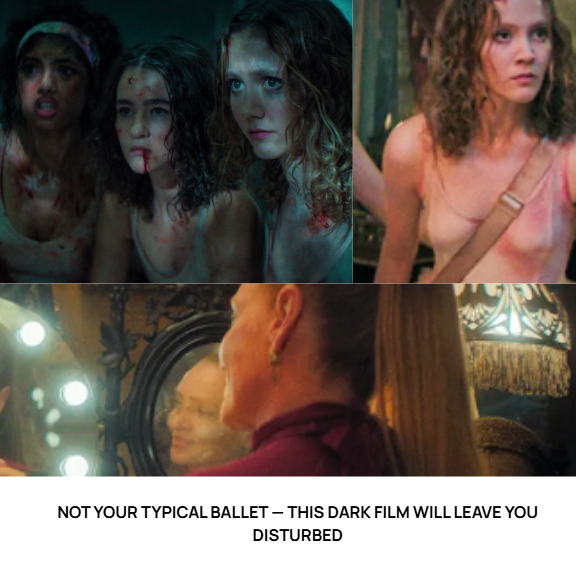
Pretty Lethal follows a familiar genre setup: a group of American ballet dancers is en route to a high-stakes competition in Budapest. The troupe—composed of Bones (Maddie Ziegler), Princess (Lana Condor), Grace (Avantika), Zoe (Iris Apatow), and Chloe (Millicent Simmonds)—finds their journey interrupted when their bus breaks down in the rural isolation of Hungary.
Seeking refuge at a remote inn, they encounter Devora (Uma Thurman), a former ballet prodigy turned criminal matriarch. What begins as a quest for a telephone and a warm meal quickly devolves into a nightmare when the girls witness a cold-blooded murder committed by the local mob. Trapped and outnumbered, the dancers must pivot from performing Swan Lake to surviving a hunt.
The “Green Room” of Ballet
Critics have noted that the film feels like a “less eye-openingly gory and markedly less effective riff on Jeremy Saulnier’s Green Room.” Where Green Room used the gritty reality of a punk band trapped by neo-Nazis, Pretty Lethal uses the discipline of ballet. The survivalist tension hinges on a simple premise: if these girls can endure the physical torture of a world-class ballet academy, they have the grit to face down a gang of Eastern European thugs.
Part II: Weaponizing the Arabesque – The Action Design
The most striking element of Pretty Lethal is its “Ballet-Fu.” Director Vicky Jewson, known for her work on Close, brings a tactile, stunt-heavy approach to the choreography. Unlike Ballerina (2025), which often felt like a standard John Wick film where the protagonist happened to be a dancer, Pretty Lethal integrates the mechanics of dance into the combat.
The Biomechanics of Violence
Ballet dancers possess extraordinary core strength, balance, and leg power. The film highlights these attributes in several key sequences:
- The Reach: Using the extreme flexibility of a grand battement to deliver a strike to a height an average fighter couldn’t reach.
- The Pivot: Utilizing pirouettes not for flourish, but as a tactical method to dodge incoming fire or blades, turning the momentum of a miss into a counter-strike.
- Improvised Weaponry: In one of the film’s most talked-about moments, ballet pumps—traditionally symbols of elegance—are transformed into shivs. The “breaking in” of a pointe shoe, usually a ritual of pain for a dancer, becomes a ritual of preparation for war.
Suspension of Disbelief
The Guardian points out that “a heavy suspension of disbelief is necessary” when a group of teenage girls takes down a room full of hardened mercenaries. However, the film argues that the “grueling form of dance many underestimate” provides a psychological advantage. Dancers are used to performing through cracked ribs and bleeding feet; a fistfight is just another high-pressure performance.
Part III: The Casting – A Generational Showcase
One of the reasons Pretty Lethal has garnered significant attention is its ensemble cast, which reads like a “Who’s Who” of Gen Z talent.
Maddie Ziegler: The Muse as a Warrior
Maddie Ziegler, the former Sia muse, takes the lead as Bones. Having spent her life in the public eye as a dancer, Ziegler brings an authenticity to the physical demands of the role that few others could. While some critics suggest she “doesn’t yet show enough confidence to carry the weight of a lead” in dramatic terms, her physical performance is undeniable. Every kick and tumble feels earned because the audience knows Ziegler has the real-world training to match the character’s skills.
Uma Thurman: The Ghost of Christmas Past
In a brilliant bit of meta-casting, Uma Thurman plays the villain, Devora. Thurman, an icon of female-led action thanks to Kill Bill, represents the “dark side” of the ballet dream. As a former prodigy who turned to crime, she serves as a warning to the younger girls. The Guardian describes her performance as “hammy enough for one to want just that bit more,” channeling the theatricality of a Bond villain. Her presence bridges the gap between the legendary action stars of the early 2000s and the new generation.
The Ensemble: Diversity and Dynamics
The supporting cast adds layers of personality to what could have been one-note characters:
- Lana Condor (Princess): Provides the abrasive comedic relief, acting as the skeptic of the group.
- Avantika (Grace): Her character spends much of the film in a drug-induced daze (a cliché the film is criticized for), yet she provides moments of surreal humor.
- Millicent Simmonds and Iris Apatow: As the bickering sisters, they provide the emotional anchor of the film, reminding the audience that beneath the “lethal” exterior, these are still vulnerable young women.
Part IV: Pretty Lethal vs. John Wick’s Ballerina
It is impossible to discuss Pretty Lethal without comparing it to From the World of John Wick: Ballerina (2025), starring Ana de Armas. While both films share a similar DNA, they represent two very different approaches to the genre.
Scale vs. Soul
Ballerina was a $90 million spectacle, deeply entrenched in the lore of the High Table and the Ruska Roma. It was sleek, expensive, and carried the heavy burden of expanding a massive franchise. Pretty Lethal, by contrast, is a “cheap and cheerful” Amazon original.
The criticism often leveled against Ana de Armas’s Ballerina was that it felt like “John Wick in a dress.” The action was standard gun-fu. Pretty Lethal attempts to reclaim the “ballet” part of the title. As one critic noted, “the Pretty Lethal dancers might not be rivalling John Wick anytime soon, but they could take down his Ballerina quite easily” in terms of stylistic creativity.
The Setting
Ballerina traveled the globe; Pretty Lethal stays rooted in a singular, dingy Hungarian inn. This claustrophobia works in its favor, heightening the tension and making the survival feel more desperate. It trades the glitz of the Continental for the grime of a backwoods hideout.
Part V: The Critique – Where the Performance Falters
Despite its fun premise, Pretty Lethal is not without its flaws. The Guardian and other outlets have identified several areas where the film misses its “grand jeté.”
Tonal Whiplash
The film struggles to decide if it wants to be a “grounded survival thriller” or a “vapid action-comedy.” One moment, characters are screaming in genuine terror; the next, they are delivering quips that feel like they belong in a 90s teen sitcom. This inconsistency prevents the audience from fully investing in the stakes.
Narrative Poverty
The script by Kate Freund is described as “economical” to a fault. The characters are defined by thin archetypes—the rich one, the sisters, the bickering one—and the plot moves so quickly (88 minutes) that there is little room for genuine character development. The film relies on the “technical beauty of its fights” to mask the lack of a soulful narrative.
Part VI: The Cultural Significance of the “Killer Ballerina”
Why is the “Killer Ballerina” becoming such a prominent trope in the mid-2020s?
The Subversion of the “Damsel”
For decades, the ballerina was the ultimate “damsel”—a figure to be protected or admired from a distance. Films like Black Swan began the work of showing the psychological horror of the industry, but the new wave of action films is taking it a step further. They are reclaiming the ballerina as a figure of agency and lethality.
The High-Low Art Intersection
There is a visceral thrill in seeing “High Art” (Ballet) collide with “Low Art” (Exploitation Cinema). Pretty Lethal embraces this absurdity. It recognizes that there is something “ghoulish and confrontationally gross” about blood splattering on a white tutu, and it leans into that aesthetic contrast.
Conclusion: A Legend in the Making?
Pretty Lethal is not a masterpiece of cinema. It is, as The Guardian puts it, a “disposable lark.” However, its significance lies in its commitment to a bit. It proves that there is a hunger for action films that utilize unique skill sets rather than just standard military training.
For Maddie Ziegler, the film serves as a “calling card for more action roles,” proving she can lead a physical franchise. For Uma Thurman, it’s a victory lap in a genre she helped define. And for the audience, it is a reminder that the most dangerous people in the room are often the ones you least expect—the ones who have been trained to turn pain into beauty and discipline into a weapon.
In the end, Pretty Lethal doesn’t reinvent the wheel, but it does make that wheel do a perfect fouetté turn. It is a blood-splattered, fast-paced, and occasionally ridiculous thrill ride that suggests the future of action might just be wearing a pair of pointes.