
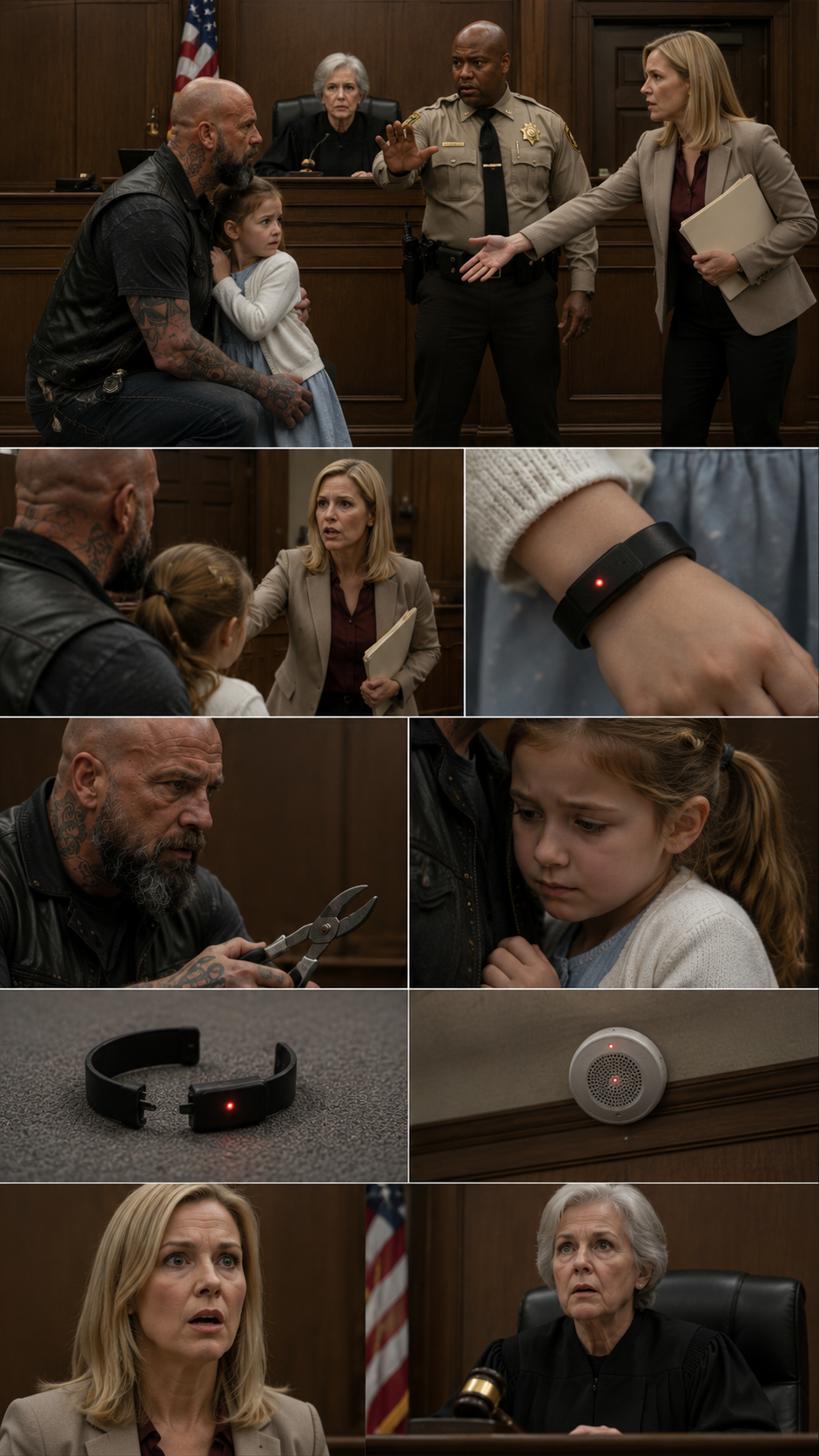
Dean Halvorsen was arrested before the courtroom doors opened.
The deputies found a remote controller in his coat pocket, matched to the bracelet on Nora’s wrist. His county tablet contained location logs, audio recordings, and photographs taken outside Kane’s repair shop.
Diane stopped denying everything once investigators separated her from Dean.
Kane’s sister had been named Mara Mercer.
She disappeared at sixteen after entering a privately operated foster home managed by Dean’s parents. The official file claimed she ran away. In reality, Mara had reported physical punishment, locked rooms, and money being taken from children’s benefit accounts.
Dean was eighteen then.
He helped his parents alter the records.
Mara kept the brass locket because Kane had given it to her before she was placed in care. She later passed it to another girl in the home, asking her to find Kane if anything happened.
That girl survived.
Decades later, she became Nora’s first foster mother, Evelyn Ross.
Evelyn discovered Dean was now approving placements and using children’s files to control vulnerable families. She began collecting evidence. When she realised Nora was being tracked, she hid the locket inside the child’s dress and taught her one instruction.
Find the man with the scar.
Dean removed Nora from Evelyn’s home before she could report him. He told the child her foster family had disappeared because they no longer wanted her.
They had not disappeared.
Evelyn and her husband had been arrested after Dean planted stolen medication in their house. The charges were quietly dismissed, but their foster licence remained suspended.
The adoption ceremony was supposed to end the problem.
Diane would take Nora out of state. Kane would be filmed cutting the bracelet from a frightened child. Dean would use Kane’s juvenile record to make the accusation believable.
The bracelet connected to the courtroom speakers because Evelyn had secretly paired it with the accessibility system during an earlier hearing.
She had created one chance for the device to expose itself.
The evidence recovered from Dean’s county account reopened Mara’s case.
Her remains were eventually found beneath an abandoned outbuilding behind the former foster home. The medical examiner could not determine every detail after thirty-six years, but the injuries did not support the claim that she had run away.
Dean later pleaded guilty to conspiracy, unlawful surveillance, child endangerment, evidence tampering, and offences connected to Mara’s death. Diane cooperated and received a reduced sentence. Several county employees were dismissed after investigators discovered years of ignored complaints.
Evelyn and her husband were cleared.
Nora returned to them first.
Kane did not contest it.
He had protected her in the courtroom, but he understood that rescue did not automatically make him her family.
He visited on Saturdays.
At first, Nora spoke only through the partially opened door. Later, she sat beside him while he repaired bicycles in Evelyn’s garage. She asked about Mara in small pieces.
Was she funny?
Did she like music?
Was she afraid?
Kane answered only what he knew.
A year later, Nora handed him the brass locket.
“It belongs with you.”
Kane closed her fingers around it.
“She made sure it reached me. That means it belongs with both of us.”
They placed Mara’s photograph inside and left the other side empty.
Not because nobody else mattered.
Because Nora said some spaces should remain open until people were ready to fill them.
Kane never became her father.
He became the person she called when official papers frightened her, when courthouse doors made her hands shake, or when an adult insisted she had misunderstood something she knew was true.
He always answered.
Mara had vanished because powerful people expected a child’s fear to remain silent.
Nora survived because, this time, someone listened before asking her to let go.