
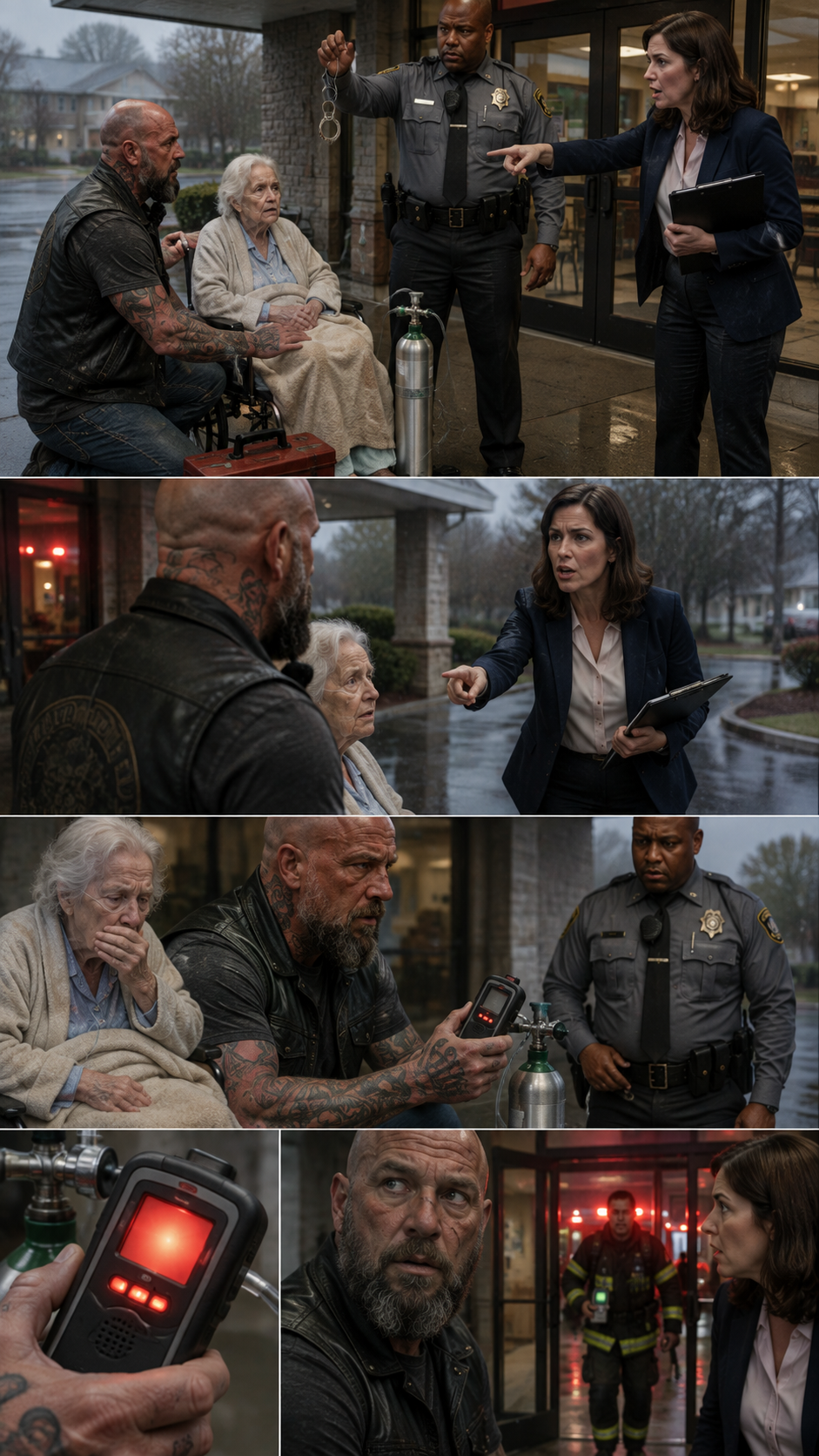
Margaret kept looking at the key while firefighters moved residents toward the ambulances.
“It belonged to Rose,” she said.
Caleb crouched beside her wheelchair.
“My mother died thirty-seven years ago.”
Margaret nodded.
“I was there.”
She had been a respiratory therapist at St. Agnes County Hospital when Caleb arrived at seventeen with burns along his face and chest. A gasoline fire had torn through the repair garage where he worked after school.
Rose Shaw reached the hospital later that night.
The official report said she died at the scene.
Margaret said that was false.
Rose survived until morning.
Before she lost consciousness, she gave Margaret the brass key and made her promise not to hand it to Caleb until he was old enough to understand what had happened.
“I tried finding you,” Margaret said. “You disappeared after foster care moved you across the state.”
Caleb’s voice remained flat.
“What does it open?”
Margaret looked toward Meadowbrook.
“This building used to be part of St. Agnes.”
The fire marshal allowed Caleb and me inside only after the air had been cleared. Margaret stayed beneath the entrance canopy with oxygen from an ambulance cylinder.
The key opened a rusted service door behind the old laundry room.
Beyond it stood a narrow concrete corridor that did not appear on our current floor plans. At the end was a row of steel lockers, most hanging open and empty.
Rose’s key opened number seventeen.
Inside were three maintenance ledgers, several photographs and a sealed envelope bearing Caleb’s name.
The ledgers documented failures in the hospital’s respiratory compressor system. Exhaust from the emergency generator had repeatedly entered the medical-air intake during power outages.
St. Agnes administrators knew.
They continued using the system because replacing it would have forced the county to close the respiratory wing.
Rose had worked in maintenance.
She discovered the falsified safety tests and copied them.
The garage fire occurred two days before she planned to meet a state inspector.
Caleb stood motionless while I turned the pages.
One photograph showed Rose beside the same portable-cylinder filling unit now used at Meadowbrook. The equipment had not been purchased recently, as our board had claimed.
It had been transferred from St. Agnes after the hospital closed.
The serial number matched.
We had been filling residents’ tanks with a machine condemned more than three decades earlier.
My stomach tightened.
“Why was this still operating?”
A firefighter behind us answered.
“Someone removed the modern intake filter last month.”
Caleb looked at me.
I had approved a maintenance invoice for that work.
The invoice came from a contractor selected by Meadowbrook’s owner, Harold Vance. He had assured us the old compressor was safe after refurbishment.
Caleb opened the envelope last.
Rose’s handwriting covered four pages.
She told him the garage fire was not an accident. Someone had poured fuel near the rear exit, then locked the outer door after Caleb entered.
Rose found him because she had been following the man who stole her maintenance records.
She pulled Caleb through a window.
Her burns came from going back inside to retrieve the remaining evidence.
The final paragraph was shorter.
Margaret read it over Caleb’s shoulder and began crying.
Rose had written one name.
Harold Vance.
The owner of Meadowbrook had been nineteen at the time and working as an assistant in his father’s hospital office.
Caleb folded the letter carefully.
Then my phone rang.
It was the fire chief outside.
Security footage showed Harold entering Meadowbrook’s mechanical room shortly before the generator started.
He had not evacuated with the residents.
His car was still in the parking lot.
Caleb looked toward the dark corridor leading beneath the building.
From somewhere below us came the heavy metallic sound of a door locking.