
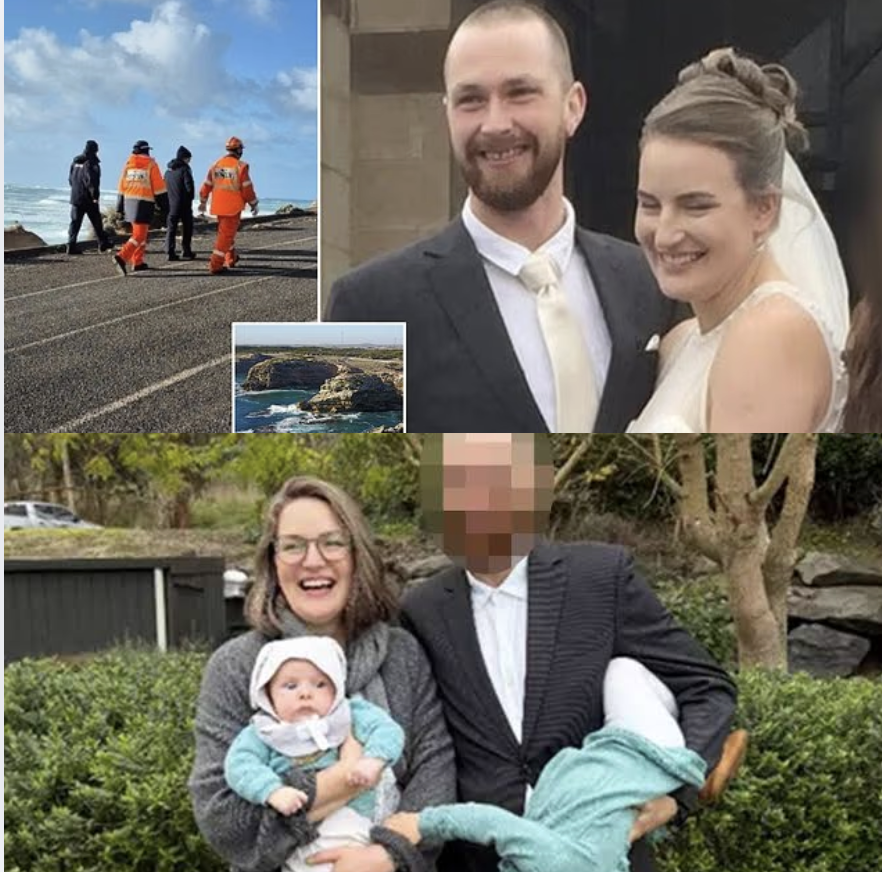
MOUNT GAMBIER — For months, the devastating case surrounding 36-year-old Helena Wright and her young children gripped the nation, sparking widespread public grief, relentless media speculation, and an exhaustive investigation that spanned land, sea, and the courtroom. What began as a harrowing missing-persons investigation along the rugged cliffs of Cape Northumberland quickly evolved into one of the most heartbreaking legal and human tragedies in recent memory.
Now, following intense proceedings and an emotional breakthrough in court, the narrative surrounding the final hours before the tragedy has fundamentally shifted. A candid, emotional statement from Wardel Wright—Helena’s husband and the father of the children—has broken months of silence, bringing legal proceedings to a emotional standstill and providing the critical answers investigators and loved ones have desperately sought.
The Tragic Timeline That Horrified the Nation
To understand the emotional gravity of the latest courtroom revelations, one must look back to the dark July morning when the tragedy first unfolded off the coast of South Australia. Emergency services were alerted after a vehicle was discovered abandoned along the clifftops of Port MacDonnell, its engine still running and doors unlocked.
A massive search and rescue operation immediately mobilized across the coastline. Hours later, local fishermen assisting search crews recovered the bodies of Helena Wright, an Estonian national who had settled in nearby Compton, and her 23-month-old daughter from the ocean waters beneath the steep cliffs. A multi-day search for her three-month-old infant son ensued, drawing specialized drone units, emergency services, and local volunteer groups before authorities were forced to suspend recovery efforts due to severe marine conditions.
From the initial moments of the investigation, rumors and online speculation ran rampant. Police confirmed early on that Helena had visited a local police station just 24 hours prior to the incident, raising intense public scrutiny regarding what warning signs may have been missed and what was occurring behind closed doors in the days leading up to the tragedy.
While law enforcement maintained throughout their inquiries that no external foul play was suspected, the void of detailed public information left room for endless public debate, media scrutiny, and agonizing questions for Helena’s extended family.
The Silence Breaks in the Courtroom
For months, Wardel Wright had remained largely out of the public eye, grieving privately while cooperating fully with police investigators and coronial officers. However, as formal coronial proceedings opened to examine the circumstances surrounding the family’s final days, the tension inside the courtroom reached a boiling point.
Surrounded by legal counsel, family members, and community supporters who filled every bench in the gallery, Wardel took the stand to deliver a detailed statement. The air inside the courtroom turned heavy as he addressed the assembly, offering a raw and unvarnished account of the months, weeks, and final hours leading up to the loss of his wife and young children.
“I spent every single day asking myself if there was something more I could have done, a word I missed, or a cry for help I failed to hear,” Wardel shared in his testimony, his voice breaking as he spoke. He detailed the subtle, often invisible battles with post-natal distress, deep social isolation, and overwhelming mental exhaustion that had quietly developed in the months following the birth of their youngest child.
He admitted that despite love and joint efforts to seek guidance, the severity of the crisis was far deeper than anyone close to the family had truly realized. His statement shed light on the visit Helena made to the police station the day before her death—clarifying that she had been seeking reassurance and help during an acute moment of anxiety, a detail that had previously triggered intense speculation among commentators online.
Devastation and Closure for the Victims’ Family
Inside the gallery, Helena’s relatives, many of whom had traveled internationally to attend the hearings, listened through tears as the full scope of the domestic struggle was laid bare. For months, fracture lines of doubt and grief had strained relationships between extended family members as everyone searched for someone or something to blame.
Wardel’s admission of the quiet signs he noticed in hindsight—the late-night conversations, the growing withdrawal, and the moments of unspoken distress—brought a solemn, devastating clarity to the room. Rather than malice or external conflict, the court heard a detailed chronicle of a hidden mental health crisis that escalated beyond reach before support systems could fully intervene.
“Hearing the truth told openly in court doesn’t lessen the pain,” a representative for Helena’s family stated outside the courthouse following the session. “But it removes the agonizing mystery. We now understand the depth of the heartbreak and the quiet struggle Helena was enduring. It allows us to honor her memory and the memory of her beautiful children without the cloud of unknown questions hanging over us.”
Legal analysts present in the courtroom noted that Wardel’s decision to speak so candidly was pivotal for the coronial inquiry. By laying out the precise sequence of events and private conversations, he provided crucial evidence that helps coronial officials construct an accurate final record and recommend potential systemic improvements for maternal mental health support.
One Final Question Remains for the Community
While the admission has brought legal clarity and closed the chapter on months of rampant rumor and conspiracy theories online, it has left the local community with a profound and lasting question: how can society better identify and support mothers navigating silent, severe crises before it is too late?
Community leaders and advocacy groups in South Australia have already begun calling for increased funding for regional maternal healthcare, enhanced mental health screening during post-natal checkups, and clearer protocols for emergency welfare responses. Helena Wright’s story has become a stark and painful reminder of the hidden pressures that can exist behind closed doors, even within seemingly loving homes.
As the formal coronial investigation wraps up its findings, the public discourse has shifted from suspicion to deep reflection. The memorial at Cape Northumberland, adorned with flowers, ocean stones, and hand-written notes, remains a quiet place of pilgrimage for locals seeking to pay their respects.
The courtroom drama has ended, the husband’s painful truth has been spoken into the official record, and the legal case is formally closing. But for the town of Mount Gambier and all those touched by this tragedy, the lessons of Helena Wright’s story will linger far into the future.