
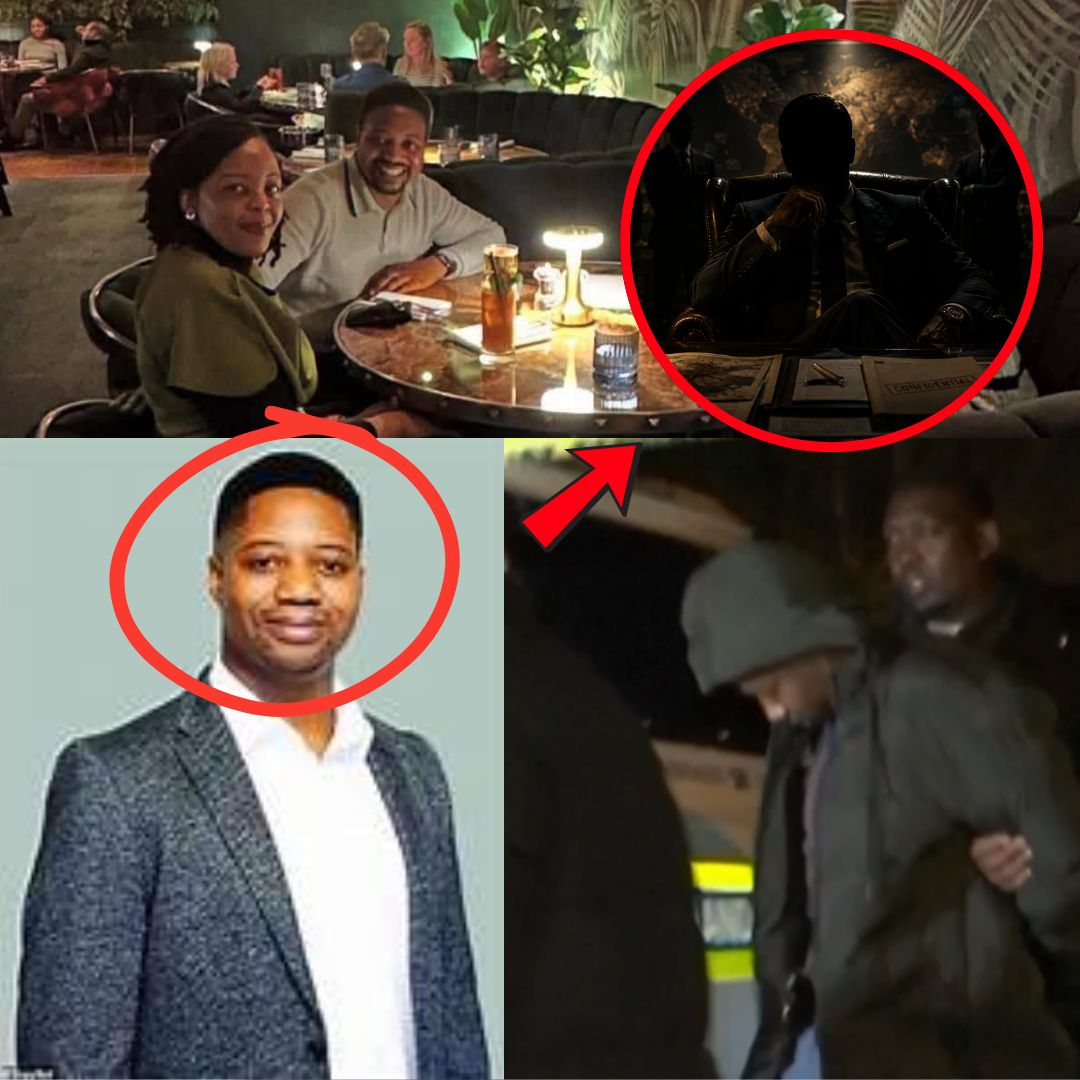
In a dramatic new development that has sent shockwaves through the investigation into one of Britain’s most chilling family murders, a group of masked individuals allegedly connected to the Ndodana Tshuma case have been apprehended, with detectives now racing to confirm their identities and exact roles.
The ongoing probe into the brutal killings of Nothabo Zandile Tshuma, 42, and her two young daughters, Natalie, 15, and five-year-old Nala, continues to grip the public on both sides of the Atlantic and in southern Africa. But it is this latest bombshell – whispered among investigators and now leaking into the open – that has transformed the already horrific case into something even more sinister.
According to sources close to the international manhunt, the masked figures, who are said to have appeared in earlier stages of the drama surrounding Tshuma’s flight from the UK, are currently being held and rigorously questioned. Authorities are working around the clock to verify who they are, what they know, and whether they actively assisted the 45-year-old British-Zimbabwean man now facing authorised murder charges in England.
The revelation has sparked feverish speculation: Were these individuals mere associates? Hired help? Or something far darker – part of a coordinated effort to help a suspected family annihilator vanish across continents?
The horror that started it all
It was early July when the quiet residential streets of Great Denham, near Bedford, were shattered by unimaginable tragedy. Concerned relatives and neighbours raised the alarm after the Tshuma family had not been seen for several days. When police forced entry into the family’s substantial home – reportedly valued at around £1.3 million – they discovered a scene of pure horror.
Nothabo Zandile Tshuma, known to loved ones as Zandile, and her daughters Natalie and little Nala were found dead. Post-mortem examinations later confirmed the devastating truth: all three had died from blunt force trauma. The injuries were so severe that the family has spoken of an “unimaginable loss.”
Ndodana Mkhanyisi Tshuma, a British citizen of Zimbabwean heritage who also went by the name Mark, had already fled. Detectives believe he left the UK via Heathrow Airport using his British passport, slipping out of the country before the bodies were even discovered. An international manhunt was launched. Within days he was tracked to South Africa.
On 10 July he was arrested in the Johannesburg suburb of Kensington – not initially on murder charges, but on an unlicensed firearms offence. South African police said he was found in possession of an illegal gun and ammunition. British prosecutors swiftly authorised three counts of murder against him. Extradition proceedings are now underway, though South African courts must first satisfy themselves that the legal requirements are met. Tshuma has remained in custody after dropping bail applications, with further hearings scheduled.
Family members have described the killings as an “unimaginable loss.” School tributes painted heartbreaking pictures of the victims: Nala as “a little ray of sunshine,” Natalie as a “bright and accomplished” pupil dearly loved by everyone at Bedford Girls’ School.
Yet even as the legal machinery ground forward in Johannesburg and London, a secondary mystery began to swirl. Reports and documents circulating among those following the case closely started to mention a group of masked individuals who had appeared in connection with earlier events surrounding Tshuma’s movements. Now, according to the latest information, those same figures have allegedly been rounded up.
The masked mystery deepens
What exactly did these masked people do? That is the question dominating discussions among investigators and the growing army of true-crime followers glued to every development.
Sources familiar with the inquiry suggest the group may have played a supporting role in the chaotic days after the murders – perhaps assisting with logistics, providing temporary shelter, or helping obscure Tshuma’s trail as he moved between the UK, and ultimately South Africa. Some accounts claim the individuals were seen in the vicinity of key locations during the critical window when Tshuma was still at large. Others speculate they could be linked to the illegal firearm he was found carrying upon arrest.
Importantly, none of this has been officially confirmed by Bedfordshire Police, the National Crime Agency, Interpol or South African authorities. Official statements have remained tightly focused on the murder investigation, the firearms charge, and the extradition process. Yet the persistence of the “masked group” narrative in related documents and private briefings has proved impossible to ignore.
“This is the kind of development that changes the temperature of an entire case,” one experienced former detective told us. “When you start looking at possible accomplices – people who may have helped after the fact or even before – the whole picture becomes more complex. Identities matter. Motives matter. And once those masks come off, the public will demand answers.”
The fact that identities are reportedly “being revealed” has only heightened the sense of impending drama. Will names be released? Will photographs emerge? Will any of them face charges of their own – assisting an offender, perverting the course of justice, or worse?
A family destroyed, a community stunned
The human cost remains almost too painful to contemplate. Zandile Tshuma was a mother in the prime of life. Natalie was a teenager with her whole future ahead of her. Nala was just five years old – an age when the world should still feel safe and full of wonder.
Friends and extended family have spoken of profound grief mixed with disbelief. How could a husband and father allegedly turn on those closest to him with such lethal force? What pressures, what secrets, what dark spiral could lead to such an outcome?
In the days after the bodies were found, the quiet Great Denham neighbourhood was transformed into a crime scene, with forensic tents, police tape and a heavy media presence. Tributes poured in. The family issued a dignified statement thanking the public for kindness and compassion that had “brought great strength.”
Meanwhile, Tshuma’s journey from Bedfordshire to Johannesburg has raised its own questions. How did he manage to board a flight so quickly? Did anyone help him? Were there warnings missed? And now, with the alleged apprehension of a masked group, those questions have multiplied.
The international chessboard
The case has become a textbook example of modern cross-border policing. UK authorities, South African police, and Interpol have all played roles. Tshuma’s dual British-Zimbabwean background added layers of complexity to the extradition process. Court appearances in Johannesburg have been closely watched, with the suspect remaining largely silent in public while legal teams on both sides prepare for the next stages.
The firearms charge in South Africa has bought time. Ballistic examinations continue. The murder charges authorised by the Crown Prosecution Service hang over everything. Yet the introduction of possible additional suspects – the masked individuals now said to be in custody – threatens to expand the investigation significantly.
If the group is confirmed to have aided Tshuma, prosecutors may pursue further charges. If their involvement proves more peripheral, the focus may shift back squarely onto the accused himself. Either way, the public appetite for answers is voracious.
What happens next?
Detectives on both continents are understood to be working at pace. Identity verification of the apprehended individuals is a priority. Forensic opportunities – phone records, CCTV, financial trails, witness statements – will be exhaustively examined. Any link, however tenuous, to the Great Denham house or to Tshuma’s movements in the critical hours and days will be pursued relentlessly.
For the bereaved family, each new revelation is another wave of pain. They have already endured the worst imaginable loss. Now they must watch as the case grows still more labyrinthine.
For the rest of us, the Tshuma case stands as a grim reminder of how quickly ordinary family life can descend into nightmare – and how the search for truth can stretch across oceans and involve players whose faces were once hidden behind masks.
As the identities of those recently apprehended begin to surface, one thing is certain: the full story of what happened in that Bedfordshire home, and in the frantic days that followed, is still being written. And the next chapter may prove the most explosive yet.