
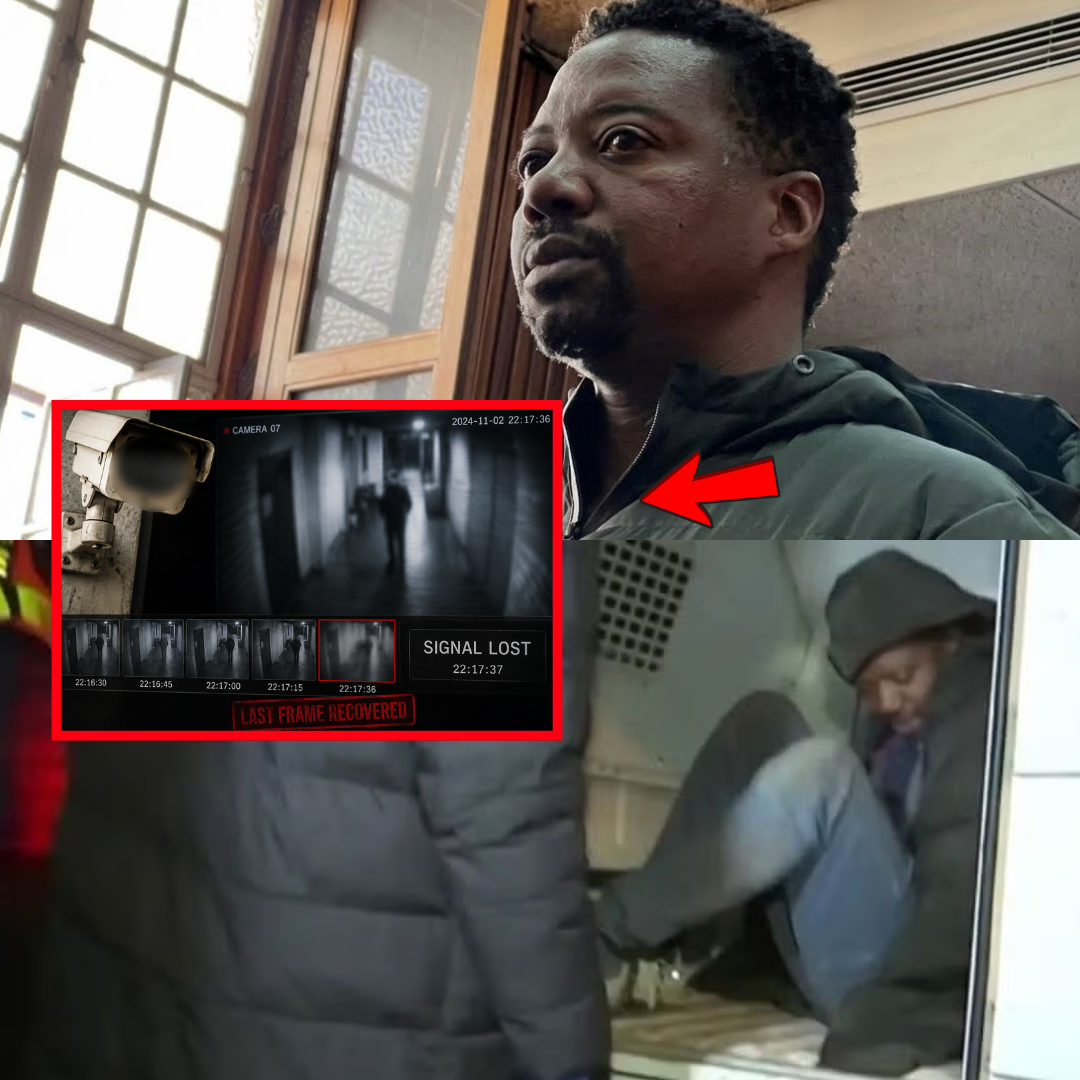
LEAKED FINAL FRAME: The single image that could blow the Sophie Langford case wide open after months of dead ends
Just when detectives believed every avenue in the tragic death of Sophie Langford had been exhausted, a chilling discovery buried deep in archived hard-drive data has sent shockwaves through the investigation — and raised terrifying new questions about what really happened in the final moments of her life.
Technical experts working for a private forensic firm have reportedly recovered a single frame from the home security system that was long thought to have failed completely. That one image, captured in the split second before the camera signal died, is now being described by sources close to the case as “potentially case-altering.”

The revelation has left the Langford family reeling and forced police to reopen lines of inquiry they had quietly shelved. For months the official narrative held that the cameras simply stopped working due to a technical fault. Now that explanation is under intense scrutiny.
Sophie Langford, 32, a talented graphic designer known for her vibrant Instagram presence and quiet suburban life in a leafy corner of Surrey, was found dead in woodland less than two miles from her home in late March. Her body was discovered by a dog walker six days after she was last seen. The post-mortem examination revealed she had suffered a severe head injury, but the precise circumstances surrounding her death have never been fully established.
From the beginning, the home security system was central to the investigation. Sophie had installed a relatively new multi-camera setup only months earlier after a series of opportunistic burglaries in the neighbourhood. The system was supposed to record continuously to a hard drive and upload key clips to the cloud. Yet when officers arrived at the house, the footage from the critical evening was gone. The cameras appeared to have stopped recording at approximately 10.47pm — around the time Sophie is believed to have last been inside the property.
Police initially attributed the failure to a power surge or corrupted hard drive. The manufacturer was contacted. The hard drive was forensically imaged. Nothing usable was recovered from the final period. Or so the public was told.
According to sources with knowledge of the latest developments, a specialist digital forensics team brought in by the family’s legal representatives conducted a far more exhaustive examination of the raw data. Using advanced recovery techniques normally reserved for high-profile cybercrime cases, they managed to reconstruct a single still image from residual magnetic traces on the drive. That image was timestamped at 10.46.58pm — two seconds before the system went dark.
What the frame shows has not been released publicly, and police have so far refused to comment on the precise content. However, multiple sources who have been briefed on the finding describe a detail that was never mentioned in any previous witness statement, police report or forensic summary. One investigator who has seen the image is said to have described it as “the one thing that makes the original timeline fall apart.”
The discovery has reignited intense speculation among those who have followed the case closely. Online true-crime communities have already begun dissecting every available photograph of Sophie’s hallway, the position of furniture, the angle of the camera, and the lighting conditions on the night in question. Some claim the recovered frame appears to show a second figure partially visible in a reflective surface. Others insist it captures Sophie herself in a posture inconsistent with the later discovery of her body. A third theory, circulating among more cautious observers, suggests the image reveals that the camera was deliberately interfered with from inside the house.
Whatever the precise content, its very existence has forced a re-examination of earlier testimony. Sophie’s neighbour, who reported hearing raised voices that evening, had always maintained the argument lasted only a few minutes. The final frame may now place that dispute in a completely different context. Similarly, the absence of forced entry — long cited as evidence that Sophie may have left the house of her own accord — is being looked at again in light of the new material.
The Langford family has issued a short but emotional statement through their solicitor. “For months we have been told that the cameras simply failed. We always suspected there was more to it. If this single image contains information that was overlooked or dismissed, then the investigation must treat it with the seriousness it deserves. Sophie deserves the truth.”
Police sources, speaking on condition of anonymity, acknowledge that the recovery of the frame is “significant” but caution against premature conclusions. “A single still image is not a complete video sequence,” one officer said. “It has to be authenticated, contextualised and tested against every other piece of evidence. That process is underway.”
Nevertheless, the timing of the leak has been explosive. The image was reportedly recovered several weeks ago, yet news of its existence only began circulating among a small group of investigators and legal teams in the past ten days. How the information reached the wider public remains unclear. Some believe a deliberate decision was made to force the issue into the open after frustration at the pace of official inquiries.

The case has always contained troubling inconsistencies. Sophie’s phone was found inside the house, fully charged, with no outgoing messages after 9.15pm. Her handbag and car keys were also inside. Yet her body was located in woodland she had no known reason to visit after dark. No defensive injuries were recorded, and toxicology results showed no significant alcohol or drugs in her system. The head injury was consistent with a fall, according to the original pathologist, but independent experts consulted by the family have questioned whether the injury pattern fully supports that conclusion.
The home itself has been the subject of intense forensic attention. Every surface was examined. Every drawer was searched. The garden was dug. Nothing conclusive emerged. The absence of useful CCTV from the property itself was repeatedly described as a major investigative handicap. That handicap may now have been partially removed.
Digital forensics experts not connected to the case say the recovery of a single frame from a seemingly blank drive is technically plausible, though rare. Modern hard drives can retain residual data even after apparent corruption or overwriting. Specialist tools can sometimes reconstruct individual frames when complete video sequences are lost. The fact that only one usable image survived suggests the system suffered a sudden and catastrophic interruption rather than a gradual failure.
What caused that interruption remains the central mystery. Was it a simple technical fault? A deliberate power cut? Physical interference with the camera or recording unit? Or something more sophisticated? The final frame may hold the answer — or at least point investigators in the right direction.
Public interest in the case has always been high. Sophie was well liked in her community, active in local charity work, and had recently become engaged. Her fiancé, who has consistently cooperated with police and has never been treated as a suspect, is understood to have been devastated by the latest development. Friends say he has clung to the hope that the cameras might one day yield something useful. That hope now appears closer to reality than anyone dared believe.
As forensic teams continue their painstaking analysis of the recovered image, the wider implications are already being debated. If the frame does contain previously unknown information about a second person present in the house, the entire investigation will shift. If it merely confirms Sophie’s movements in those final seconds, it may still help establish a more accurate timeline. Either way, the discovery has demolished the comfortable assumption that the cameras had nothing left to give.
For the family, the development is both a source of hope and a fresh source of anguish. Every new piece of information forces them to relive the worst period of their lives. Yet they remain determined. “We will not stop until we know exactly what happened to Sophie,” a relative said. “If this image is the key, then it must be examined with every resource available.”
Police have confirmed only that “additional digital material” is under review. They decline to discuss the single-frame recovery specifically, citing the ongoing nature of the investigation. Behind the scenes, however, the pressure is mounting. Senior officers are understood to have requested an urgent briefing on the findings. External specialists have been consulted. The manufacturer of the camera system has been asked to provide further technical support.
In the true-crime community the speculation is already feverish. Enlarged, enhanced and colour-adjusted versions of what people believe the frame might show are circulating on forums and social media, despite no authentic image having been released. Most of these reconstructions are pure invention. Yet the hunger for answers is understandable. For months the case has felt stuck. A single image has now changed the atmosphere completely.
Whether that image ultimately proves decisive remains to be seen. Digital evidence is rarely as straightforward as it appears in television dramas. Authentication is complex. Context is everything. A reflection can be misleading. A shadow can be misinterpreted. Lighting conditions, camera angles and compression artefacts all play their part. Experienced investigators know that one frame can raise more questions than it answers.
Still, the psychological impact is undeniable. The case that many had begun to accept as unsolvable has been jolted back into life. Detectives who had moved on to other inquiries are being pulled back in. Witnesses who thought their involvement was over may be asked to look again at what they saw and heard. The quiet suburban street where Sophie lived has once more become the focus of media attention and police activity.
For those who loved Sophie Langford, the wait continues. They have already endured the agony of her disappearance, the horror of the discovery, the frustration of an investigation that seemed to lead nowhere, and the dull ache of unanswered questions. Now they face another period of uncertainty while the single recovered frame is subjected to every test science can apply.
What that frame ultimately reveals may rewrite the story of Sophie’s final night. Or it may simply deepen the mystery. Either outcome will be significant. After months of silence from the cameras that were supposed to protect her, the system has spoken one last time. The question now is whether anyone is prepared to listen carefully enough to understand what it is saying.